Last updated November 17, 2026




Free written scope consultation - allowances, timeline, and change-order rules on paper before a single trade is scheduled
Driveway & Pavers Warning Signs Every Homeowner Should Know
Edge restraint failure rarely looks dramatic when it starts. It looks like a gap at the driveway perimeter, maybe half an inch wide, easy to walk past for a season. But leave that gap through one Dallas rainy season and the border row shifts, which unlocks the rows behind it in a chain reaction. We’ve walked hundreds of Dallas driveways where a homeowner pointed at a “cosmetic” crack that had already compromised a 12-foot section of pavers underneath. This guide covers the six visual signs that matter, which ones can wait and which can’t, what to document, and the Dallas-specific patterns that accelerate failure faster than most homeowners expect.
Quick Answer
The warning signs that precede a paver driveway failure are usually visible 6 to 18 months before the failure itself. The six to watch are: an edge restraint gap over 1/4 inch, joint sand sitting more than 1/2 inch below the paver surface, a single paver that rocks under foot, white efflorescence patterns, blocked drainage channels, and cracking that runs along seams rather than across paver faces. Any one of these is a schedule-soon item. Standing water pooling against a foundation is an immediate call. Recognizing these as structural signals rather than surface imperfections is the difference between a $400 repair and a $4,000 rebuild.
Styles & brands we work with
- Kitchen remodeling
- Bathroom remodeling
- Home additions & ADU
- Roofing
- Windows & doors
- Driveway & pavers
- Fence
Table of Contents
- Why Edge Restraint Failure Is the First Sign You’ll Miss
- The Six Visual Warning Signs, Described in Plain Terms
- Which Warning Signs Can Wait and Which Need a Call Today
- What to Document When You Spot a Warning Sign
- Dallas Climate Patterns That Accelerate Paver Failure
- Three Questions to Ask Before You Call Anyone
- What Repairs Cost: A Line-Item Range
- Common Mistakes to Avoid
- When to Call a Professional
Why Edge Restraint Failure Is the First Sign You’ll Miss
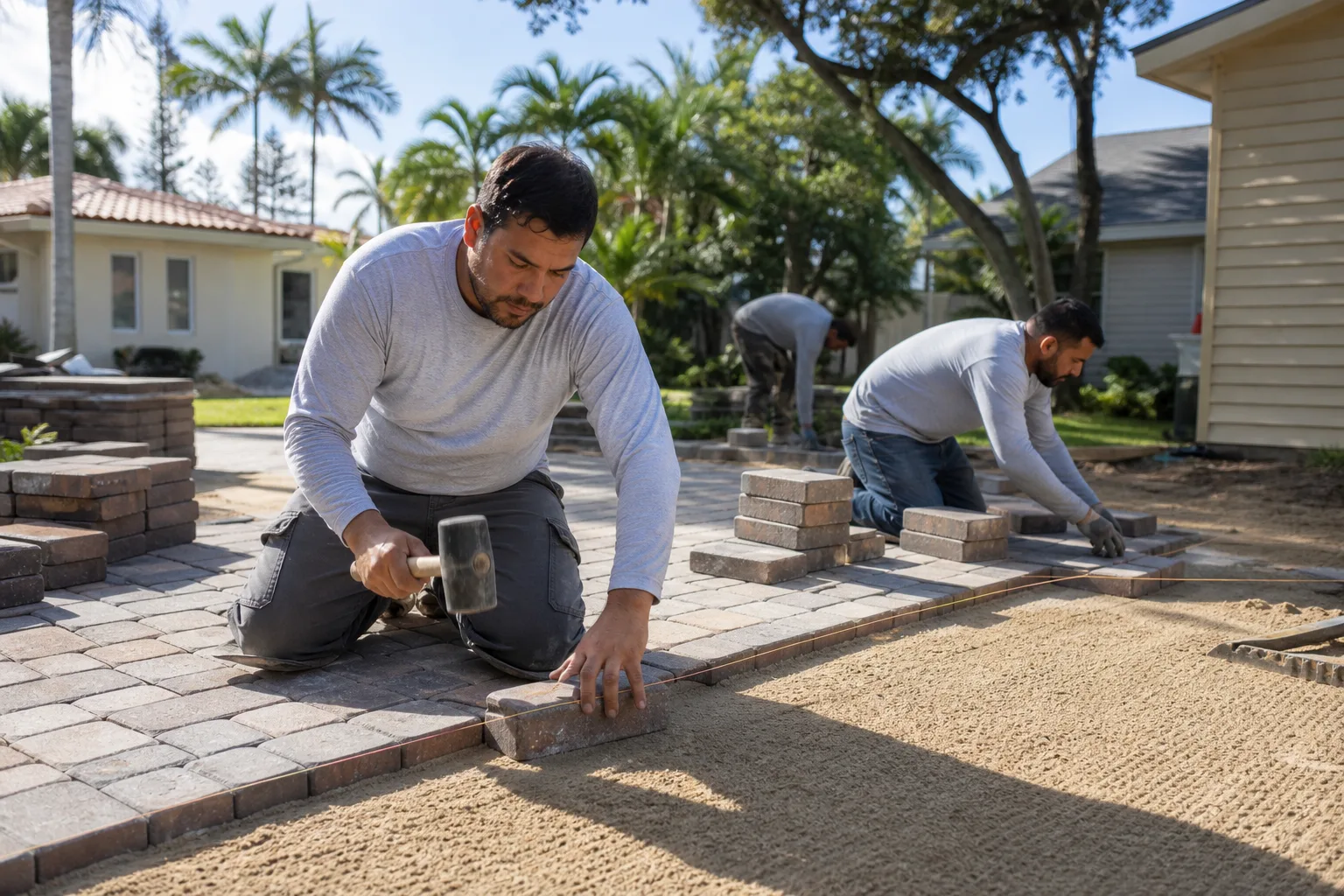
The plastic or aluminum border running around the perimeter of a paver driveway is called edge restraint, and its whole job is to hold the paver field in compression. Pavers work as a system when they’re locked tight against each other and against that border. Lose the border and the whole system loosens from the outside in.
Here’s what it looks like in the early stage. A gap opens between the paver row and the restraint, or between the restraint and the concrete apron or lawn edge. It starts narrow, often under 1/4 inch, and widens as the subgrade settles or the spikes pull free. Left through one Dallas storm season, the border row shifts outward, the interlocking pattern loosens, and the rows behind it start to move in sequence. By the time a homeowner notices a “lifting” section near the apron, the failure has usually traveled 8 to 15 feet inward.
Most Dallas paver driveways are installed with either a polymeric sand joint fill or a stabilized sand, and both depend on the edge restraint staying pinned. Once that border gives, the joint fill erodes faster, which is why the gap and the sand loss usually show up together. If you see both, you’re looking at a system losing its pressure, not a surface that needs a top-off.
Aluminum edge restraint handles Dallas heat cycles better than the flexible plastic type but requires proper spike depth into the base. Plastic shifts more under expansive clay, which is a factor across much of North Texas. If your driveway borders lawn on one side and concrete on the other, check both edges: the lawn side fails first because the soil moves more than the slab.
The Six Visual Warning Signs, Described in Plain Terms
These are the six signs worth knowing by sight. Walk your driveway once a season with a tape measure and a phone camera. Ten minutes of attention is what separates a repair from a rebuild.
- Edge restraint gap over 1/4 inch. Measure between the paver and the restraint at several points. Under 1/4 inch in one spot is worth watching. Over 1/4 inch anywhere, or 1/4 inch in multiple spots, warrants investigation. A gap wider than a nickel is the tipping point.
- Joint sand sitting more than 1/2 inch below the paver surface. Run your finger or a putty knife along a joint. The fill should sit flush or within 1/8 inch of the paver face. When it’s dropped a half inch or more, water is entering the joint directly instead of shedding off the surface.
- A single paver that rocks under foot. Step on each paver near the driveway entrance and along the apron where the paver meets concrete. One rocking paver means the bedding layer has voided out under that unit. Three or more rocking in a cluster means the base is failing, not just one unit.
- White efflorescence in a pattern. Efflorescence is the chalky white mineral deposit that rises to the surface as moisture moves through the paver. A scattered light dusting after rain is normal. A concentrated white patch, or efflorescence that keeps returning after you scrub it, means moisture is moving up through that specific zone, often from a failing base or a leaking irrigation line beneath.
- Blocked drainage channels. Most Dallas paver driveways have a channel drain, a swale, or a slope to the street. If you see leaf litter, silt, or a new low spot holding water more than 24 hours after rain, the drainage course has changed. Standing water pooling against a foundation is an immediate call.
- Cracking that follows the seams. Cracks that run along the joints between pavers are usually joint-fill loss. Cracks that run across the face of a paver, or crack a run of pavers in a stair-step pattern, indicate base movement underneath. Surface wear doesn’t crack faces; movement does.
One caution on the DIY side: don’t lift and reset a paver yourself to “check” the base. The bedding layer and joint sand are compacted as a system, and a lifted paver usually won’t seat back correctly without rescreening and recompaction. If a paver is rocking badly enough that you want to look underneath, get a contractor to look with you. See our full guide to Driveway & Pavers in Dallas for the installation side.
Which Warning Signs Can Wait and Which Need a Call Today
Not every sign carries the same urgency. Sorting them by how fast they degrade is what saves money. Here’s the breakdown we use when a homeowner calls Rowan Construction Group Dallas about paver concerns.
Call today
- Standing water pooling against the foundation, the garage apron, or a basement or crawlspace wall. Water against a foundation is a structural risk, not a paving issue, and it can move from a paving problem to a foundation problem in a single weekend storm.
- A trench or sinkhole opening under the pavers. Any hollow you can put a hand into is a base failure and possibly a utility issue.
- Edge restraint lifting out of the ground entirely, or a section of pavers that’s separated from the driveway and can be moved by hand.
- Efflorescence plus a musty smell in a nearby garage or crawlspace, which together can indicate active water intrusion.
Schedule within the next 30 days
- A single rocking paver.
- Joint sand more than 1/2 inch low in two or more joints.
- An edge restraint gap between 1/4 and 1/2 inch.
- Cracking along the joint line without displacement.
Add to routine maintenance
- Light efflorescence that responds to cleaning and doesn’t return for a season.
- Drainage silt removal once a year.
- Joint sand top-off every two to three years.
If you’re uncertain, the free estimate is the low-risk answer. Rowan Construction Group Dallas offers a written price before any work starts, and a Free Second Opinion on any written estimate you already have.
What to Document When You Spot a Warning Sign
The single thing homeowners do wrong after spotting a warning sign is nothing. They notice it, decide to “keep an eye on it,” and six months later can’t tell a contractor (or a warranty department) whether the problem has spread. Documenting takes ten minutes and is the difference between a warranty claim honored and one denied for lack of evidence.
- Photograph with a ruler for scale. Lay a tape measure or a ruler directly next to the gap, crack, or sand depth. A photo without a scale reference can’t be verified later.
- Note the date and the weather. Write down when the photo was taken and whether the last 30 days were wet, dry, hot, or a mix. Dallas rain events and heat cycles change how a sign presents.
- Take a wide and a close shot. Wide shot shows the location relative to the house, driveway apron, and street. Close shot shows the detail.
- Re-shoot exactly 30 days later. Same angle, same ruler placement, same time of day. If the gap has widened or the sand depth has dropped, you now have a timeline. That timeline is what a contractor, or a warranty department, can actually use.
- Log it in a single folder. A phone album labeled “driveway” works fine. Notes app is fine. The point is that the photos live together, not scattered across a camera roll.
This documentation isn’t bureaucracy. It’s the reason Rowan’s written warranty means something: the record of what was found is created on the visit, not reconstructed after. Every Rowan visit includes a documented photo record as a standard deliverable.
Dallas Climate Patterns That Accelerate Paver Failure
Paver failure isn’t random, and it isn’t a slow uniform decline. In Dallas, three specific climate patterns drive the warning signs described above. Knowing them helps you know where to look and when.
Thermal gap widening after summer heat cycles. Dallas pushes above 100°F most summers, and a paver driveway absorbs a lot of that heat. Pavers expand, edge restraint pins loosen slightly under the repeated expand-contract cycle, and the gap at the perimeter widens a fraction at a time. We’ve seen gaps double in width between May and September in the same driveway. Check the perimeter in late summer and again in early spring; the difference tells you whether the restraint is holding.
Joint sand erosion after high-intensity storms. Dallas gets its rain in bursts – two inches in 45 minutes happens in April and September. The joint sand between pavers is designed to lose that water from the top, but when the edge restraint has loosened, water gets underneath first, then pushes the joint sand up and out. The erosion shows up on the downhill side of the driveway, near the apron, or at any point where the driveway sheds to the street. If you see a pattern of sand loss from the top of the driveway down, that’s an edge restraint issue, not a top-off issue.
Grass and weed infiltration as a map of edge restraint failure. Weeds growing between pavers aren’t just a maintenance annoyance; in a mature driveway, they mark exactly where the restraint has failed and the joint sand has loosened. Where weeds cluster, the restraint has opened up, allowing water and seeds into the joint. Walk the perimeter and note where the weeds grow. That line is your repair map. The front edge along the street and the sides near planting beds are the two spots we see weeds first.
Add to this the expansive clay soil across much of North Texas, which swells in wet periods and shrinks in dry periods, and moves the base under the pavers slightly every season. That’s why Dallas repairs tend to run more involved than the same repair in a sandy-soil market.
Three Questions to Ask Before You Call Anyone
Before you lift the phone, ask yourself three questions. The answers tell you whether you’re looking at a scheduled maintenance item, an urgent repair, or a full rebuild consultation. These are the same questions we ask at the start of any Rowan site visit.
1. Is the problem isolated or progressive? One rocking paver is an isolated unit. Three rocking pavers in a 10-foot stretch is a base failure. Two edge restraint gaps at opposite ends of the driveway is systemic – the base under the field is moving, not just the border. Isolated problems are usually a repair; progressive problems are usually a rebuild of a section.
2. Is it getting worse week to week? Take the ruler photo again 30 days later. If the gap has widened or the sand depth has dropped, it’s active and needs scheduling. If it’s been the same for six months, it’s stable and you can put it on the next maintenance visit.
3. Are multiple warning signs appearing together? Edge restraint gap plus joint sand loss plus sand erosion plus weed infiltration means the whole edge system has failed and is affecting the field. Three or more signs at once is a rebuild of that section, not a top-off. Two or fewer is usually a scheduled repair.
The answers to those three questions are what a contractor needs to give you an honest number. Under Clause 1 of the Haven Standard, Rowan delivers a written price before any work starts, so the site visit and the quote are one visit, not two.
What Repairs Cost: A Line-Item Range
Nobody wants to call a contractor without a number on the page. We’ll give you the range that Dallas pricing supports, in dollars, with the caveat that actual prices depend on driveway square footage, base condition, and access. Rowan’s written price is flat for the agreed scope with no change order unless you sign one.
- Joint sand top-off, full driveway: $250 to $600 depending on square footage.
- Single rocking paver reset (one unit): $150 to $350, including re-bedding and re-sanding the joint.
- Edge restraint section replacement (10 to 15 linear feet): $400 to $900, including re-spiking and re-setting the border row.
- Full edge restraint replacement, typical 2-car driveway: $1,200 to $2,800.
- Field section rebuild (100 to 200 square feet): $2,500 to $6,000, including base prep.
- Full driveway rebuild (typical Dallas 2-car driveway, pavers): $12,000 to $28,000 depending on base condition, paver selection (Belgard and Techo-Bloc lines run the range), and drainage scope.
These are ranges, not quotes. Only a site visit produces a number you can hold a contractor to. But the ranges tell you the urgency: a $400 edge restraint section replacement is the small repair. A $4,000 field rebuild because the gap was left through one Dallas rainy season is the big repair. That’s the gap between the two dollar figures the thesis of this guide is about.
For comparison on the installation side and material selection, see our full page on Driveway & Pavers in Dallas.
Common Mistakes to Avoid
- Treating a widening edge gap as cosmetic. A gap over 1/4 inch is a structural signal. Waiting through one Dallas storm season is what turns a $400 repair into a $4,000 rebuild.
- Top-off joint sand without addressing the edge restraint. If the restraint has failed, fresh sand washes out with the next hard rain. Fix the pinning before re-sanding, or you’ll pay for the same fix twice.
- Power-washing the pavers to “clean” them. High-pressure washing blasts out the joint sand and loosens the interlock. Light cleaning with a garden hose and a soft brush is what the system is built for.
- Ignoring efflorescence that keeps coming back. A recurring white patch means moisture under the pavers. Cleaning the surface treats the symptom; the subsurface water source is the actual problem.
- Reading a paver-face crack as a bad paver. A cracked paver face usually means base movement underneath. Replacing it without fixing the base gets you a second cracked paver in the same place next year.
- Calling a paver driveway a “sealed” surface. Paver driveways are designed to shed water through joints and slopes, not through a surface sealer. Surface sealers trap moisture and worsen efflorescence in Dallas heat.
- Waiting until you have five signs to call. One clear sign is enough. The free estimate costs nothing and tells you whether you’re looking at a $400 fix or a $4,000 fix; waiting costs the difference.
When to Call a Professional
Call a contractor for any of these: standing water pooling against a foundation, a paver field section that has displaced or separated, edge restraint lifting out, three or more rocking pavers in a cluster, a hollow under the pavers, or a warranty question about existing work. Two other situations also warrant the call: a home showing or sale in the next 90 days, because a pre-sale paving report is required by many buyers’ inspectors; and a driveway that adjoins a fence installation or an addition project, because the trades need to be coordinated on base and drainage. If you’re planning a fence or a Fence Installation in Dallas alongside paver work, coordinating the two in one visit is almost always cheaper than two separate crews. Same for Home Additions & ADU in Dallas, where drainage and driveway slope are part of the permit set. Rowan Construction Group Dallas offers free estimates in Dallas – call (833) 954-5327 to schedule.
See the difference
 Before
 After
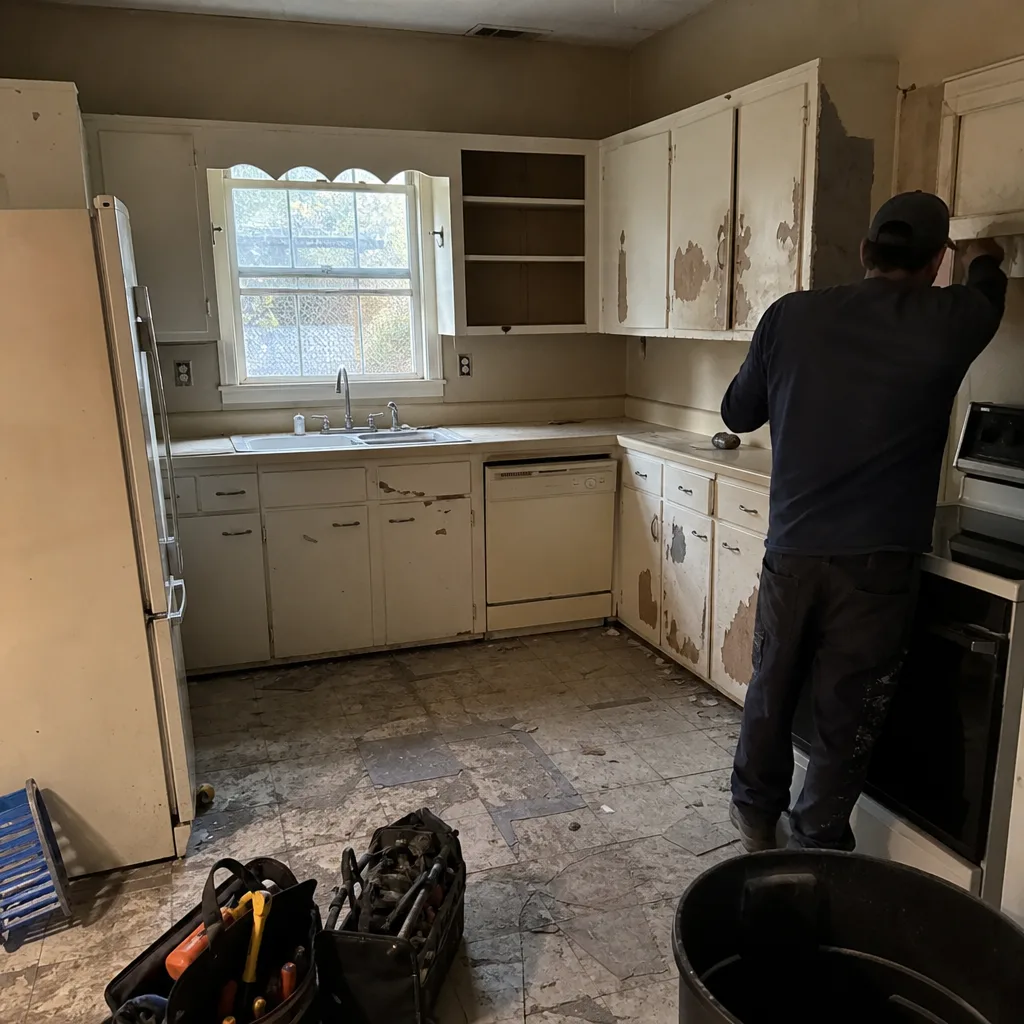 Before
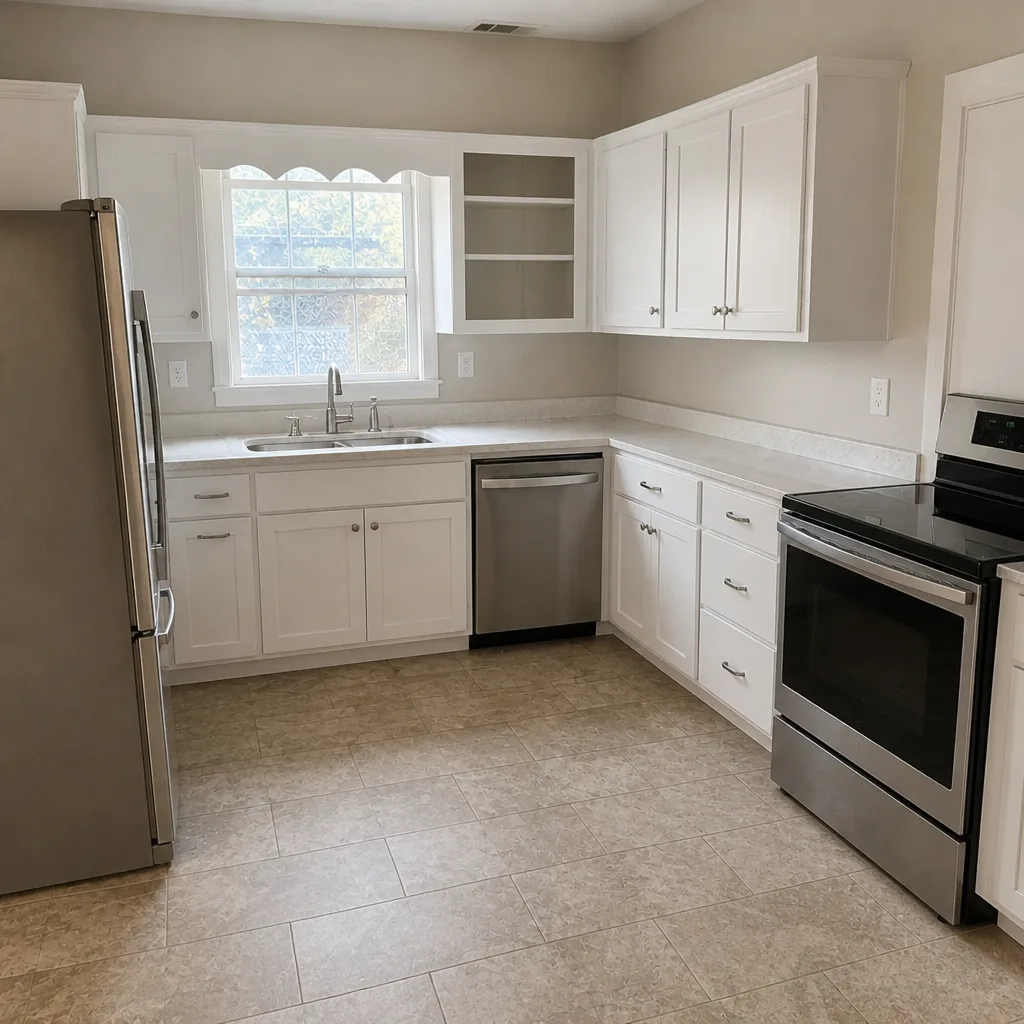 After
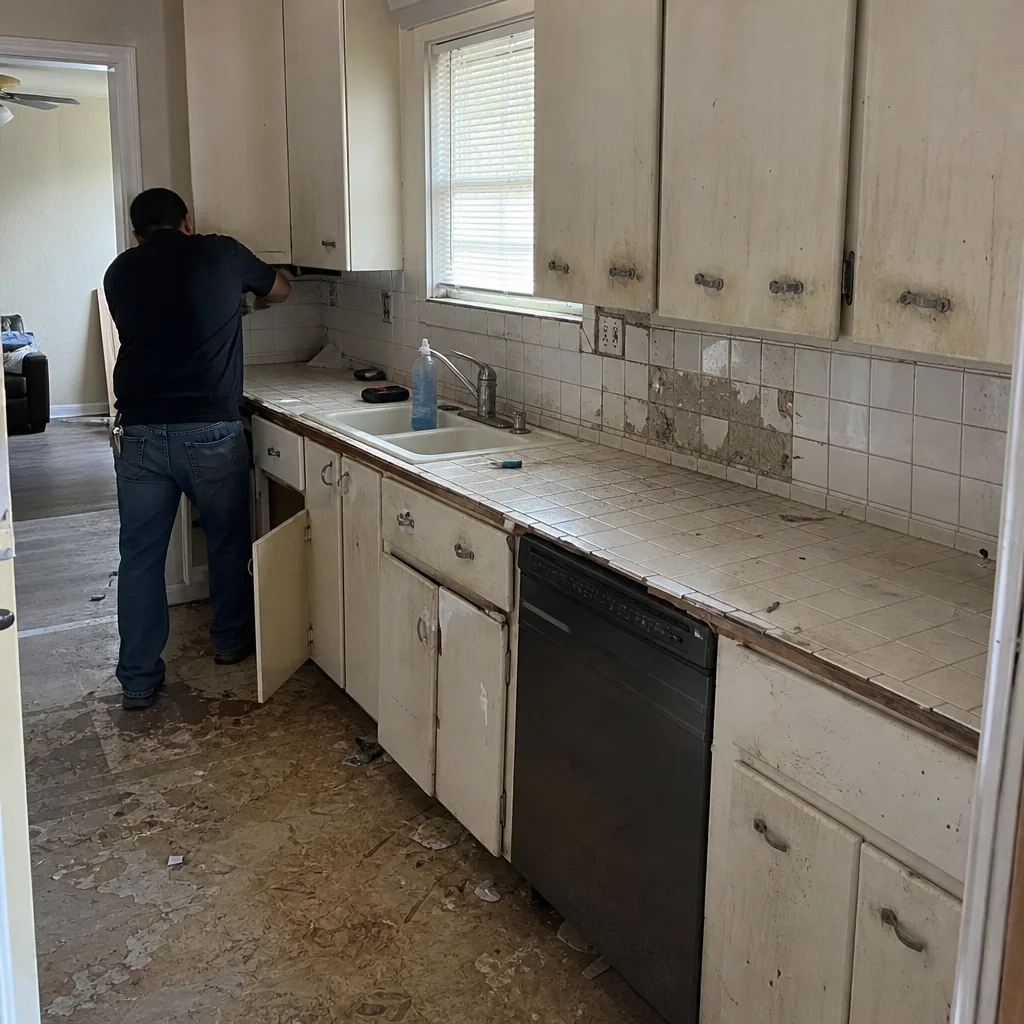 Before
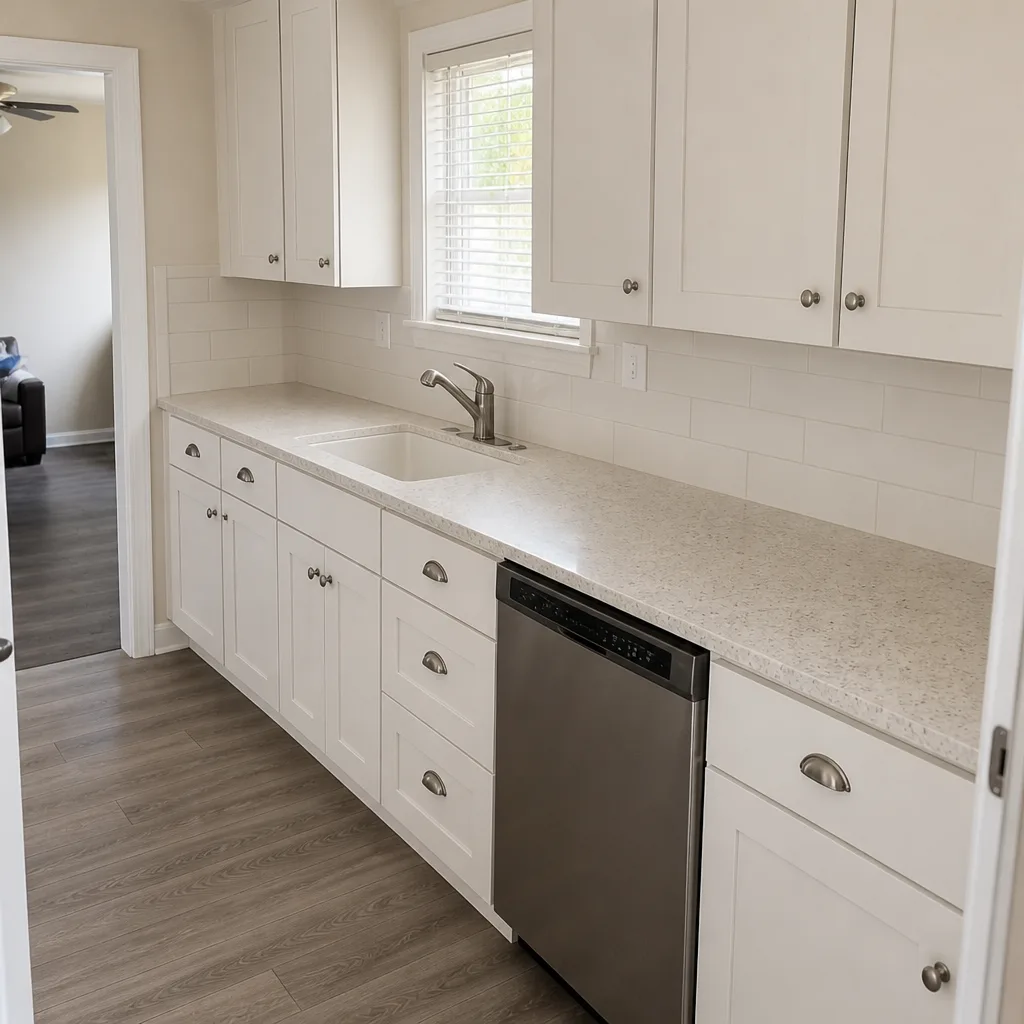 After
Frequently Asked Questions
Edge restraint failure is usually the first visible sign: a gap at the perimeter of the driveway that starts narrow and widens over a season. Measure it with a tape. Anything over 1/4 inch warrants investigation, and the gap almost always shows up alongside joint sand loss and weed infiltration in the same area. Call Rowan Construction Group Dallas at (833) 954-5327 for a free estimate if you’ve measured a gap.
Paver repair in Dallas runs from about $150 for a single rocking paver reset to $2,800 for a full edge restraint replacement, and $2,500 to $6,000 for a field section rebuild of 100 to 200 square feet. Full rebuilds typically run $12,000 to $28,000. Rowan delivers a flat written price before work starts, so the number doesn’t move. Call (833) 954-5327 for an exact quote; estimates are free.
Joint sand top-off alone only works if the edge restraint is intact. If the restraint has failed, fresh sand washes out with the next Dallas storm and the underlying base issue remains. Top-off is a maintenance task; edge restraint investigation is a contractor task. If you’ve measured a gap over 1/4 inch, have it looked at before re-sanding.
Seam-line cracking is usually joint-fill loss, not a paver problem. The joint sand has eroded below flush and the paver edges are now bearing on each other. Cracking across the paver faces is different; that pattern indicates base movement and needs a site visit. In Dallas, the combined heat cycle and clay soil movement accelerates both.
Dallas permits for paver driveways depend on scope and whether the project touches drainage or right-of-way. Permits are pulled and inspections passed when the scope requires them, and the permit status is part of the written price. Ask for the permit line on the quote. Call (833) 954-5327 to schedule the free estimate and get the scope clarified before any work proceeds.
No. Under Clause 1 of the Haven Standard, Rowan delivers a written price before any work begins, and no change proceeds on a change until the change order is signed. That’s the discipline that has kept Rowan’s projects within a few percent of the agreed cost across 4,000-plus jobs. If a change is needed mid-project, you’ll see it in writing before anyone touches the driveway.
The Bottom Line
The warning signs that precede a paver driveway failure are visible 6 to 18 months before the failure itself, and they’re usually easy to dismiss. A widening edge restraint gap, joint sand dropped below flush, a single rocking paver, a pattern of efflorescence, a blocked drainage channel, cracking along the seams – each is a structural signal, not a surface imperfection. Document with a ruler, re-photograph in 30 days, and answer the three threshold questions. Standing water against a foundation is an immediate call; a single rocking paver is a schedule-soon item. That decision, made early, is the difference between a $400 repair and a $4,000 rebuild. For Dallas homeowners, the free estimate is the low-risk next step: Rowan Construction Group Dallas home, written price before any work starts, and a documented photo record on every visit.
Call (833) 954-5327 to schedule your free estimate with Rowan Construction Group Dallas. Written price before any work starts, no change order without a signature, and the 365-Day Done Right Promise on the work.
Written by the team at Rowan Construction Group Dallas.