Last updated November 17, 2026
Free written scope consultation - allowances, timeline, and change-order rules on paper before a single trade is scheduled
The Complete Bathroom Remodeling Guide for Dallas Homeowners
A $500 tile allowance in a Dallas bathroom bid covers roughly 80 square feet of builder-grade ceramic at $6 per square foot installed. Choose a $14 per square foot porcelain instead and the project is already $640 over budget before anyone discusses grout. That gap is not a mistake. It is how the bidding model is built, and it is why so many Dallas bathroom remodels finish thousands of dollars above the number the homeowner first signed. This guide replaces the allowance with real installed price ranges by named brand and product tier, so your first budget lands close to your final one. We’ll cover cost by bathroom type, what Dallas plumbing and slab work actually costs, how the permit and inspection sequence runs, and how to read a bid line by line.
Quick Answer
A full bathroom remodel in Dallas typically costs $18,000 to $45,000 for a hall or secondary bath and $40,000 to $85,000-plus for a primary suite with a layout change. The single biggest driver of overruns is the allowance: contractors bid low using placeholder numbers for tile, fixtures, and vanities that homeowners reliably exceed. A written price with real product selections attached before work starts is the fix.
Styles & brands we work with
- Kitchen remodeling
- Bathroom remodeling
- Home additions & ADU
- Roofing
- Windows & doors
- Driveway & pavers
- Fence
Table of Contents
- What Does a Bathroom Remodel Cost in Dallas?
- Fixture Brands and Installed Prices at Three Tiers
- Dallas Plumbing: CPVC, PEX, and Slab-on-Grade
- What Moving a Drain Actually Costs in Dallas
- Dallas Bathroom Remodel Permits and Inspections
- How to Read a Bathroom Bid
- Timeline by Scope
- Common Mistakes to Avoid
What Does a Bathroom Remodel Cost in Dallas?
Cost tracks bathroom type and scope far more than square footage. A powder room is a half bath with no shower and roughly 20 to 30 square feet of finish surface. A secondary or hall bath carries the full fixture set. A primary bath adds a larger tile field, a shower system, and often a layout change. Here is what we see across Dallas projects.
- Powder room (cosmetic refresh): $4,000 to $9,000. New vanity, toilet, mirror, paint, and a stone top. No wet-area waterproofing beyond what already exists.
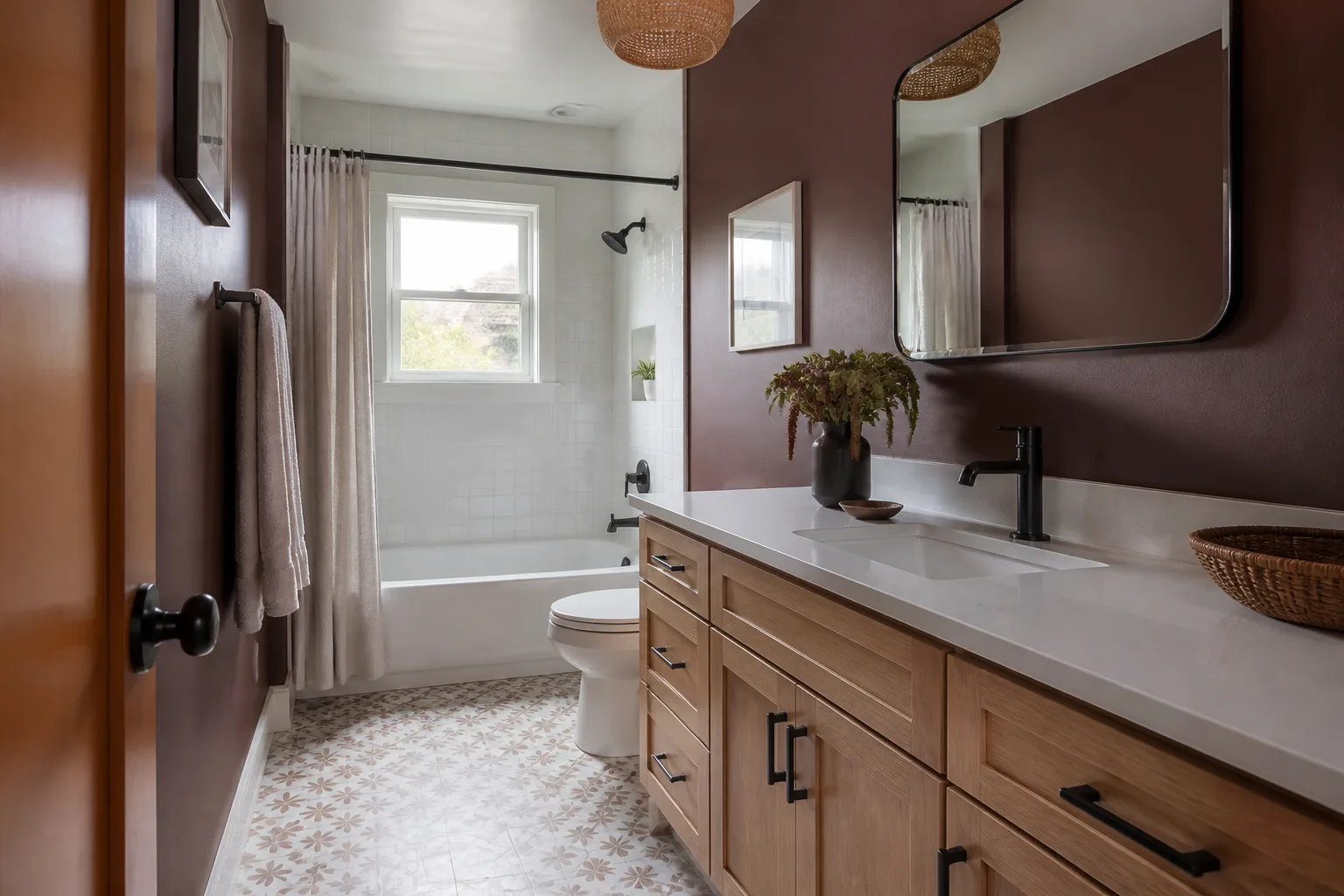
- Secondary / hall bath (mid-level): $18,000 to $32,000. New tub or tub-to-shower conversion, tile surround, new fixtures, and waterproofing.
- Secondary bath (full gut): $28,000 to $45,000. Subfloor repair, new drain location if needed, full tile, and new everything.
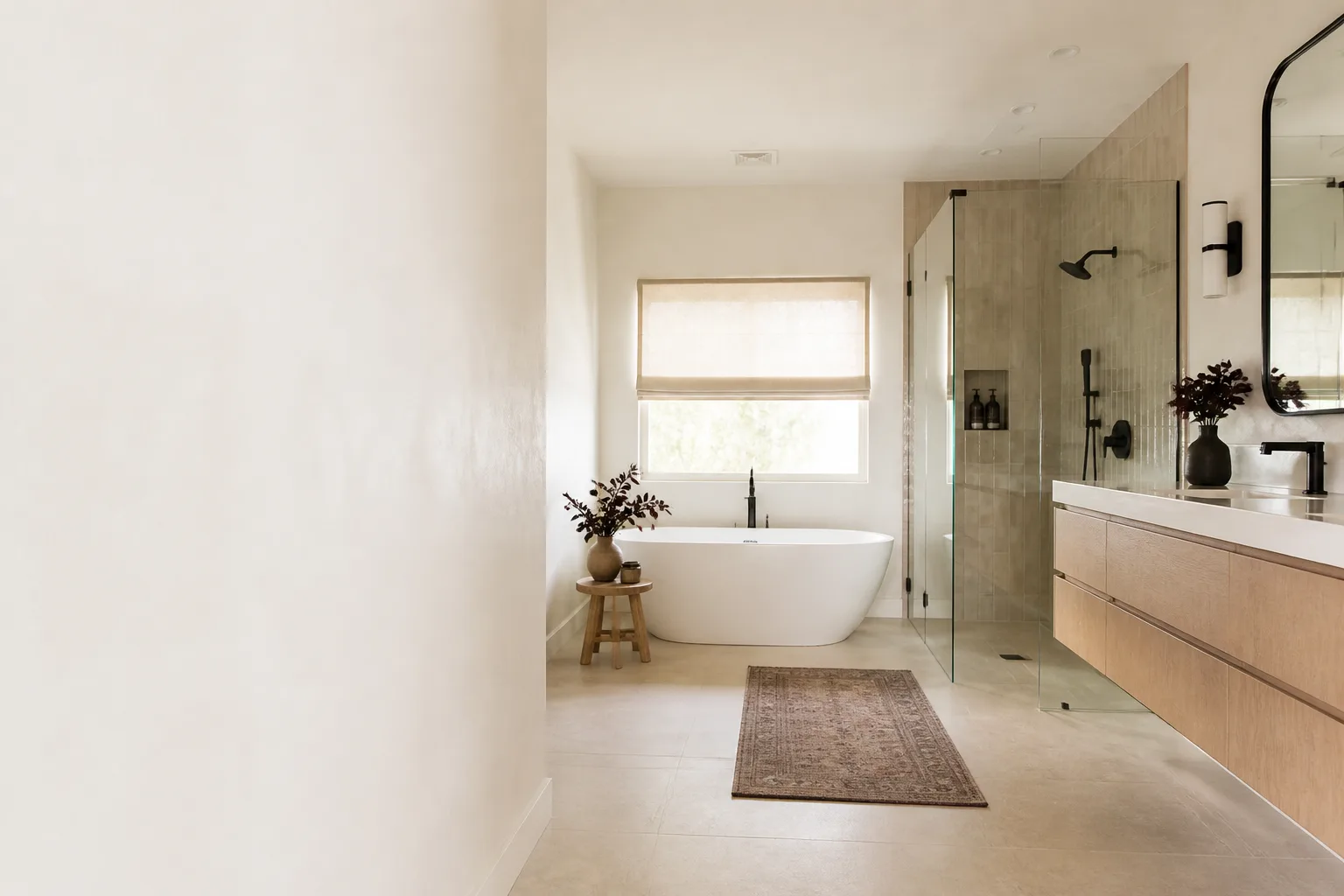
- Primary bath (no layout change): $35,000 to $60,000. Double vanity, large-format tile, frameless glass, freestanding or built-in tub.
- Primary bath (layout change): $55,000 to $85,000-plus. Moving plumbing, removing a wall, relocating the toilet, and reworking the electrical for a heated floor or added lighting.
Those ranges assume a written scope with selections already named. The moment selections are open-ended, the ranges stop meaning anything. A ceramic tile field at $6 per square foot installed and a porcelain slab at $30 per square foot installed are the same installer, the same 40 square feet, and a $960 swing on one line item.
Fixture Brands and Installed Prices at Three Tiers
The fixture brand tells you more about a budget than the fixture count does. We source across more than fifty vetted brands, and the tiers below are the ones Dallas homeowners actually choose. Installed prices include the fixture, supply and drain connections, and labor.
Builder tier
- Moen Adler shower and tub trim: $180 to $320 installed.
- American Standard Cadet two-piece toilet: $320 to $520 installed.
- Delta basic widespread lavatory faucet: $150 to $280 installed.
Mid-range tier
- Kohler Memoirs toilet: $650 to $1,050 installed.
- Delta Trinsic shower system with pressure-balance valve: $480 to $780 installed.
- Kohler cast-iron undermount sink: $450 to $800 installed.
- Grohe thermostatic shower valve: $600 to $950 installed.
Design-forward tier
- Toto Washlet-integrated toilet: $1,400 to $2,800 installed (requires a dedicated GFCI circuit in most Dallas bathrooms).
- Brizo Litze widespread faucet: $700 to $1,100 installed.
- Duravit wall-hung toilet with in-wall carrier: $1,800 to $3,400 installed, and it requires opening the wall to install the carrier.
Notice the pattern. A builder-tier three-fixture package runs $650 to $1,100 installed. The same count in design-forward brands runs $3,900 to $7,300 installed. That is the entire allowance problem in one comparison, and it is why we name brands and installed prices in the written quote before anyone lifts a tool.
Dallas Plumbing: CPVC, PEX, and Slab-on-Grade
Older Dallas homes, particularly in Preston Hollow and Lakewood, carry supply lines that shape the budget before a single tile is picked. Many were plumbed in CPVC or, in some cases earlier, copper. CPVC turns brittle with age and heat. It develops stress cracks at fittings and fails at joints after a few decades in an attic that reaches 150 degrees in August. When a remodel opens the wall, we find it and we have to address it.
PEX has become the standard replacement. It flexes, it resists freeze damage better, and it costs less to install in a re-pipe. The catch is disclosure, not price. If the supply lines in the wall are CPVC and the bid doesn’t say so, that replacement is coming as a change order once the drywall is open.
The other Dallas constant is slab-on-grade construction. Most of the city is post-tension slab or conventional slab with no basement or crawl space. There is no underfloor access, so every plumbing move happens through the slab. That reality drives the next section.
What Moving a Drain Actually Costs in Dallas
Moving a drain in a Dallas bathroom costs $800 to $3,500, and the number depends on slab thickness and rebar density rather than on the plumber’s hourly rate. Here is how the estimate breaks down:
- Locate and mark. A scan identifies post-tension cable and rebar locations. Moving without that scan risks cutting a tensioned cable.
- Cut and break the slab. Roughly 2 to 4 square feet of concrete removal around the existing drain. Standard slab runs $300 to $600.
- Re-route the drain line. New PVC under the slab with proper fall to the stack. $400 to $1,400 in labor and material.
- Patch the slab. Matching pours and cure time. $150 to $500, more if the concrete is post-tension and needs engineered repair.
- Waterproof the transition. A new pan and membrane at the new shower location. Never skip this step.
Post-tension slabs add cost because you cannot cut a tensioned cable. The repair typically involves an engineered detail and a licensed structural sign-off. That single condition is why a primary bath with a relocated shower in a 1980s Preston Hollow home often runs $8,000 to $12,000 more than an identical plan with the fixtures left in place. Get that number in the written quote before the slab opens.
Dallas Bathroom Remodel Permits and Inspections
In Dallas, a bathroom remodel needs a permit when the work touches the plumbing rough-in, moves or adds a drain or supply line, adds or relocates a circuit at the electrical panel, or changes a wall. It does not need a permit when you are replacing surface finishes only: new tile over an existing substrate, paint, a vanity swap that reuses the existing rough-in, or a fixture swap in the same location.
The inspection sequence usually runs like this:
- Rough-in inspection. After framing and plumbing lines are run but before drywall goes up. The inspector checks drain slope, venting, and supply line material.
- Electrical rough-in. After wiring, before drywall. Required when a new circuit was added, such as for a Toto Washlet or a heated floor mat.
- Framing and mechanical, if applicable. After any wall change or new exhaust fan ductwork.
- Waterproofing inspection. Where required, before tile. Some Dallas jurisdictions accept a manufacturer’s membrane warranty in place of a flood test.
- Final inspection. After tile, fixtures, and finish are complete. The permit closes here.
The hold points are why timelines stretch. A rough-in inspection that fails on a venting detail sets the schedule back two to five business days while the correction is made and rescheduled. That delay belongs in the timeline conversation, not in a surprise phone call.
How to Read a Bathroom Bid
A bathroom bid has two kinds of line items: fixed costs and allowances. Fixed costs are things like the permit fee, the dumpster, the demolition labor, the inspection coordination. Allowances are placeholder numbers for tile, fixtures, and the vanity where selections haven’t been made. The allowance is where the budget quietly drifts. Here are the three questions to ask about every allowance before you sign:
- “What product does this allowance number actually buy?” If $500 covers ceramic tile at $6 per square foot installed, then ask what happens when you choose the $14 porcelain. The answer should be a written per-square-foot rate and a stated square footage.
- “Is the allowance enough for the fixture the plan shows?” If the plan shows a Kohler Memoirs toilet but the allowance is $250, that number covers an American Standard Cadet at most. The gap is a change order waiting to happen.
- “What is the overage rate, in writing?” The good answer is a fixed labor rate per square foot plus the actual product cost, documented before the change. The bad answer is “we’ll work it out.”
Then ask whether the bid is a flat written price with a written scope and a written warranty. A real quote names the fixture brand, the tile tier, the membrane system, and the permit fee, and it prints a labor rate for anything chosen above the allowance. Under Clause 1 of The Haven Standard, the price is written before anyone starts. If a bid can’t produce that number, pressure the contractor until they do, or bring the bid to us for a free second opinion and we’ll review it line by line at no charge. Reading a bid against the written scope is how the final number stays within a few percent of the agreed one.
Timeline by Scope
Timelines in Dallas follow the inspection hold points more than they follow the size of the room. Here is what we see in practice, assuming permits and selections are ready on day one.
Cosmetic refresh: 3 to 5 days
Paint, a vanity swap reusing the existing rough-in, new mirror and lighting, and a fixture change in the same location. No permit, no inspection hold points. This works well for powder room updates.
Mid-level remodel: 2 to 3 weeks
New tile surround, waterproofing, new toilet and faucet, tub-to-shower conversion. One permit and two inspections, typically the rough-in and the final. Add two to five business days for the rough-in inspection and cure time for waterproofing.
Full gut with layout change: 4 to 7 weeks
Slab work, re-pipe, framing, new circuits, full tile. This is the timeline that includes all four to five inspection hold points. A drain relocation in a post-tension slab adds a structural sign-off, which adds one to two weeks on its own. For the exterior scope that often runs alongside – pavers, fencing, roofing – see Driveway & Pavers in Dallas if the plan touches the driveway, or Fence Installation in Dallas if the yard gets torn up in the process.
Common Mistakes to Avoid
- Budgeting on the allowance number instead of the real price. A $500 tile allowance in a Dallas bid sounds generous until you price the porcelain you actually want. Get the installed rate per square foot in writing.
- Skipping the slab scan before moving a drain. Post-tension cable is everywhere in Dallas slab construction. Cutting one without a scan costs more than the whole drain relocation.
- Assuming CPVC stays in the wall. In older Preston Hollow and Lakewood homes, the brittle supply lines fail when disturbed. Decide upfront whether the re-pipe is in scope.
- Choosing a wall-hung toilet without opening the wall. A Duravit wall-hung toilet needs an in-wall carrier installed before the wall closes. Plan it at demo, not after tile.
- Skipping the permit for a “small” change. Any work touching the plumbing rough-in or adding an electrical circuit needs a permit in Dallas. An unpermitted change can stall a future sale or insurance claim.
- Adding a heated floor mat without the circuit. A heated mat needs a dedicated GFCI circuit. Confirm the panel has space before the electrician arrives.
- Letting someone start without a signed change order. No work proceeds on a change until it’s signed. That discipline is what keeps a bathroom project within a few percent of the agreed price.
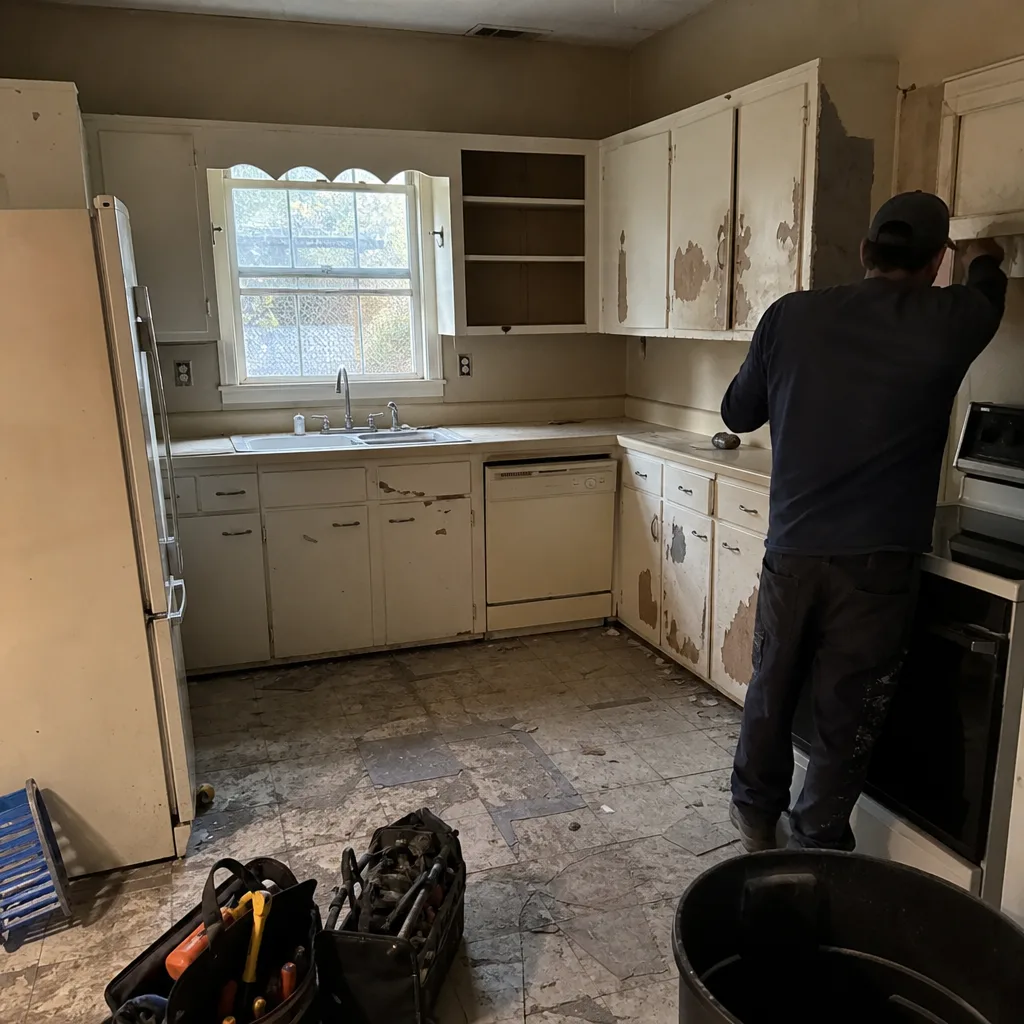
See the difference
 Before
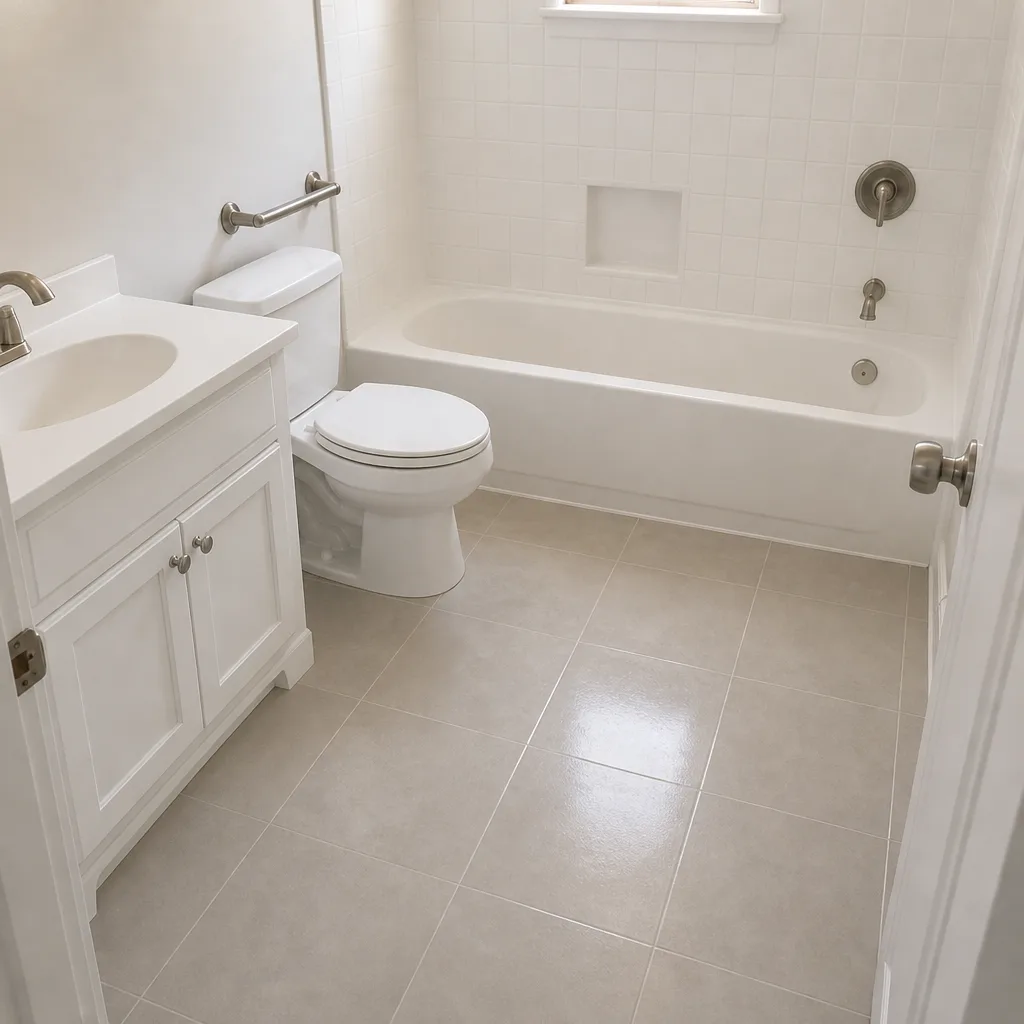 After
 Before
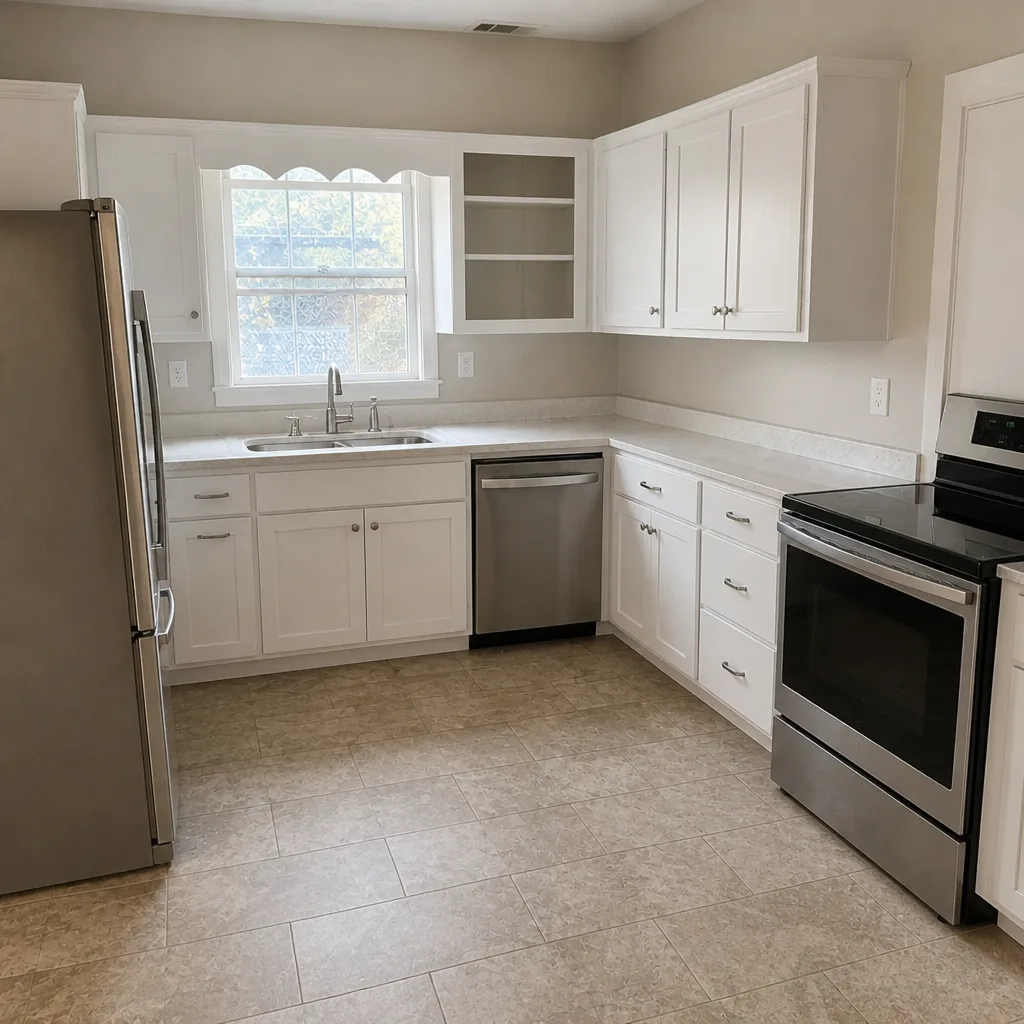 After
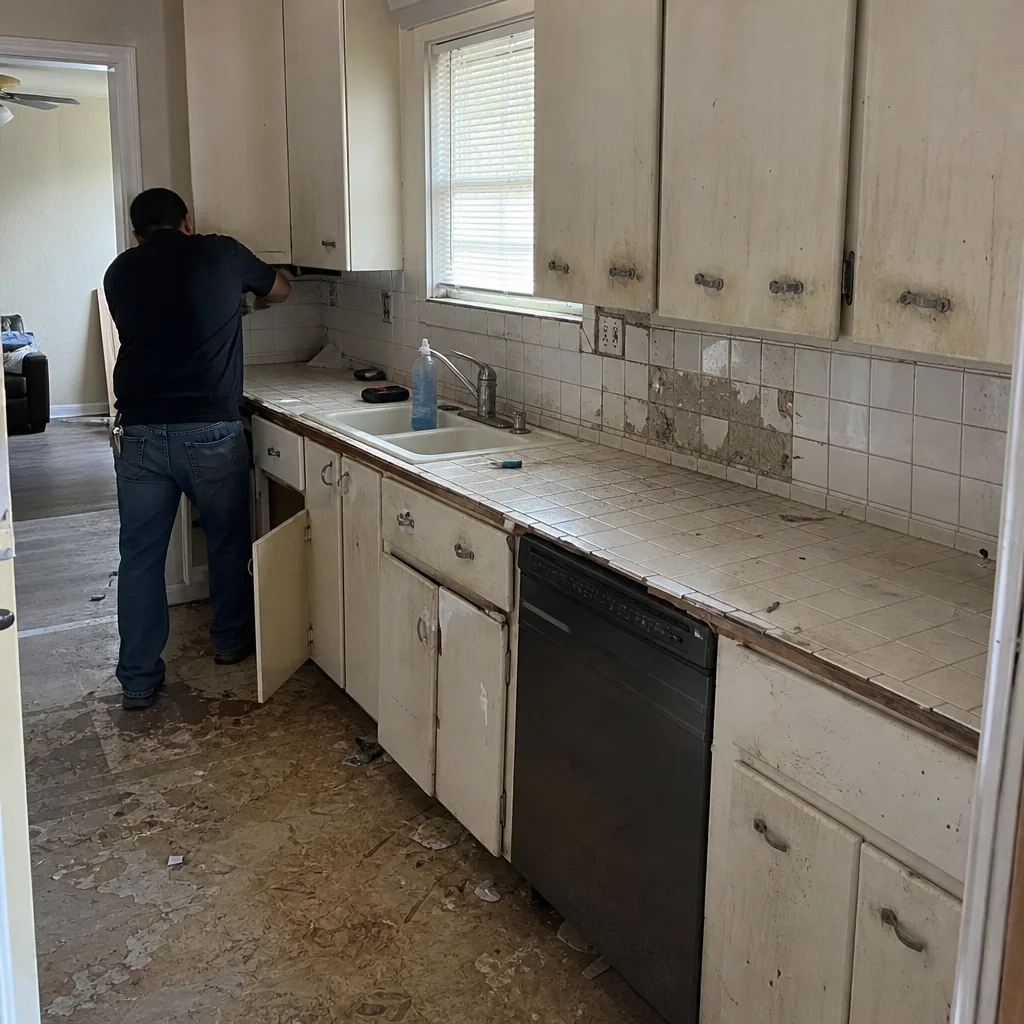 Before
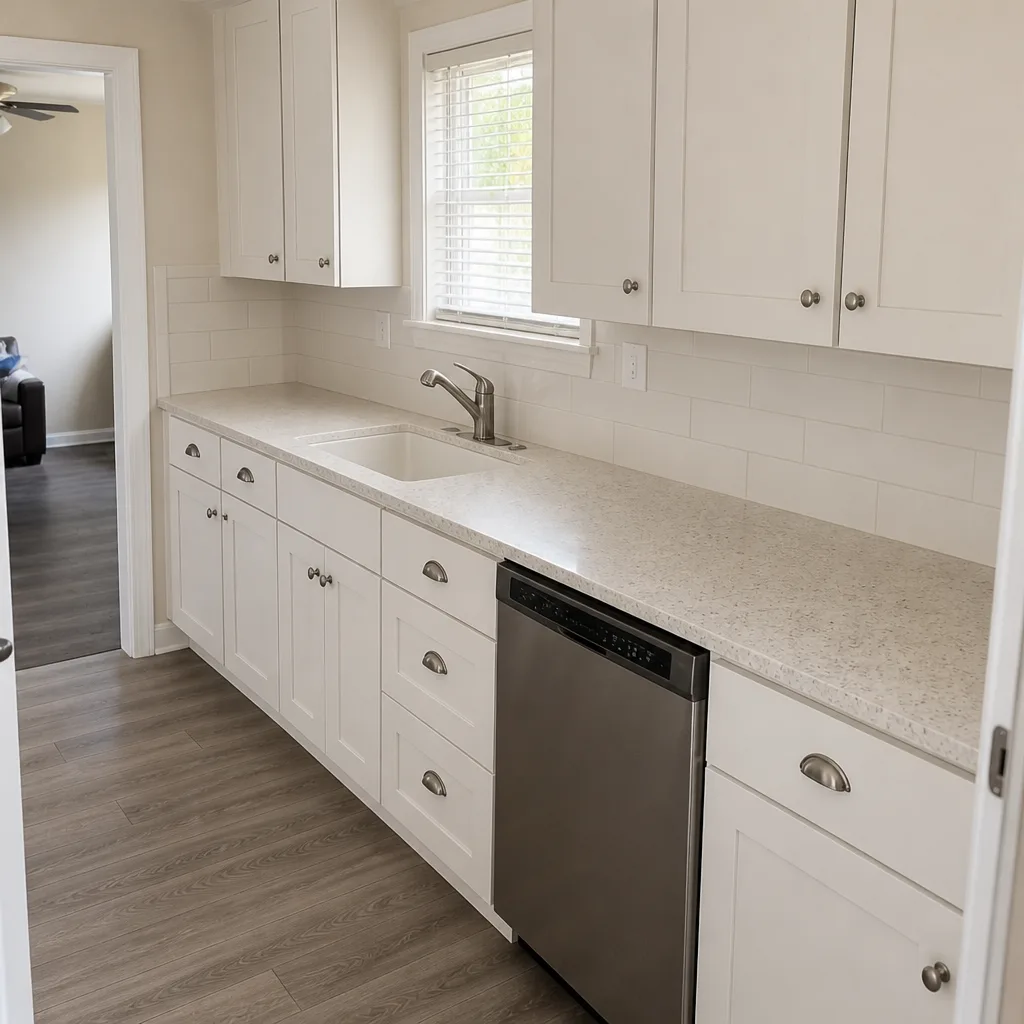 After
When to Call a Professional
Call a licensed professional the moment a bathroom project touches the plumbing rough-in, the electrical panel, a wall, or the slab. Re-routing a drain through post-tension concrete, replacing CPVC supply lines, and adding a circuit for a Washlet or a heated floor are all work that fails inspection or worse when done without a permit and a licensed trade. Waterproofing is the other line: a membrane system installed without the right materials and cure time leaks into a Dallas subfloor and the ceiling below it, and the damage shows up months later. If a bid looks low and doesn’t name the tile tier, the fixture brand, or the permit fee, that’s the moment to get a second set of eyes on it. Rowan Construction Group Dallas offers free estimates in Dallas – call (833) 954-5327 and we’ll give you a written price before anything starts.
Frequently Asked Questions
A secondary bath in Dallas typically runs $18,000 to $45,000, and a primary bath runs $35,000 to $85,000-plus depending on whether the layout changes. The number moves most with tile tier, fixture brand, and slab work, not with square footage. Call (833) 954-5327 for an exact quote on your Dallas bathroom – estimates are free.
A permit is required in Dallas whenever the work touches the plumbing rough-in, moves a drain or supply line, adds an electrical circuit, or changes a wall. Replacing surface finishes and swapping a fixture in the same location usually doesn’t need one. Call (833) 954-5327 and we’ll tell you whether your project needs a permit before you commit.
Overruns come from the allowance model, where the contractor bids low using placeholder numbers for tile, fixtures, and vanities that homeowners reliably exceed. A $500 tile allowance buys roughly 80 square feet of builder-grade ceramic, so a design-forward porcelain choice adds hundreds of dollars before the first change order. Call (833) 954-5327 for a written quote with real product selections attached.
Moving a drain in Dallas costs $800 to $3,500, and post-tension slabs can push it higher because a tensioned cable can’t be cut without an engineered repair. Get the slab type confirmed and the drain cost written into the quote before demo. Call (833) 954-5327 to get that number in writing.
A cosmetic refresh takes 3 to 5 days, a mid-level remodel with new fixtures and tile takes 2 to 3 weeks, and a full gut with a layout change takes 4 to 7 weeks. The difference is the inspection hold points and any slab work. Call (833) 954-5327 and we’ll map the timeline for your scope.
Yes – and we name the installed rate for each selection in the written quote so the number stays real. If you want the design-forward tier with Brizo or Toto, the quote reflects it before work starts instead of arriving as a change order. Call (833) 954-5327 to talk through selections and get a written price.
For the broader work that often pairs with a bathroom project – exterior paving, fencing, or an addition that needs the same written-price discipline – start with our Rowan Construction Group Dallas home page, or read about Home Additions & ADU in Dallas if the bath is part of a larger plan.
The Bottom Line
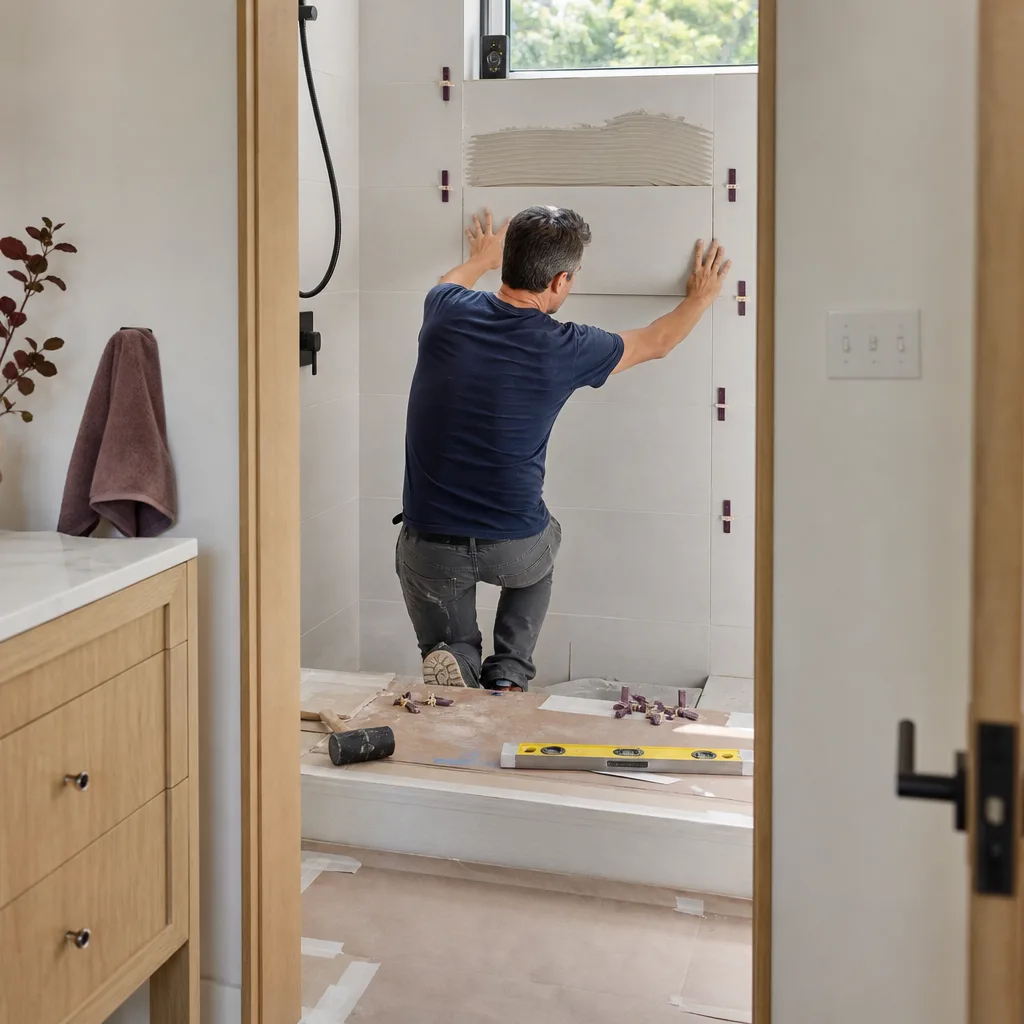
Dallas bathroom budgets drift for one reason: the allowance. A bid that names a $500 tile allowance and a $250 toilet isn’t giving you a price, it’s giving you a starting position. The fix is simple and it’s the whole discipline behind The Haven Standard: name the product, name the installed rate, print the permit fee, and get the fixture brand in writing before anyone touches the wall. Do that and your final number lands within a few percent of the agreed one. Skip it and the $640 tile gap is only the first of many.
Readiness matters more than enthusiasm here. If you’re ready to price a Dallas bathroom with real numbers attached to real products, call Rowan Construction Group Dallas at (833) 954-5327 for a free estimate. We’ll bring a written scope, a flat price, and a fixture list you can screenshot and compare – and if you already have a competitor’s quote, we’ll review it line by line at no charge.
Written by the team at Rowan Construction Group Dallas.