Last updated November 17, 2026
Free written scope consultation - allowances, timeline, and change-order rules on paper before a single trade is scheduled
DIY vs Professional Bathroom Remodeling: What’s Safe to Do Yourself
In Texas, running a new circuit to a bathroom GFCI outlet without a licensed electrician pulling the permit can void your homeowner’s insurance coverage for any fire claim in that room. That’s not a scare tactic – it’s what happens when an unpermitted electrical modification sits behind drywall and an adjuster asks who signed off on it. Most DIY tutorials open with a sledgehammer and a smile. This guide opens with the electrical code, because that’s where the real line gets drawn. What follows maps the tasks you can safely own, the ones that carry permit and warranty exposure, and the honest cost math on doing it yourself in Dallas.
Quick Answer
In Dallas, you can safely DIY painting, vanity hardware swaps, mirror installation, and accessory mounting – low-permit, low-risk work. You should hire licensed trades for anything involving new electrical circuits (TDLR-licensed electrician), plumbing relocations or new rough-in (TSBPE-licensed plumber), and structural changes that require a city permit. The middle zone – tile, drywall, demo – is doable yourself but carries warranty and resale disclosure consequences most homeowners don’t anticipate.
Styles & brands we work with
- Kitchen remodeling
- Bathroom remodeling
- Home additions & ADU
- Roofing
- Windows & doors
- Driveway & pavers
- Fence
Table of Contents
- What Texas Law Actually Requires (and Where the Lines Are)
- Tasks With High DIY Success and Low Legal Exposure
- Tasks That Look Simple but Carry Hidden Consequences
- The Honest Cost Comparison: DIY vs. Hiring Out
- How to Document Your Own Work for Resale in Texas
- The Dallas Permit Process, Step by Step
- Where the DIY Line Sits in Older Dallas Housing Stock
What Texas Law Actually Requires (and Where the Lines Are)
Texas regulates trades through two state agencies, and the boundaries matter more than most homeowners realize. Plumbing is governed by the Texas State Board of Plumbing Examiners (TSBPE). Electrical work falls under the Texas Department of Licensing and Regulation (TDLR). General contracting itself isn’t licensed at the state level in Texas – but the work is regulated through municipal permitting, and Dallas has its own requirements layered on top.
Here’s how the practical line breaks down for a Dallas bathroom remodel:
- New electrical circuits, GFCI replacement where wiring is altered, adding a bathroom exhaust fan circuit: TDLR-licensed electrician required. The 2023 National Electrical Code, adopted in Dallas, mandates GFCI protection in bathrooms, and any modification to that circuit requires a permit and licensed sign-off.
- Moving a toilet, sink, or shower drain, replacing a shower valve, adding a new water line: TSBPE-licensed plumber required. Dallas requires a plumbing permit for any rough-in change.
- Removing or altering a load-bearing wall, cutting a new window opening, expanding the footprint: Dallas Development Services permit required, plus engineered plans.
- Like-for-like fixture swaps (replace a faucet, replace a toilet with the same rough-in): No license required in most cases, though plumbing code still applies. If you crack the shutoff valve during the swap, you’ve created a permit-requiring repair.
We’ve seen Dallas homeowners get caught in the gap between “I’m allowed to do this myself” and “the work I did requires a licensed trade.” The distinction is whether you’re modifying a regulated system or replacing a component within it. Painting a bathroom is neither. Running a new circuit to a heated towel rack is both a modification and an electrical code event.
Tasks With High DIY Success and Low Legal Exposure
Some bathroom work genuinely belongs in the homeowner’s hands. These tasks carry no permit requirement, no license requirement, and near-zero risk of creating a downstream insurance or resale problem if done carefully.
- Painting walls, ceiling, and trim. Budget $80-$200 in materials for a standard 40-square-foot Dallas bathroom. Time: one weekend including cure time. Use a bathroom-rated semi-gloss to handle the humidity swings that come with Dallas summers.
- Swapping vanity hardware and cabinet pulls. $30-$80 in hardware. A drill, a screwdriver, and 45 minutes. No permit, no disclosure obligation.
- Installing a mirror (surface-mount or glue-up). $40-$300 depending on size and whether you use clips or adhesive. Two hours with a level and a stud finder. Avoid drilling into tile without a tile bit – and skip anything near a shower wall where waterproofing membrane may run.
- Mounting towel bars, robe hooks, toilet paper holders, and shelving. $20-$60 in hardware. One hour. This is the most forgiving category of bathroom work, full stop.
- Replacing a showerhead or faucet aerator. $20-$150. Thirty minutes with plumber’s tape. This is a component swap, not a system modification, so no permit applies.
- Regrouting (not retiling) floor tile in dry zones. $40-$100 in materials. One weekend. Grout is cosmetic; removing and replacing grout doesn’t touch the substrate.
These tasks are also the ones our crews see most often pre-done when we quote a Rowan Construction Group Dallas home bathroom remodel. When the work is done right, it saves the customer real money and shortens the schedule. When it’s done wrong, we’re correcting it before the tile goes down.
Tasks That Look Simple but Carry Hidden Consequences
This is where the DIY conversation gets interesting. Several bathroom tasks look like afternoon projects and create problems that surface months or years later – sometimes at resale.
Tile Over Existing Tile
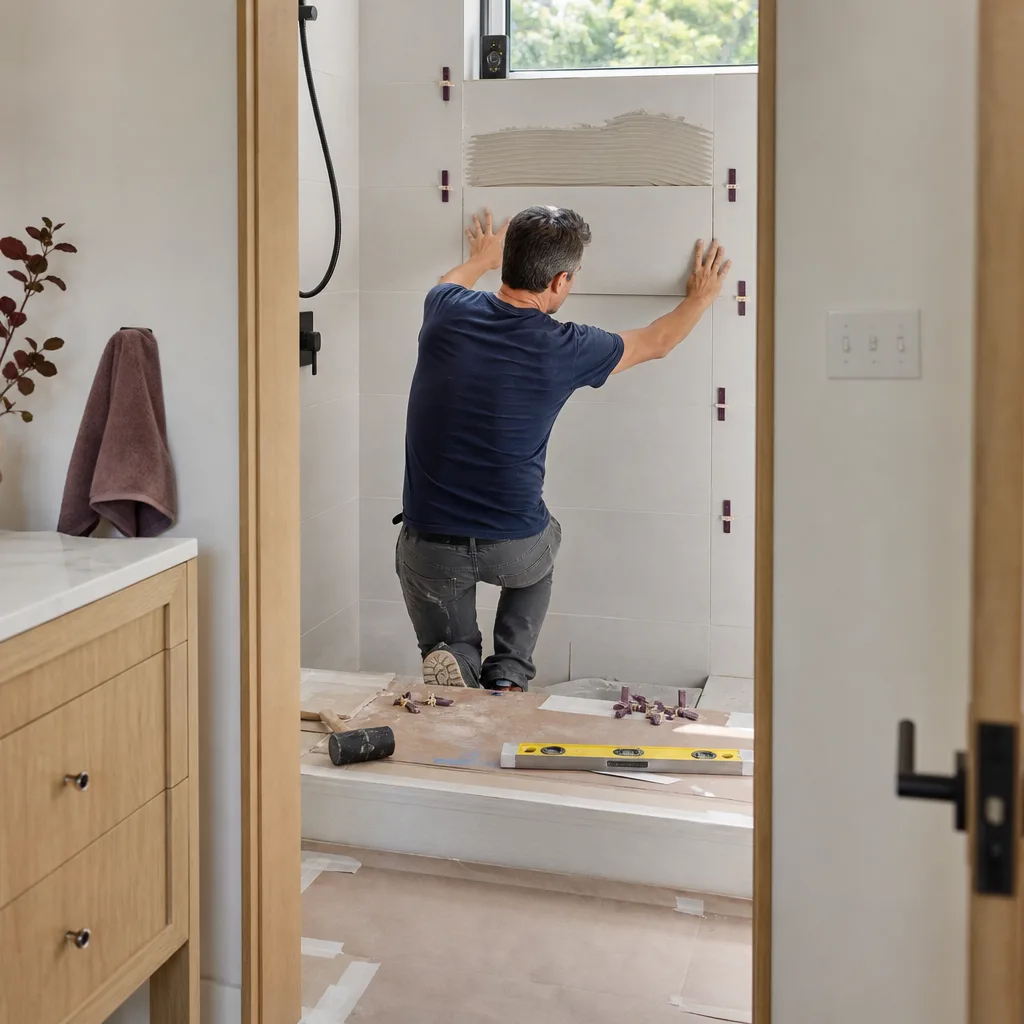
It’s faster than demo. It’s also a warranty problem. Existing tile is rarely flat enough to receive a new layer without lippage (the uneven height at tile edges), and the added thickness affects door swing, shower valve trim depth, and toilet flange height. If you’re using a membrane system like Schluter Kerdi, the manufacturer’s warranty requires installation over an approved substrate – existing tile over the old thinset is not one. In Dallas’s expansive clay soils, the movement in a slab-on-grade bathroom makes double-layer tile especially prone to cracking at the grout lines within a few years.
Re-Caulking a Tub Surround Without Removing Old Layers
New caulk over old caulk is a moisture trap. The old layer is already compromised – that’s why you’re re-caulking. If you don’t cut it out fully and clean the joint down to bare substrate, the new silicone bonds to failing caulk rather than to tile and tub, and the beachhead fails within six to eighteen months. In a Dallas bathroom that runs 75-80% humidity most of the summer, that timeline is shorter than you’d guess.
Installing a New Vanity Without a Shutoff Valve Upgrade
Most older Dallas homes have angle-stop shutoff valves that were never designed to be operated regularly. When you shut them off for the vanity swap and turn them back on, they leak or fail entirely – typically inside the wall. If you’re pulling the vanity anyway, replacing those shutoffs with quarter-turn ball valves is a $30 part and twenty minutes of work that saves you a much bigger repair. This is plumbing work done without a permit in most cases, but it’s also the point where we see homeowners call us mid-project because the valve sheared off.
Replacing a Shower Valve or Cartridge on Old Plumbing
Changing a cartridge is a component swap. Pulling the valve body is a rough-in change requiring a TSBPE-licensed plumber and a permit. The two-hour job that looks like the first is often the second, especially in homes built before 1990.
The Honest Cost Comparison: DIY vs. Hiring Out
The DIY economics in a bathroom remodel are narrower than most homeowners expect. Here’s the math on the tasks that seem like the biggest win:
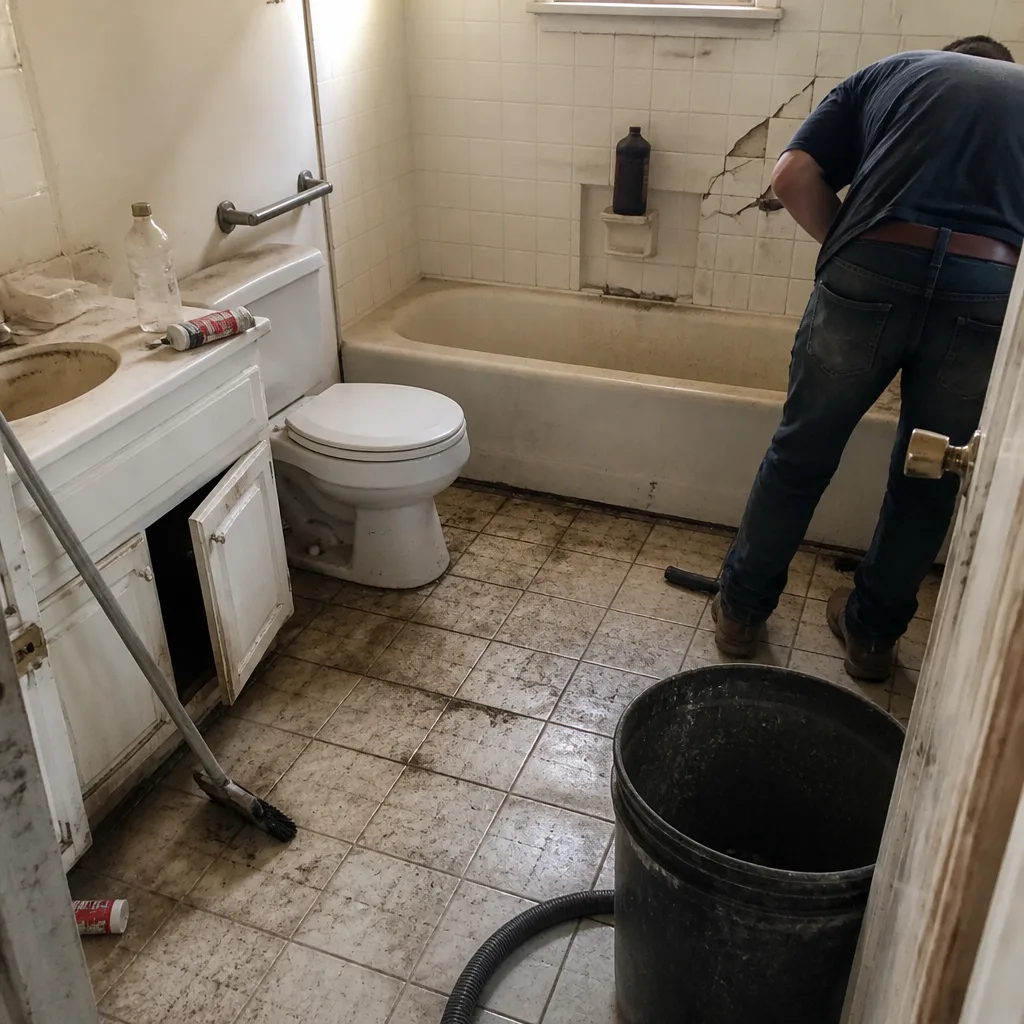
- Bathroom demolition labor: Contractors charge $400-$800 in a Dallas labor market to demo a standard 5×8 bathroom (tile, tub, vanity, toilet out). DIY cost: $0 in labor.
- Disposal: Tile, drywall, and old fixtures weigh 800-1,500 pounds. In Dallas, a dumpster rental runs $350-$550 for a 10-yard unit delivered, dumped, and picked up. Without a truck, haul-by-pickup in multiple runs adds $150-$300 in trips and a $60-$120 dump fee per load at the city transfer station.
- Tool costs: If you don’t own a rotary hammer, a wet saw, and pry bars, expect $200-$500 to buy or $80-$150 to rent them for the weekend.
- Repair allowance: Somewhere in the demo, you’ll discover an unexpected condition – old galvanized pipe, a rotten subfloor patch, an unpermitted previous renovation. A contingency of $200-$500 is realistic.
Add it up: the “$400-$800 saved” in demolition labor is realistically a net savings of $0-$350 after disposal, tools, and contingency. That’s real money, but it’s not the thousands of dollars homeowners assume when they decide to demo their own bathroom. And if the demo opens a wall that reveals a code violation, you’re now responsible for correcting it because your permit pulled the wall open.
For comparisons across other exterior work, our team has priced similar trade-offs in Driveway & Pavers in Dallas, where the DIY-vs-hire math runs differently because material handling (Unilock, Tremron, and Techo-Bloc pavers weigh 12-15 pounds per square foot) quickly tips the balance toward professional installation.
How to Document Your Own Work for Resale in Texas
Texas doesn’t require a seller’s disclosure of DIY work specifically – but the Texas Property Code Chapter 5 requires disclosure of known defects. If your DIY shower pan leaked and you knew, you must disclose. If you did the work correctly and documented it, you’ve protected yourself.
What Dallas buyers’ inspectors flag most often when reviewing DIY bathroom work:
- Missing permit records. Dallas Development Services keeps a permit history for every address. An inspector will pull it. Unpermitted electrical or plumbing work that shows up in the record gap is a negotiation point – buyers ask for a credit of 1-3% of contract price, or back out.
- Non-compliant GFCI protection. A 2017 or later remodel should have GFCI outlets in the bathroom. No GFCI, no passing inspection, no clean sale.
- Improperly sloped shower pans. Water pooling at the edge of the drain instead of at the drain is the single most expensive DIY fix we’re asked to make. Tear-out and re-pour.
- Tile lippage and grout cracking. Cosmetic on its own, but it signals substrate problems that a buyer’s inspector will escalate.
- Missing weep holes or improper shower door installation. Water intrusion follows.
The fix is simple: photograph everything. Take continuous video of every wall cavity before you close it back up. Keep receipts for every product (this also supports manufacturer warranties). If a licensed trade is involved at any point, keep the permit number and the sign-off. In our experience, a documented DIY bathroom with photos and receipts closes the same as a professionally remodeled one – a bare one doesn’t.
The Dallas Permit Process, Step by Step
If your bathroom remodel touches plumbing or electrical rough-in, a permit is required by Dallas Development Services. Here’s the actual sequence we follow:
- Determine permit type. A minor remodel (no structural, no footprint change) typically uses a residential remodel permit. Structural changes require a separate structural permit with engineered drawings.
- Submit plans. Dallas uses an online portal for residential permits. Turnaround for a straightforward bathroom remodel permit runs five to fifteen business days depending on review load.
- Pay fees. Fees are calculated on project valuation. A $15,000 Dallas bathroom remodel permit runs roughly $200-$400.
- Schedule rough-in inspection. After framing and rough-in plumbing/electrical but before insulation and drywall. This inspection is non-negotiable – if the drywall is up, the inspector won’t pass it.
- Final inspection. After tile, fixtures, and finish work. The permit close-out is the document that proves the work was done to code.
When we quote a bathroom remodel, the permit cost is itemized on the written price – not hidden in the labor line. Under Clause 1 of The Haven Standard, the price is written before anyone picks up a tool, and that includes the permit line. No work proceeds on a change until the change order is signed, which is the discipline that keeps projects within a few percent of the number the customer agreed to.
Where the DIY Line Sits in Older Dallas Housing Stock
Dallas’s housing stock shapes the DIY conversation more than most homeowners account for. Homes built before 1980 – common in East Dallas, Oak Cliff, and parts of Lakewood – frequently have original cast iron or galvanized plumbing, and a simple vanity swap can open into a $2,000 unplanned plumbing replacement when the old shutoff snaps. Homes in the 1990s-2000s build range across Plano, Frisco, and Richardson are more forgiving of component swaps but often have polybutylene supply lines that fail without warning during any pressure change.
We’ve also watched what we call spring fails – caulk lines and shower pan seals that look fine through winter and give way in April and May as humidity climbs. If your bathroom is on the second floor, even a small seal failure becomes a ceiling repair in the room below. That’s not a reason to skip DIY entirely, but it’s a reason to hold the tiling and shower sealing work to a higher standard than the painting.
For the exterior-adjacent trades where Dallas climate matters, our team has written the same cost-and-scope analysis on Fence Installation in Dallas and Home Additions & ADU in Dallas – the decision framework mirrors this one: know which parts of the work require licensed trades, then decide where your own time earns a real return.
Common Mistakes to Avoid
- Assuming a permit is optional for rough-in changes. In Dallas, plumbing and electrical permit records are searchable by address. An unpermitted remodel that hits resale becomes a buyer’s leverage point worth 1-3% of the sale price.
- Buying materials before measuring the existing rough-in. Standard Dallas vanities expect a specific drain and valve offset. If your existing rough-in is off-standard, that vanity sits in your garage while you re-measure.
- Skipping the waterproofing membrane because the old tile didn’t have one. Older tile was set with a thick bed of mortar over metal lath, which functioned as the waterproofing layer. Modern tile installed without a membrane (Schluter, RedGard, or similar) has no waterproofing at all. This is the single most expensive DIY error we see.
- Re-caulking over failing caulk. If you didn’t remove the old line down to bare tile and tub, the new caulk is sitting on a moving surface. It’ll fail.
- Demo work done without shutting off water and gas properly. Turn the main water shutoff, not just the angle stops. If you have a gas water heater in the bathroom closet, that closet comes off the DIY list entirely.
- No photo documentation before the walls close. Buyers’ inspectors and manufacturers’ warranty departments both require it. Continuous walkthrough video is the cheapest insurance you’ll take out on the project.
- Installing a new vanity over old, seized shutoff valves. A $30 upgrade prevents a $400 emergency leak call the first time you toggle the valve.
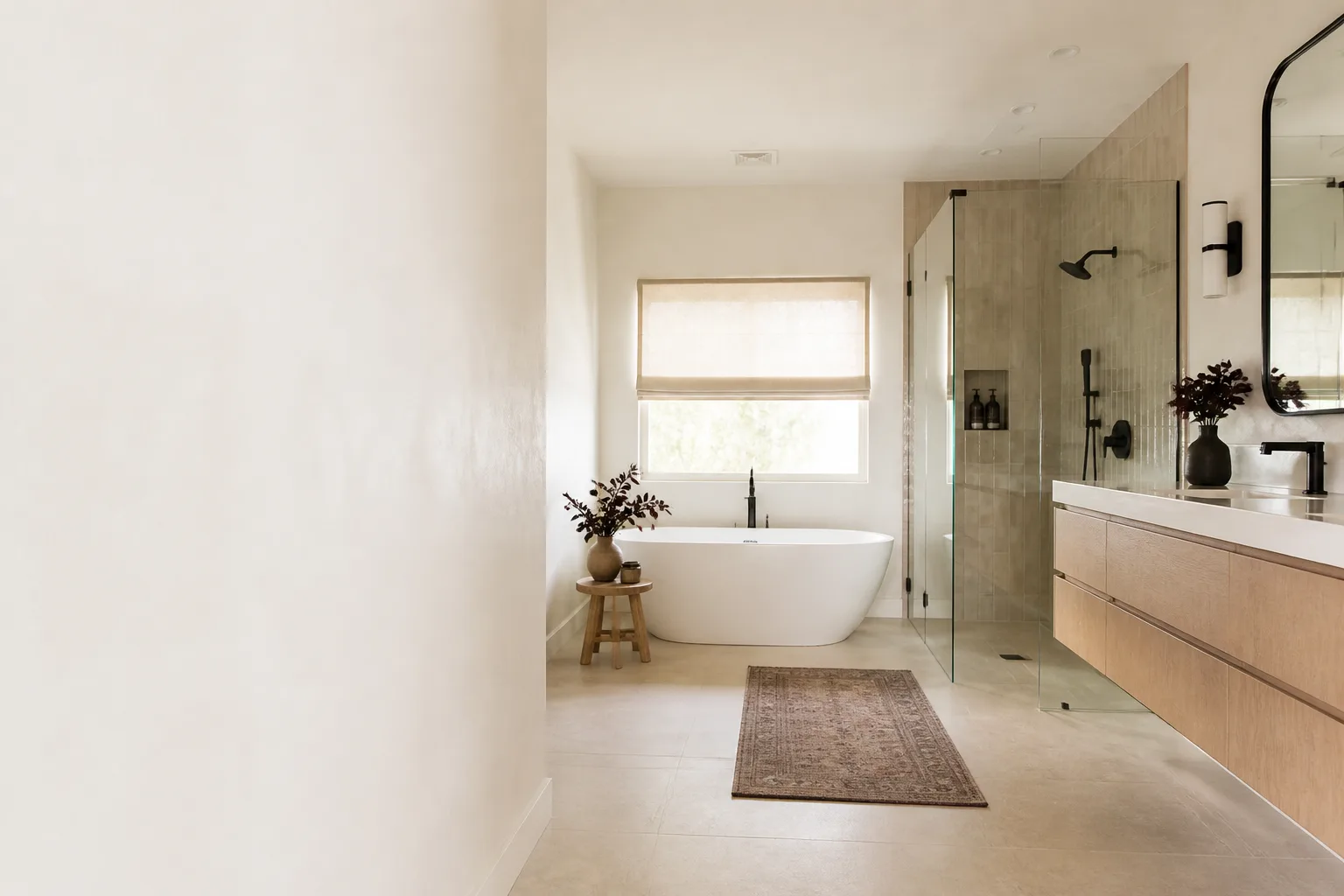
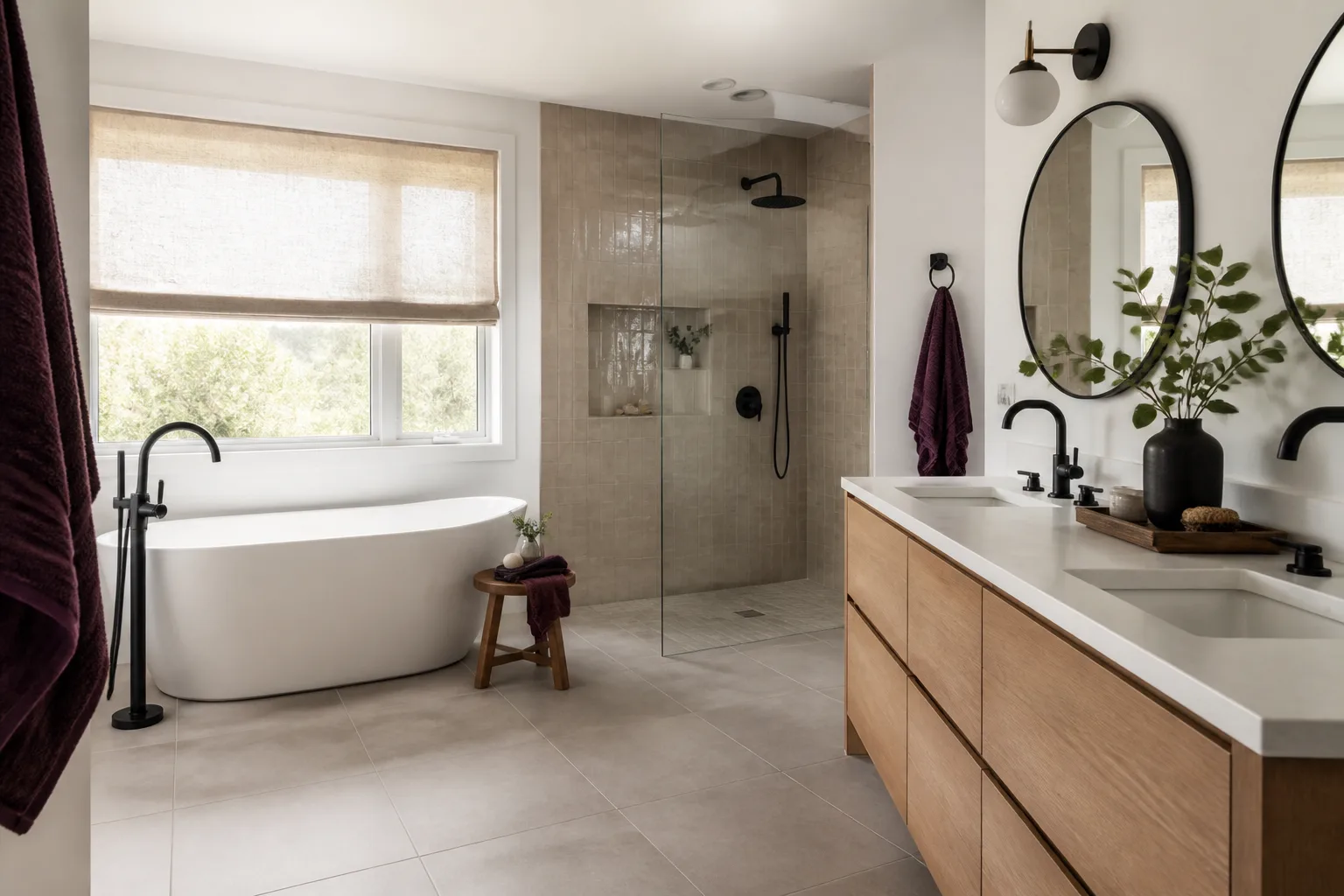
See the difference
 Before
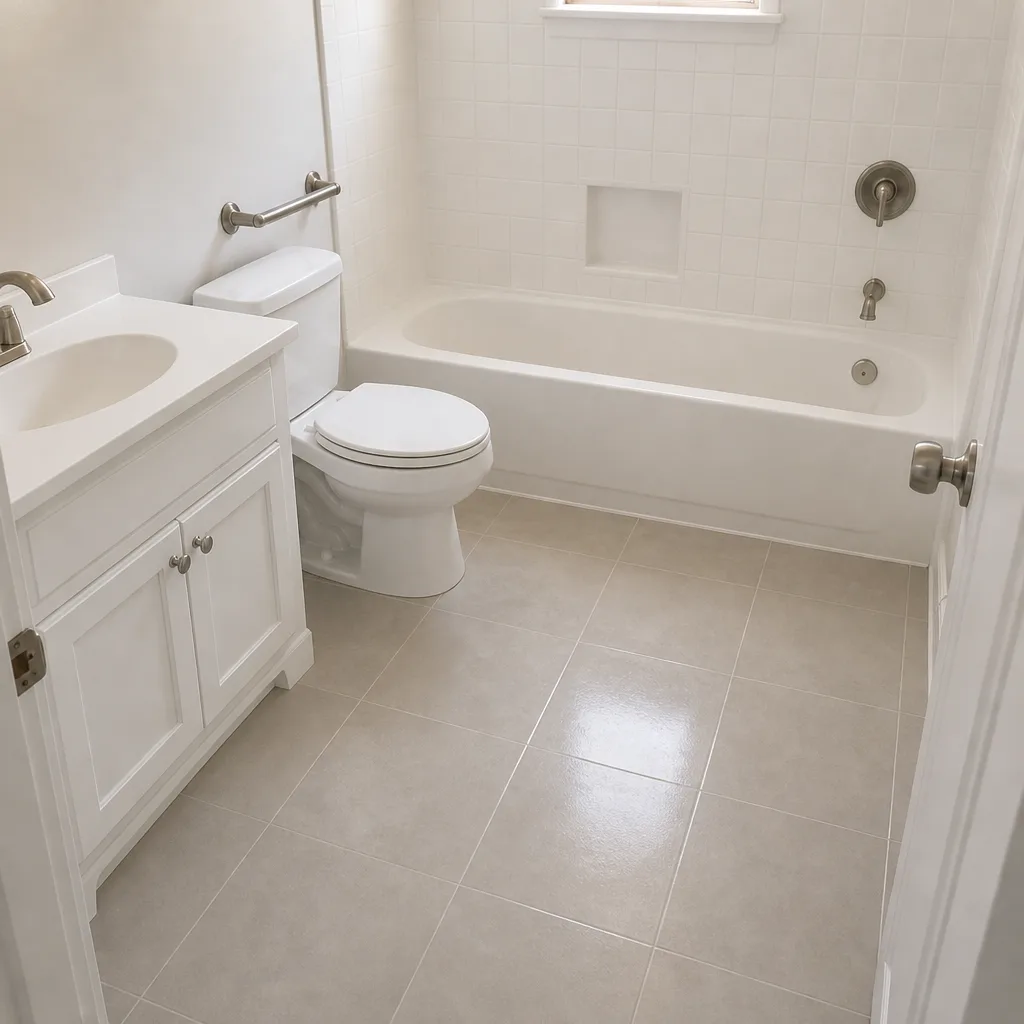 After
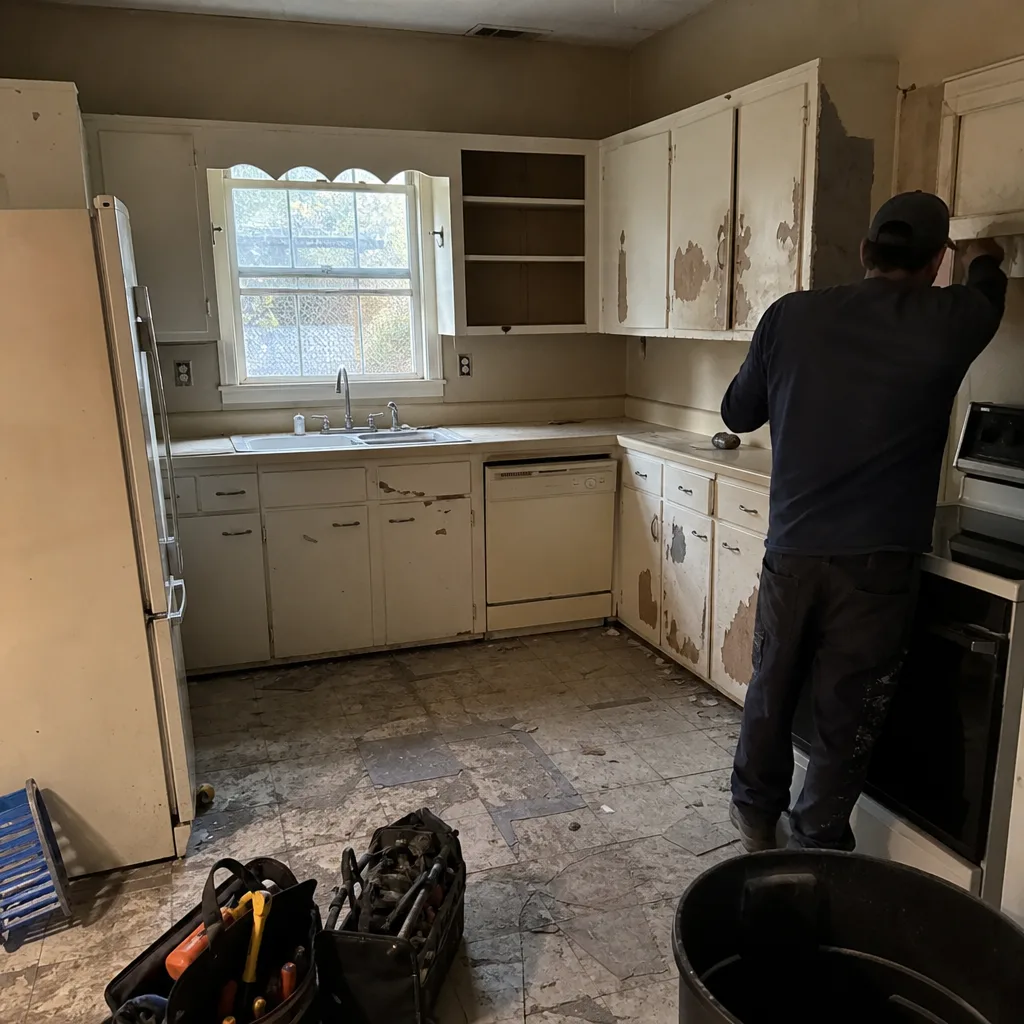 Before
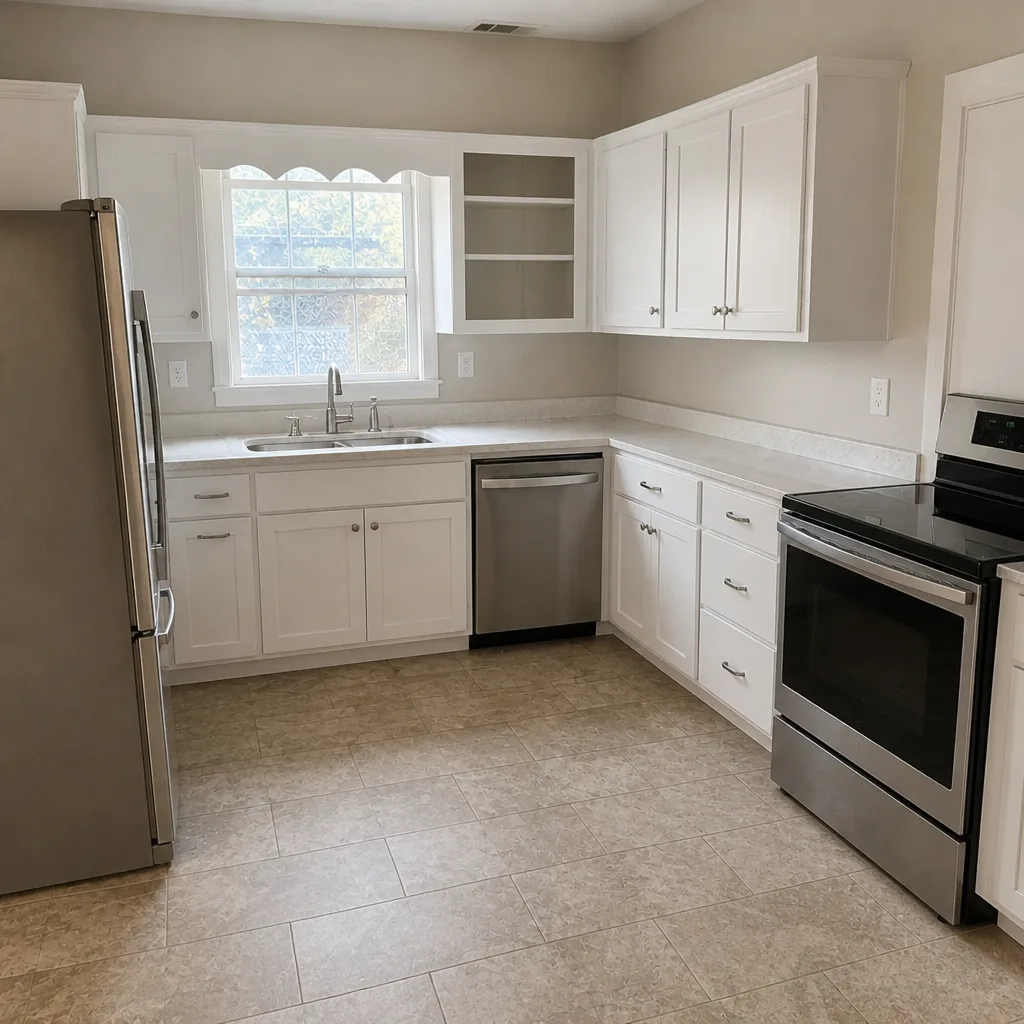 After
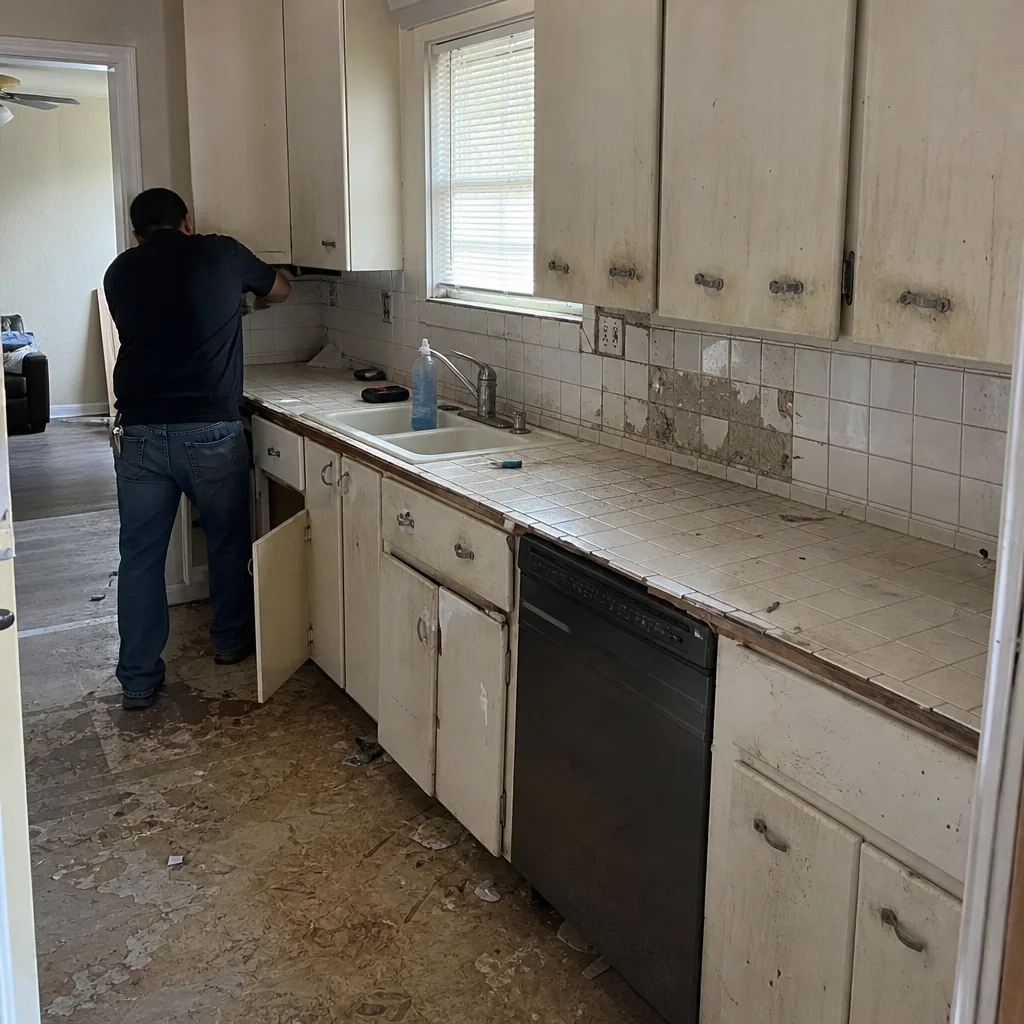 Before
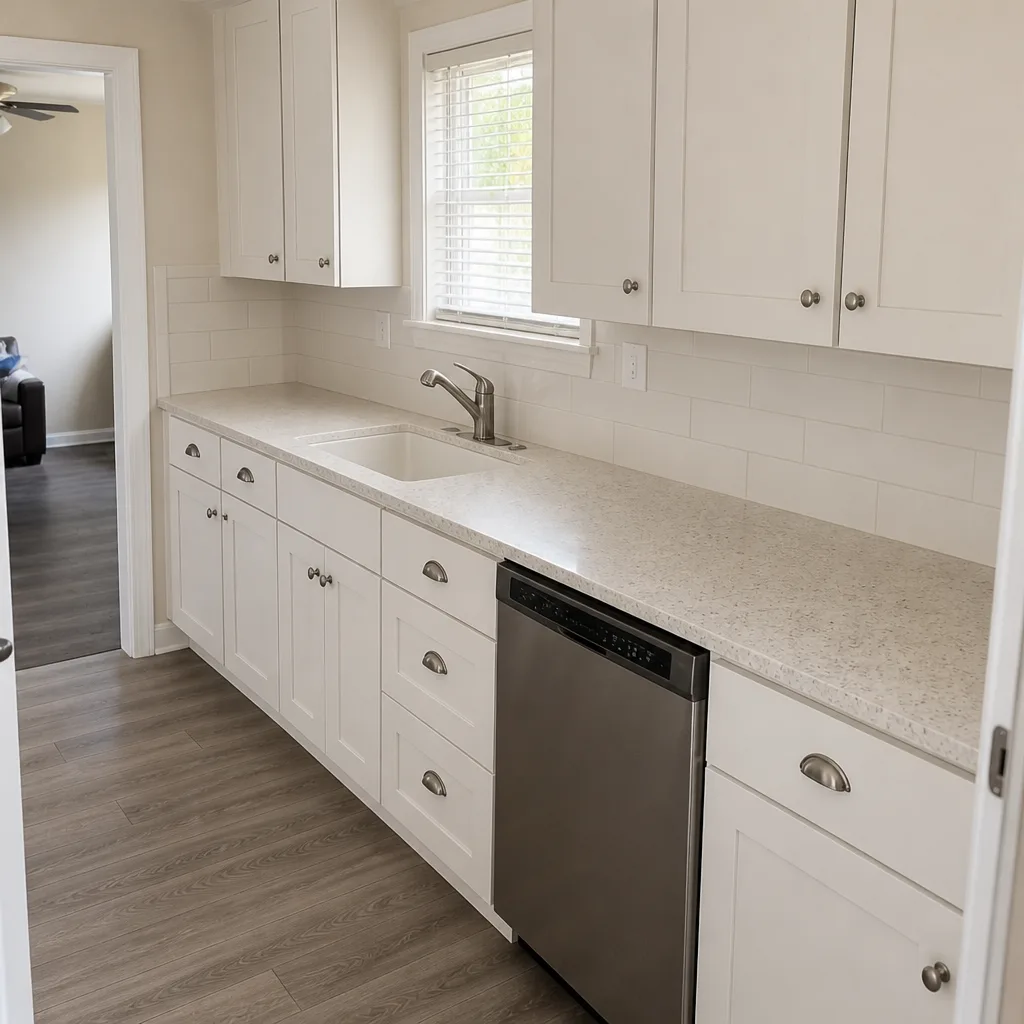 After
When to Call a Professional
Call a licensed trade – not a handyman, not a YouTube deep dive – when the work touches: any new electrical circuit or GFCI modification (TDLR electrician), any plumbing rough-in change or valve body replacement (TSBPE plumber), any load-bearing wall modification or new opening (Dallas permit plus engineer), any shower pan installation or replacement, and any gas-line-adjacent fixture. If your bathroom is on the second floor and the shower pan or tub surround has failed, call before you attempt a repair – the water has already been migrating, and the ceiling below tells the story. If you’re uncertain whether a task falls inside the permit line, call and ask; that’s a two-minute conversation that prevents a five-figure correction. Rowan Construction Group Dallas offers free estimates in Dallas – call (833) 954-5327 and we’ll walk through the scope with you, line by line, at no charge.
Frequently Asked Questions
You can legally paint, swap fixtures, install mirrors, and do cosmetic work without permits in Dallas. You cannot legally modify electrical circuits, plumbing rough-in, or structural elements without permits and licensed trades – the City of Dallas enforces this through inspection at resale and through complaint-driven code enforcement.
A full DIY bathroom remodel (labor-only savings) realistically runs $4,000-$8,000 in materials for a standard 5×8 bathroom in Dallas. A professionally contracted equivalent ranges from $12,000-$28,000 depending on finish level and trade scope. The DIY savings concentrate in demolition and finish work; the licensed-trade costs (electrical, plumbing, permit) don’t disappear. Call (833) 954-5327 for a free estimate with line-item pricing – the written price comes before any work starts.
Unpermitted electrical or plumbing work can be excluded from coverage if a claim arises from the modification. Most Texas homeowner policies exclude losses caused by faulty workmanship or code violations arising from unpermitted work. A fire in an unpermitted bathroom circuit is the clearest example – the insurer has grounds to deny the claim.
Missing or incorrectly installed shower waterproofing is the single most common and most expensive mistake. Dallas’s humidity and slab movement accelerate the failure timeline. A failed shower pan typically requires full tear-out to fix, which usually costs more than the professional installation would have.
Replacing a toilet with the same rough-in or swapping a vanity cabinet typically doesn’t require a permit in Dallas. If you’re moving the drain or supply line to accommodate a different rough-in, the plumbing change requires a permit and a TSBPE-licensed plumber.
Documented, code-compliant DIY work doesn’t hurt resale. Undocumented DIY work that an inspector flags does – typically as a 1-3% negotiation credit at closing. Keep photos, receipts, and permit records, and the work stands on its own. Call (833) 954-5327 if you want a free second opinion on work you’ve done or plan to do – we’ll review it line by line at no charge.
The Bottom Line
The DIY line in a Dallas bathroom isn’t drawn by skill – it’s drawn by permit exposure, warranty voidance, and insurance liability. Painting, hardware, mirrors, and accessories are yours to own. Rough-in plumbing, new electrical circuits, structural changes, and shower pans are not. The cost savings on DIY demo are narrower than the YouTube math suggests once disposal and tools are counted. Document everything you touch, keep the permits clean, and you’ve protected both the project and the resale. When the work crosses into licensed territory, the written price comes first – that’s the discipline that keeps five-figure projects within a few percent of the agreed number.
Call (833) 954-5327 for a free estimate on any bathroom remodel in Dallas – written, line-item, and in your hands before anyone picks up a tool. We’ll also review any competitor’s written estimate line by line at no charge as a free second opinion, and every visit includes a documented photo record as a standard deliverable.
Written by the team at Rowan Construction Group Dallas.