Last updated November 17, 2026



Free written scope consultation - allowances, timeline, and change-order rules on paper before a single trade is scheduled
Home Additions & ADU Warning Signs Every Homeowner Should Know
Here’s the number that should reframe how you read any home addition proposal in Dallas: a lump sum without a schedule of values cannot be enforced, because there’s nothing in the document to measure it against. The line-by-line breakdown of what each trade and material costs is what turns a number into a price. The warning signs that an addition or ADU is heading toward overruns, delays, or worse are almost always visible before the first shovel hits the ground – in the proposal’s structure, the contractor’s site habits, and the paperwork trail. This guide teaches you to read all three, using the language accountable contractors use and the ones who aren’t accountable avoid.
Quick Answer
The most reliable warning signs of a home addition or ADU project heading sideways are a lump-sum quote with no schedule of values, allowance line items marked “TBD,” and a proposal with no change order clause or markup percentage. During construction, watch for concrete poured in standing water, piers placed without a soils report reference, and draw requests that exceed the schedule of values percentage complete. Any one of these alone is a reason to slow down and ask for documentation in writing.
Styles & brands we work with
- Kitchen remodeling
- Bathroom remodeling
- Home additions & ADU
- Roofing
- Windows & doors
- Driveway & pavers
- Fence
Table of Contents
- What a legitimate addition proposal must contain
- Allowance line items: why “TBD” is a red flag
- On-site warning signs during foundation work
- Permit and inspection red flags
- Financial warning signs mid-project
- How to verify claimed ADU experience in 90 seconds
- Dallas-specific conditions that stress-test an addition
- Common mistakes to avoid
What a legitimate addition proposal must contain
A proposal for a home addition or ADU in Dallas is a contract document, not a brochure. If any of the four elements below are missing, you don’t have a price – you have a starting position that will move. Here’s what a proposal that can actually be enforced contains:
- A schedule of values by trade. Framing, foundation, electrical, plumbing, HVAC, drywall, roofing, and finish work each carry a line with a dollar amount. This is the document that lets you compare draw requests to progress later. Without it, a contractor can bill a 40% draw on a 20% complete job and there’s no paper trail to challenge it.
- Named subcontractors or stated self-perform trades. If the contractor uses subs for electrical, plumbing, and HVAC (most do), the proposal should name them or at least state that they’re licensed and how they’re vetted. “We have a guy” is not a subcontractor disclosure.
- Allowance line items with stated dollar amounts. More on this in the next section, but the short version: every allowance carries a number in dollars, not “TBD.”
- A change order clause with a specific markup percentage. When scope changes – and on an addition, it always does at least once – the markup on that change is written into the contract before work starts. A clause that says “changes billed at cost plus a reasonable markup” is not a number. A clause that says “changes billed at cost plus 15%” is.
Under Clause 1 of The Haven Standard, Rowan Construction Group delivers a flat written price with a written scope before any work starts, on every trade from kitchen remodeling through home additions and ADUs. That’s the standard to hold any contractor to. If the proposal doesn’t meet it, ask why in writing.
Allowance line items: why “TBD” is a red flag
An allowance is a placeholder budget for a material or fixture the homeowner hasn’t selected yet – the tile package, the cabinet tier, the plumbing fixtures. It’s a legitimate tool, used honestly. But an allowance labeled “TBD” or “to be determined” isn’t an allowance; it’s an open-ended check written against your budget.
Here’s how allowances work when a contractor is being straight with you. A cabinet allowance might read “$18,500 for semi-custom cabinetry, KraftMaid or equivalent.” That number is based on a real product at a real price. When you select the actual cabinet line and it comes in at $16,200, you get $2,300 back. When it comes in at $21,000, you pay $2,500 more – but you knew that could happen before you signed, because the number was on the page.
An allowance labeled “TBD” or “at cost” hands the contractor the whole decision. You sign a contract with a price that isn’t actually a price. Three months in, the “allowance” turns out to be $30,000 more than you budgeted, and you have no contractual ground to push back.
- Red flag: allowance line items with no dollar figure, or marked “allowance to be discussed.”
- Red flag: allowance line items that are clearly too low to be real – a $6,000 allowance for cabinets in a kitchen addition when the Dallas market for the product you actually want is $20,000+.
- What good looks like: every allowance carries a dollar figure, a named product tier, and a written policy for what happens if the actual selection comes in over or under.
An ADU adds at least a second kitchen and a second set of bathrooms to the allowance picture. Window and door allowances deserve particular scrutiny, since material selection swings the number significantly. A proposal that names a brand – Therma-Tru for entry doors, Barrette for fencing if the ADU includes an enclosed yard – and prices the allowance against that brand is a proposal that can be held to its number.
On-site warning signs during foundation work
Dallas soil is famously expansive – the black clay that swells when wet and shrinks when dry, cracking slabs and shifting foundations across the metro. An addition’s foundation is the single most consequential piece of work on the whole project, and it’s the part a homeowner is least equipped to judge. Here’s what to watch for, in plain terms.
Piers placed without a soils report reference. A soils report is a licensed engineer’s document describing what’s actually under your lot – clay depth, moisture content, bearing capacity. On a Dallas addition, the engineer who designs the foundation should reference that report in the drawings. If the contractor shows up to drill piers with no soils report on file, the pier depth and spacing are guesswork, and the guess is going to be expensive in year five when the addition separates from the main house. Correct practice: the soils report is in hand before the pier plan is finalized, and the plan cites it by date.
Concrete poured in standing water. Concrete cures by chemical reaction, not by drying. When it’s poured into standing water, the water-to-cement ratio at the bottom of the pour is off, and the concrete at the base of your footing is weaker than the mix design specifies. Correct practice: the trench is dewatered before the pour, and the contractor accounts for groundwater conditions before the day of the pour, not during it.
Foundation not inspected before backfill. Once the dirt goes back in, nobody can verify the rebar spacing, the anchor bolts, or the pier embedment. The pre-backfill framing and foundation inspection is the moment of truth. If the crew is backfilling at 7 a.m. before the inspector has been out, that’s a problem you want to catch that morning.
Permit and inspection red flags
In Dallas, an addition or detached ADU requires a building permit through the city’s development services process, plus separate trade permits for electrical, plumbing, and mechanical. Any contractor who suggests skipping the permit on “just the part that isn’t visible” or “the interior work” is asking you to absorb a liability that will land on you, not them, when the work is discovered.
- “We can skip the permit on this part.” No legitimate contractor says this on an addition. Ever. The permit is your only independent verification that the work meets code.
- Inspections called in without the contractor or homeowner present. The inspection is where deficiencies get caught. If the contractor isn’t there for the rough-in inspection and you aren’t there either, nobody on your side of the transaction is watching the outcome.
- Final inspection passed before HVAC commissioning is complete. The mechanical final inspection requires the HVAC system to be commissioned – refrigerant charge verified, airflow measured, the system actually running. A final inspection signed off before the system has been commissioned means someone signed a piece of paper without verifying the work. Watch the sequencing on this one, because it’s easy to miss.
- “We don’t need a soils report on this one.” On Dallas clay, a structural addition without a soils report is a coin flip. If the contractor is skipping it to save $1,500 on a $200,000 project, that tells you what their priorities look like.
Ask for the permit number before work starts. Dallas’s public permit portal lets you look up any permit in the city by address or number – you can verify the permit exists, that it’s for the right scope, and that the inspections are being logged. A contractor with nothing to hide will hand you that number without hesitation. A contractor who deflects the question has given you your answer.
Financial warning signs mid-project
Cost overrun on an addition rarely arrives as one big shock. It usually shows up as a series of smaller administrative sidesteps, each of which seems reasonable in the moment. These are the four worth watching for.
Draw requests that exceed the schedule of values percentage complete. If the schedule of values says framing is 25% of the contract and framing is 60% complete, the draw for framing should be 15% of the contract total. When a contractor asks for a draw that outruns the actual progress, they’re financing their next job with your money. Compare every draw request against the schedule of values and the actual completion percentage, and ask for the discrepancy in writing if the numbers don’t line up.
Verbal change orders. “We’ll settle up at the end” is a sentence that ends in a disputed invoice. Under the discipline that keeps projects on budget, no work proceeds on a change until the change order is signed. A change order with a description, a price, and a signature protects both sides. A verbal agreement protects no one.
Subcontractors contacting you directly about unpaid invoices. This is a lien risk signal, and it’s serious. Texas has a mechanic’s lien statute that allows unpaid subs and suppliers to file a lien against your property. If a sub calls you asking whether the contractor has been paid, the answer is already no. Ask for lien waivers at every draw – a signed document from each sub confirming they’ve been paid for the work to date. Any contractor who balks at providing lien waivers is telling you something.
Requests for large draws ahead of material delivery. On a legitimate project, draws follow work and materials, not the other way around. A draw for lumber is normal once the lumber is on site. A draw for lumber before the order has been placed is a cash flow problem on the contractor’s side that is about to become yours.
How to verify claimed ADU experience in 90 seconds
Every contractor in Dallas will tell you they’ve built ADUs. Very few can produce the permit number on a completed one. Here’s the check, and it takes less time than reading the rest of this paragraph.
- Ask for the permit number on a completed ADU in Dallas. Not “a project in the area,” not “a client who can vouch” – a permit number from the city, tied to a specific address you can verify.
- Open the Dallas public permit portal and look it up. The portal shows the permit type, the address, the issue date, the inspection history, and the final status.
- Read the inspection history. A permit that shows a rough framing correction, a re-inspection, and a passed final is a normal project. A permit that shows “expired” or “withdrawn” is a project that stalled. A permit that doesn’t exist is a claimed experience that never happened.
What separates documented experience from claimed experience is that one has a permit number you can verify and the other has a story. Rowan Construction Group has delivered 4,000-plus projects since 2007, every one with a written price before work started and a documented record when the crew left. That’s the standard to demand from anyone you hire for an addition in Dallas.
While you’re verifying, ask about related scope. Many addition projects pull in a new driveway approach or expanded parking, which involves Driveway & Pavers in Dallas and its own permitting considerations. If the ADU includes a fenced yard for privacy, Fence Installation in Dallas is a separate scope that should appear in the proposal with its own line items. A contractor who prices all of it in one lump sum has given you the same problem on a bigger number.
Dallas-specific conditions that stress-test an addition
An addition in Dallas faces conditions an addition in a colder climate doesn’t. The expansive clay soils move with the seasons, and an addition on a different foundation type than the original house will move differentially – which shows up as cracks at the joint between old and new. That joint is where you’ll see the first evidence of an underbuilt foundation, and it typically shows up within two to three years.
Summer heat pushes HVAC load calculations hard. An addition tied into the existing system without a fresh manual J load calculation will underperform in July and August, when a Dallas cooling system is running near its limit. Ask whether the HVAC scope includes a new load calculation and whether the addition gets its own system or ties into the existing one – the answer changes the price by a meaningful amount, and it should be a line item, not an assumption.
Drainage is the third condition worth naming. Dallas sits in a region where a single spring storm can drop three inches of rain in an afternoon. An addition changes the way water moves across the lot, and the grading plan should address where it goes. A contractor who hasn’t talked about drainage on a slab addition in Dallas hasn’t thought the project through. This is also where your Home Additions & ADU in Dallas scope needs a drainage line item, not a verbal promise that “the grading guy will handle it.”
For the full scope of what a well-documented addition project looks like, start at the Rowan Construction Group Dallas home, and bring any competitor’s written estimate to us for a free second opinion – we’ll review it line by line at no charge.
Common mistakes to avoid
- Signing a lump-sum proposal. A lump sum without a schedule of values cannot be enforced, because there’s nothing to measure the price against. Ask for the line-by-line breakdown before you sign anything.
- Accepting “TBD” allowances on cabinets or fixtures. Every allowance needs a dollar figure and a named product tier. An allowance without a number is a blank check written against your budget.
- Skipping the soils report on a Dallas addition. On Dallas clay, the soils report is the foundation of the foundation. A contractor who wants to save $1,500 on it is saving it out of your structural risk.
- Letting the contractor call inspections without you or them present. The inspection is where code deficiencies surface. Somebody on your side of the transaction should be there to see the outcome.
- Accepting a verbal change order. “We’ll settle up at the end” ends in a disputed invoice you have no contractual defense against. Insist on a signed change order with a description and a price before work proceeds.
- Not asking for lien waivers at each draw. Texas mechanic’s lien law allows unpaid subs to file against your property. Lien waivers at every draw are the cheap insurance that prevents this.
- Not verifying the ADU permit number. Every Dallas contractor claims ADU experience. Only a permit number you can look up on the city’s public portal separates documented experience from a sales pitch.
See the difference
 Before
 After
 Before
 After
 Before
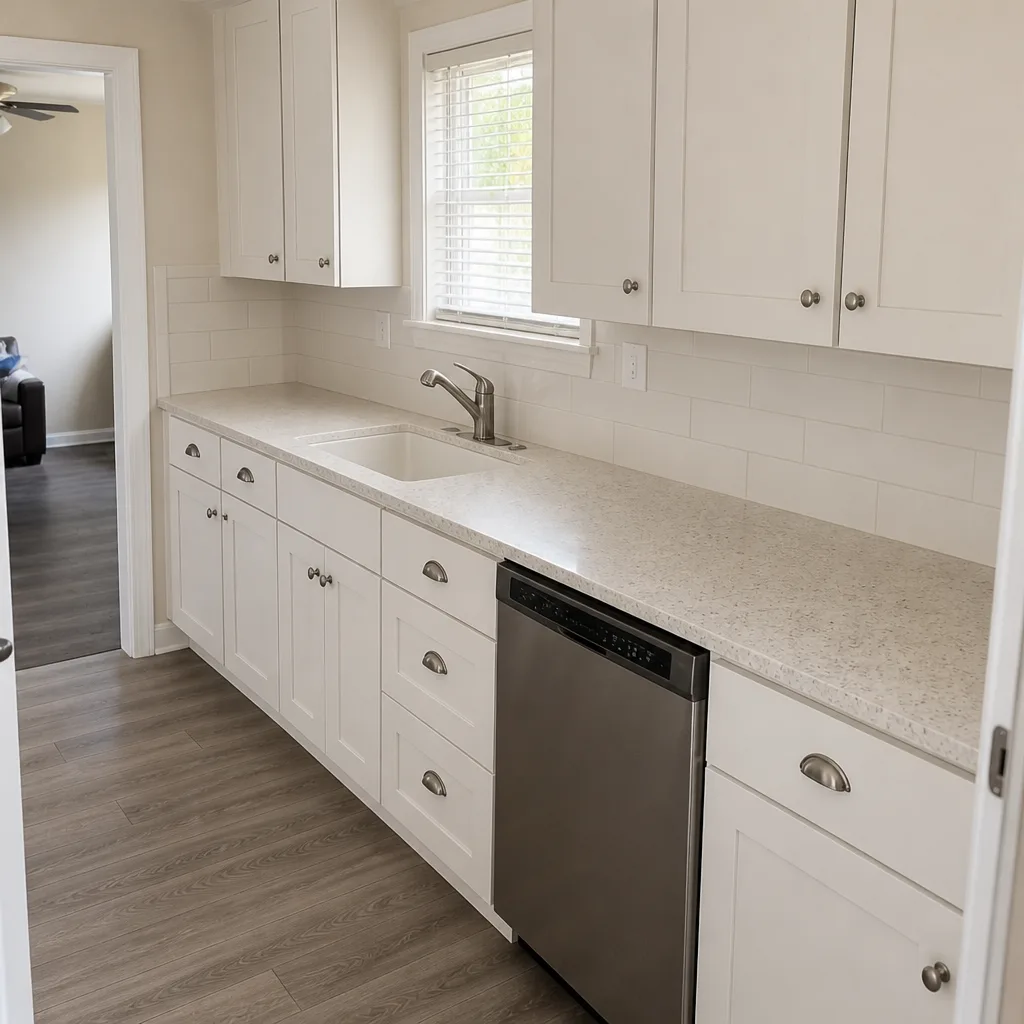 After
When to Call a Professional
Call a professional the moment any of the following appears on your project: a proposal without a schedule of values, an allowance marked “TBD,” a draw request that outruns the schedule of values, a subcontractor asking you directly about unpaid invoices, or a contractor who suggests skipping a permit on any part of the scope. Each of these is a stopping point, not a conversation to have later. If you’re already mid-project and any of these signs are showing, the priority is documentation: written change orders, lien waivers, and a photo record of the work in place. If you’re at the proposal stage and want a second set of eyes on a written estimate, Rowan Construction Group Dallas offers free estimates in Dallas and a free line-by-line review of any competitor’s quote – call (833) 954-5327.
Frequently Asked Questions
A schedule of values is a line-by-line breakdown of what each trade and material in the project costs, and your proposal needs one because it’s the document that makes the price enforceable. Without it, you have no way to compare a draw request to actual progress, no way to negotiate a change with a reference point, and no way to identify which trade is over budget when the final invoice comes in. Ask for it in writing before you sign.
Ask for the dollar figure before you sign. An allowance without a number is not an allowance – it’s an open-ended cost the contractor can fill in later. Every allowance should specify a dollar amount, a named product tier, and a written policy for what happens if the actual selection comes in over or under. A contractor who can’t produce that number has given you important information about how the rest of the project will be documented.
Ask for the permit number on a completed ADU in Dallas and look it up on the city’s public permit portal. The portal shows the permit type, address, inspection history, and final status. A legitimate ADU history produces a verifiable permit number in under a minute. Claimed experience that can’t produce a permit number isn’t documented experience. Call (833) 954-5327 for a free review of any written estimate you’ve received.
Yes, because Dallas’s expansive clay soils move with seasonal moisture, and an addition foundation that isn’t designed against a soils report is a guess. The report tells the engineer what’s actually under the lot – clay depth, bearing capacity, moisture content – and the pier plan should cite it by date. Skipping it to save a small fraction of the project budget is a decision that shows up as structural separation at the joint between old and new within a few years.
A mechanic’s lien is a claim against your property filed by an unpaid subcontractor or supplier, and it becomes your problem if the contractor fails to pay the sub who worked on your addition. The warning sign is a sub contacting you directly about an unpaid invoice. The prevention is asking for lien waivers from every sub at every draw – a signed document confirming they’ve been paid to date. Any contractor who resists providing lien waivers is telling you something worth listening to.
It can, which is why the change order clause matters. No work should proceed on a change until the change order is signed, and the change order should carry a description, a price, and the markup percentage that was written into the contract before work started. A contract that says “changes billed at cost plus a reasonable markup” is a contract with no markup number, which is a contract that will move. Call (833) 954-5327 for an exact quote on your addition – written prices are standard, and estimates are free.
The Bottom Line
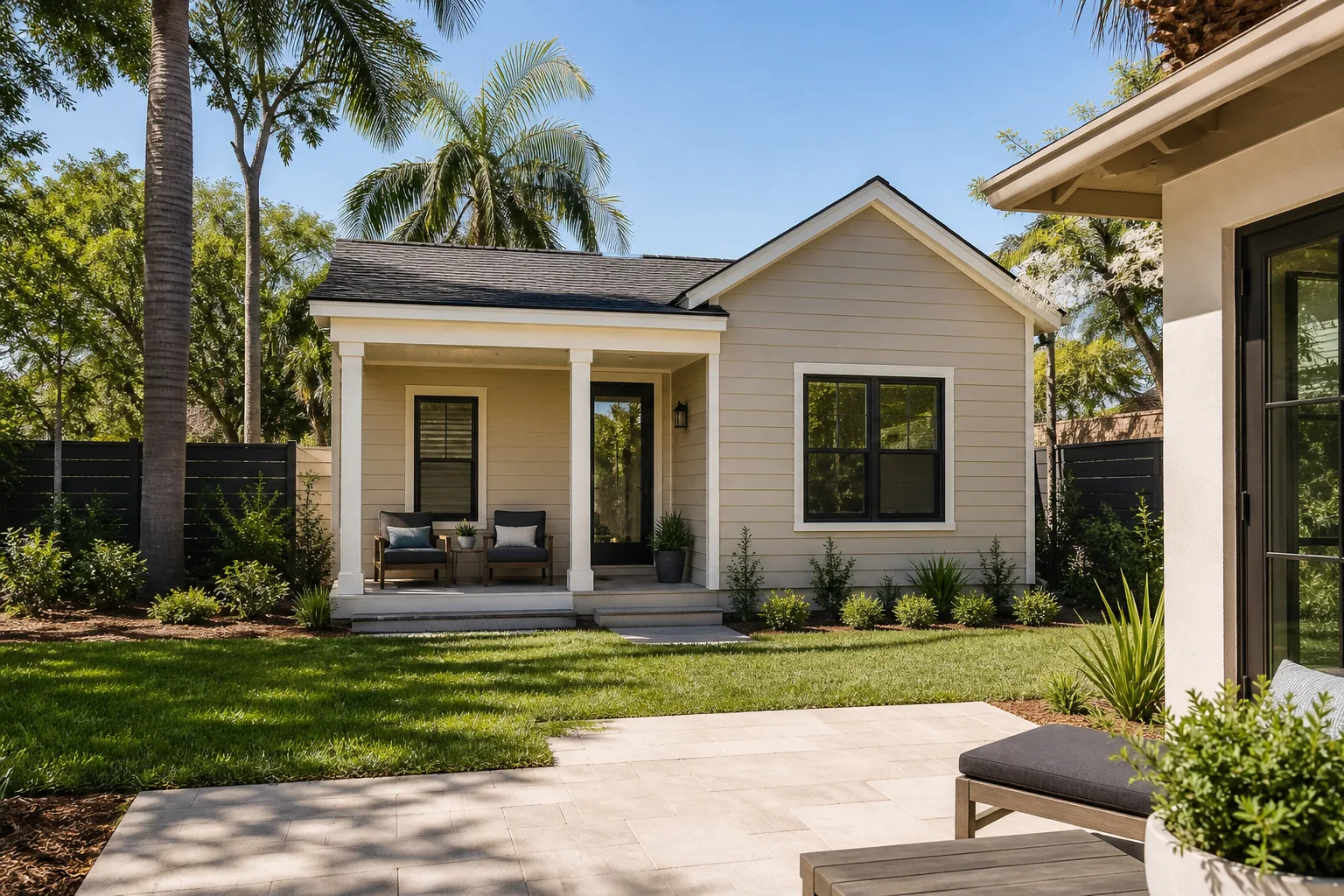
The warning signs of a home addition or ADU heading wrong are almost never hidden underground. They’re in the proposal structure – no schedule of values, “TBD” allowances, no change order markup – in the site habits, and in the paperwork trail. Read all three before you sign, and keep reading them as the project goes. Ask for the permit number. Ask for the soils report reference. Ask for lien waivers at every draw. The contractors who can produce all three are the ones who finish within a few percent of the number you agreed to. The ones who can’t have shown you, in writing, where the project is going. Rowan Construction Group offers free estimates in Dallas and a free second opinion on any written estimate – call (833) 954-5327 to schedule yours.
Written by the team at Rowan Construction Group Dallas.