Last updated November 17, 2026


Free written scope consultation - allowances, timeline, and change-order rules on paper before a single trade is scheduled
Driveway & Pavers Maintenance Checklist for Dallas Homeowners
A paver driveway that looked perfect in October can show joint sand washout, edge creep, and lippage by March. The installer didn’t do anything wrong. Dallas soil moved underneath it during a wet winter, and nobody re-sanded the joints before the first hard freeze locked the damage in. Most maintenance guides are written for a generic climate where the ground stays put. Dallas doesn’t offer that luxury, and that gap is why we put this checklist together: a twice-yearly inspection routine built around North Texas clay, sudden January freezes, and eight months of relentless UV.
Quick Answer
Dallas homeowners should inspect a paver driveway twice a year – once in late fall before the December 15 freeze window and once in spring after the last thaw – checking joint sand depth, edge restraint integrity, drainage slope, and sealer condition. Re-sanding joints and repairing edge creep ahead of winter is what prevents most $2,000-plus repairs. A checklist walk-through takes about 30 minutes and costs nothing.
Styles & brands we work with
- Kitchen remodeling
- Bathroom remodeling
- Home additions & ADU
- Roofing
- Windows & doors
- Driveway & pavers
- Fence
Table of Contents
- Why Dallas Driveways Fail Differently Than Anywhere Else
- The Twice-Yearly Inspection Checklist (Pass/Fail)
- The Freeze-Thaw Window and Why Sealer Timing Matters
- Polymeric Sand Intervals for Dallas Rainfall
- Tree Root Heave vs. Soil Expansion: Telling Them Apart
- Which Paver Brands Require Documented Maintenance for Warranty Coverage
- What Your Maintenance Records Must Include
Why Dallas Driveways Fail Differently Than Anywhere Else
Most of Dallas sits on expansive clay soil – the Blackland Prairie series that runs through neighborhoods from Lakewood to Preston Hollow. That clay swells when it’s wet and shrinks when it dries, and a Dallas summer can push the moisture swing through a full cycle in a matter of weeks. A paver driveway is a flexible system, so it tolerates some movement. But it isn’t immune. When the base shifts underneath, the pavers above it start telegraphing that movement as joint sand loss, edge creep, and lippage – the trade term for one paver sitting higher than its neighbor.
Layer on top of the soil the second problem Dallas throws at pavers: UV. A north Texas summer bakes a driveway surface for months, and standard sealers break down faster here than in most of the country. Sealer failure lets water into the joints, and once water reaches the bedding sand and base, the freeze-thaw cycle does the rest.
The third factor is timing. Dallas freezes are not gradual. A blue norther can drop the temperature below freezing within a day, which means water sitting in joint sand has almost no warning before it expands. That’s why late-fall maintenance – not spring maintenance – is the one that protects the investment.
The Twice-Yearly Inspection Checklist (Pass/Fail)
Print this. Walk the driveway with a clipboard, a 5-gallon bucket of joint sand for reference, and a level. Each item has a pass or fail threshold so you’re not guessing.
- Joint sand depth. Pass: sand sits within 1/8 inch of the paver chamfer (the beveled top edge). Fail: joints are more than 1/4 inch deep or you can see bedding sand through them. Failing joints need re-sanding before winter.
- Edge restraint integrity. Pass: the edge restraint is tight against the outside pavers with no gap. Fail: visible gap, cracked plastic restraint, or pavers pushing outward. Edge creep lets the whole field spread – it’s the single most common failure we see on Dallas driveways.
- Surface drainage slope. Pass: a level laid perpendicular to the driveway shows a consistent slope toward the apron or a drain. Fail: any low spot where water pools and sits more than a few hours after rain. Ponding water is the direct cause of most heave.
- Sealer condition. Pass: water beads and rolls off the surface. Fail: water darkens the pavers immediately or soaks in. Re-seal in spring or early fall, never within 30 days of the freeze window.
- Lippage. Pass: no more than 1/8 inch variance between adjacent pavers. Fail: any paver sitting 1/4 inch or more above its neighbor – that’s a base problem, not a cosmetic one.
- Staining and efflorescence. Pass: no white powdery bloom. Fail: persistent efflorescence (the white mineral haze that wicks out of concrete pavers) that reappears within weeks of cleaning. It usually signals water moving through the base.
Do this in late October or early November, and again in March. Log the date and findings – you’ll need them for warranty claims (more on that below).
The Freeze-Thaw Window and Why Sealer Timing Matters
Dallas’s reliable freeze window runs roughly December 15 through February 28. That’s not every day – but it’s the span in which a hard freeze can arrive with little warning, and it’s the span in which water in your joints is most dangerous.
Sealer application has to finish at least 30 days before that window opens. A solvent-based or water-based acrylic sealer needs a full cure before it can withstand a freeze, and applying it in mid-December leaves the surface vulnerable if temperatures drop early. The practical rule: seal by mid-November or wait until March.
Here’s why the timing is non-negotiable:
- Sealer that hasn’t cured fully can craze (fine surface cracks) when it freezes, and crazing opens the door to moisture.
- Water trapped beneath a partially cured sealer film has nowhere to escape and expands into the joint sand.
- Dallas soil moves most in the weeks right after heavy fall rain, so sealing too early – when the base is still saturated – traps moisture under the film.
If you reseal in spring instead, aim for late March through April, after the last freeze and once the spring rains have passed. If you need the surface protected before winter and the timing is tight, your best move is a written quote from an installer who can confirm cure time against the Dallas forecast – not a same-week rush job. For a full service overview, see our Driveway & Pavers in Dallas page.
Polymeric Sand Intervals for Dallas Rainfall
Most polymeric sand bags print a “re-apply every 3 years” recommendation. In our experience across Dallas driveways, that national figure is optimistic. Dallas averages roughly 39 inches of annual rainfall, and much of it arrives in intense spring and fall storms that force water across driveways. Polymeric sand in that environment breaks down faster.
We recommend inspecting joint sand annually and re-applying polymeric sand every 18 months to 2 years in Dallas – sooner on driveways with heavysurface water running across them or under tree canopy where organic debris holds moisture. A shoreline-influenced east Dallas property with heavy oak shade can need it even more often.
Two things drive premature sand failure:
- UV degradation. Polymer binders break down in strong sun, and a west-facing Dallas driveway takes the worst of it.
- Washout. Water running across the surface before the polymer has fully set lifts the sand and sends it to the lowest point – frequently a storm drain.
When re-sanding, use a polymeric product rated for the joint width, sweep it in completely, compact it, and mist it per the manufacturer’s instructions. Do this in an early-fall window so it has time to cure before the freeze.
Tree Root Heave vs. Soil Expansion: Telling Them Apart
When a section of your driveway lifts, the repair depends on which force lifted it – and the cost differs by roughly $800 to $2,400. Here’s how to diagnose.
Tree root heave typically shows up as a distinct bump or ridge running in a line toward the offending tree – often a live oak, pecan, or elm, all common in older Dallas neighborhoods. The raised section feels like a tent ridge rather than a broad dome, and it’s usually localized to one or two pavers near the tree’s root zone. You may also see the base sand pushed up at the joint.
Soil expansion heave looks broader and more gradual. The whole field near the driveway edge domes up or the pavers near the apron slope, and the pattern follows the wet/dry cycle rather than the tree line. This is the Blackland clay swelling under the base and is more likely near the property’s lowest point or where gutters dump water.
Once you’ve identified the cause, the repair path:
- Root heave: barrier installation or root pruning (with an arborist, never on your own – pruning a live oak at the wrong season invites oak wilt), then re-lay the affected field.
- Soil expansion: correct grading and drainage first, then re-bed and re-lay the affected section. Re-laying without fixing drainage just resets the clock.
- Verify with a written scope before any work begins, so you know which repair you’re paying for.
If roots are the cause, the fix sometimes depends on whether the affected tree sits on the property line, which can make the work an adjacent concern. Our fence installation in Dallas team sees the same root-intrusion pattern along shared property lines and can help confirm where a tree’s root zone actually runs.
Which Paver Brands Require Documented Maintenance for Warranty Coverage
Product warranties on pavers are not automatic – several major brands require documented annual maintenance to stay valid. The big three in the Dallas market are Belgard, Unilock, and Techo-Bloc, and each publishes a maintenance schedule as part of its warranty terms.
What most homeowners don’t realize: the warranty language typically doesn’t just say “maintain your pavers.” It specifies the documentation required when a claim is filed. Without a dated maintenance record, a warranty claim on joint sand failure or edge creep can be denied as neglect – even when the product itself was fine.
What that documentation must include:
- Dated photos of the driveway at the time of each inspection, showing joints, edges, and surface.
- A written maintenance log with the date, what was done (re-sand, seal, edge repair), and who did it.
- Product names and manufacturer codes for the sealer and polymeric sand used.
- The original installation receipt and product warranty certificate.
Our advice: keep a manila folder (or a shared cloud folder) for the driveway, and put the manufacturer’s warranty certificate in it on day one. If you’re having a driveway installed now, ask for the warranty document at handoff and the installer’s maintenance recommendation in writing. Tamko also publishes maintenance guidance for the sealer products it distributes, so if that’s what your installer used, keep that document too.
What Your Maintenance Records Must Include
Documentation is the difference between a warranty that pays and one that gets denied. We’ve seen claims on Dallas driveways denied because the homeowner had a clean driveway and no paper trail. The record takes five minutes per inspection – the warranty protection is worth far more.
Build the folder at the first inspection. Use a simple format:
- Inspection date and weather. “Nov 2, first freeze not yet in, driveway dry.”
- Pass/fail per checklist item. Sand depth, edge restraint, drainage slope, sealer, lippage, efflorescence.
- Action taken. “Re-sanded joints, applied sealer – product name and lot number noted.”
- Photo set. Full driveway plus close-up of each failed item and any repair.
- Contractor documentation. If a pro did the work, keep the written quote, the scope, and the photo record the crew left.
If your driveway was installed by a company that provides a written photo record as part of its documentation, add that to the folder – it becomes part of the maintenance history. Under the Haven Standard, we provide a documented photo record on every visit as a standard deliverable, not an extra.
Common Mistakes to Avoid
- Sealing in December. A Dallas sealer job in December hasn’t cured before the first hard freeze, and a frozen film fails quietly. Seal by mid-November or wait for spring.
- Re-sanding over wet joints. Polymeric sand forced into saturated joints will not bond, and it sets up unevenly. Wait for a dry stretch of days.
- Pressure-washing at high PSI. Blasting a paver driveway at high pressure strips the joint sand and the sealer in one pass. Use low pressure and a fan tip, or a surface cleaner rated for pavers.
- Ignoring edge creep. A quarter-inch gap at the edge restraint looks tiny and spreads across the whole field over one winter. Fix it before the freeze window opens.
- Skipping the photo record. A warranty claim without dated photos is a hope, not a claim. Snap the driveway every inspection.
- Treating root heave as cosmetic. Tamping a raised paver back down without addressing the root or the drainage just resets the clock. The base has to be fixed.
- Trusting the generic 3-year sand interval. Dallas rainfall breaks polymeric sand down faster than the national recommendation assumes. Inspect annually and re-sand every 18 to 2 years.
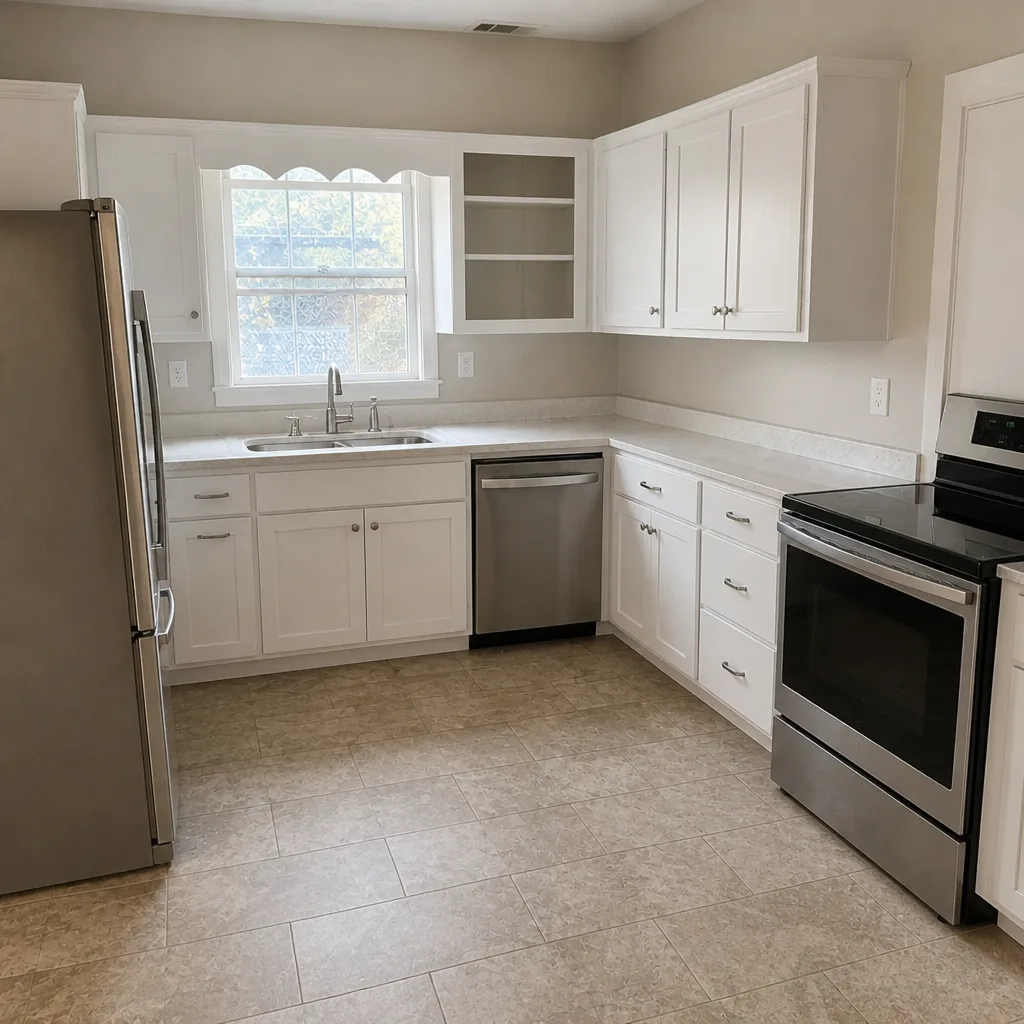
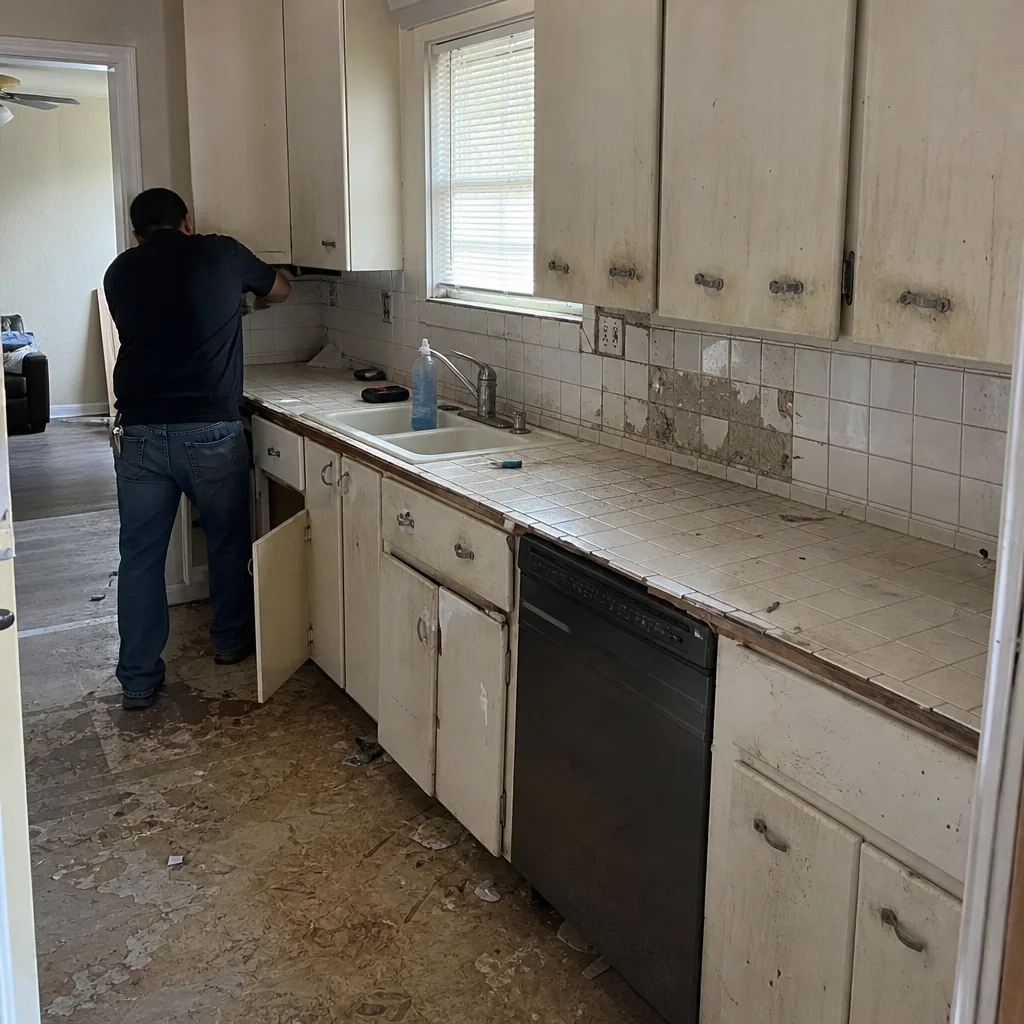
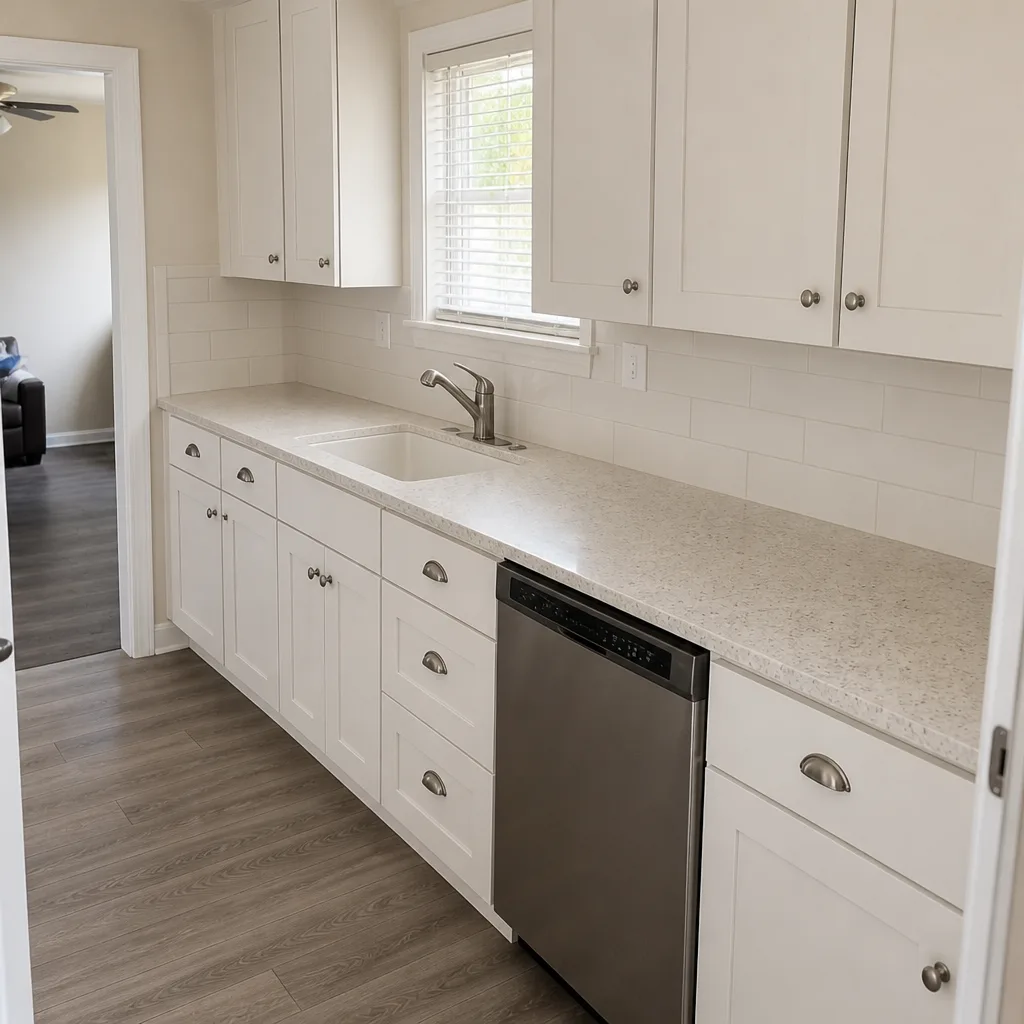
See the difference
 Before
 After
 Before
 After
 Before
 After
When to Call a Professional
Most of this checklist is walk-around work you can do yourself. Some of it isn’t. Call a pro when you see any of the following: lippage of 1/4 inch or more across multiple pavers; edge creep that keeps returning after re-sanding; ponding water that doesn’t drain within a few hours; a whole section doming up; or a warranty claim that needs a written maintenance history. Those aren’t cosmetic, and they’re the repairs where the wrong fix costs more than the right one. Our crews have up to 19 years of experience across Dallas driveways, and a written price before any work starts is standard under the Haven Standard – no work proceeds on a change until the change order is signed. Rowan Construction Group Dallas offers free estimates in Dallas – call (833) 954-5327.
Frequently Asked Questions
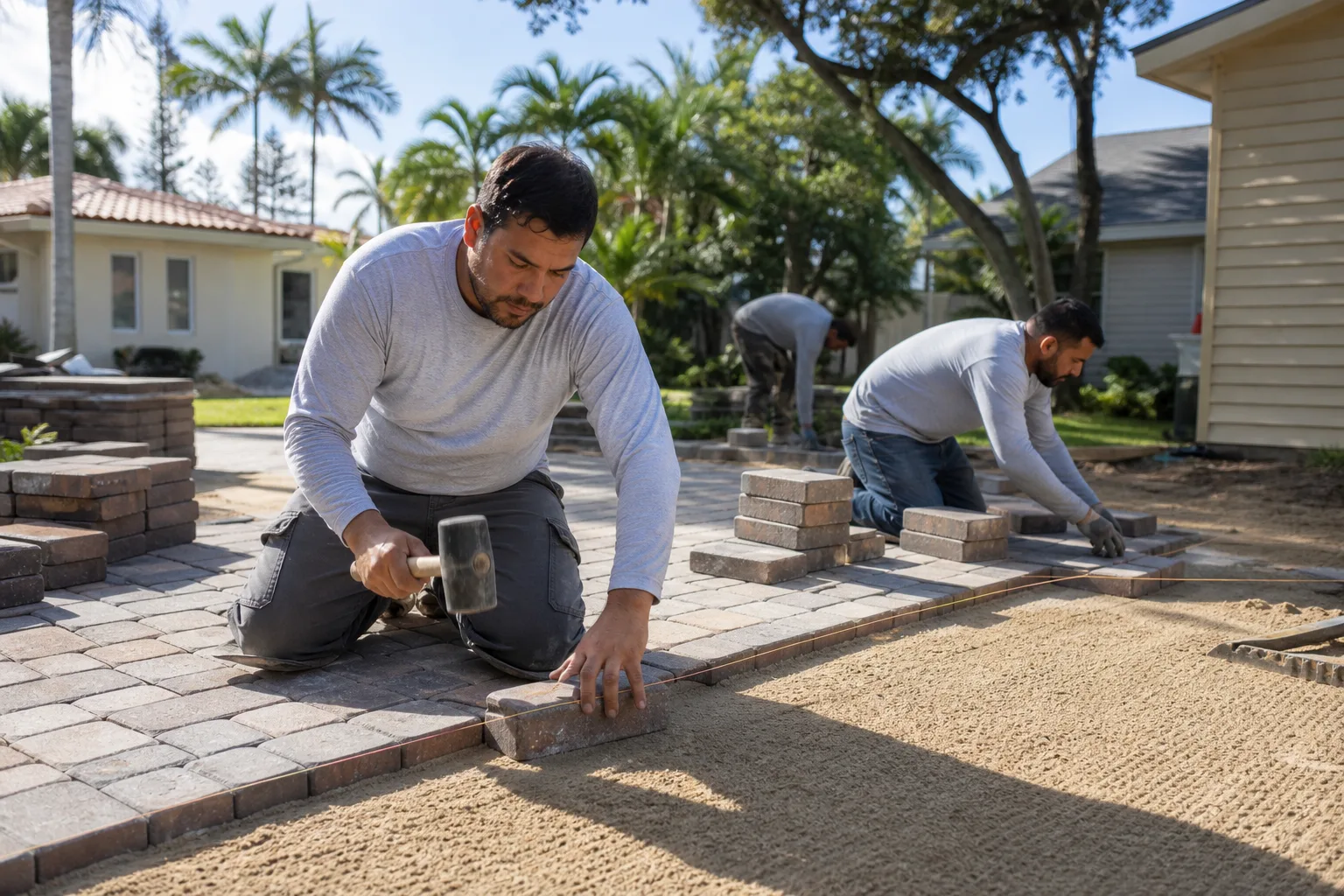
Every 18 months to 2 years in Dallas, which is faster than the 3-year interval most polymeric sand brands print. The 39 inches of annual rainfall and the spring and fall storm intensity break down the polymer binder faster here than in a dryer climate. If your driveway has heavy shade or surface water running across it, inspect sooner. Call (833) 954-5327 for a written maintenance quote – estimates are free.
Seal by mid-November, at least 30 days before the December 15 freeze window opens, or wait until late March. Sealer needs a full cure before it can take a freeze, and curing in mid-December leaves it vulnerable. Spring sealing after the last thaw and after the spring rains is the safest alternative.
Root heave shows up as a distinct ridge running toward a tree, usually one or two pavers near the root zone. Clay expansion is broader and more gradual, following the wet/dry cycle rather than the tree line. The repair approach differs and the cost range is roughly $800 to $2,400. Have a pro diagnose before any work begins so you pay for the right repair.
Often yes – but only if you have documented annual maintenance. Belgard, Unilock, and Techo-Bloc all publish maintenance requirements as part of their warranty terms, and a claim without a dated record can be denied as neglect. Keep dated photos, a written log, and the product names used. Call (833) 954-5327 if you want a written maintenance history prepared for a warranty claim.
Yes, with a low-pressure surface cleaner – not a high-pressure wand. High PSI strips joint sand and sealer in one pass and can mar the paver surface. Use a fan tip and keep the pressure low, and re-sand the joints if any sand is lost after cleaning.
Re-sanding runs roughly $400 to $900 for a typical two-car driveway. Sealer application runs $600 to $1,400 depending on square footage and product. Localized heave repair runs $800 to $2,400. A professional inspection is usually free or credited toward work. Rowan Construction Group Dallas will put the price in writing before any work starts – call (833) 954-5327 for a free estimate.
The Bottom Line
Dallas driveways fail on a schedule you can predict, and most of the expensive repairs are preventable with two inspections a year. Check joint sand depth, edge restraint, drainage slope, sealer condition, and lippage in late fall and again in early spring. Re-sand every 18 months to 2 years given Dallas rainfall, and seal by mid-November or not until spring. Keep a dated photo folder for warranty protection. The work is modest. The alternative is a base repair you’ll pay for. For a written price on any paver repair or full installation, our Rowan Construction Group Dallas home page explains how we quote – and if you’re planning a larger project alongside the driveway, our Home Additions & ADU in Dallas team can coordinate the site work.
Rowan Construction Group Dallas builds and maintains driveways and pavers across the city, and every quote comes with a written price and a written scope before a tool is picked up. The 365-Day Done Right Promise, backed by the Haven Standard, covers the work long after the crew leaves. Call (833) 954-5327 for a free estimate and a written price range for your Dallas driveway.
Written by the team at Rowan Construction Group Dallas.