Last updated November 17, 2026




Free written scope consultation - allowances, timeline, and change-order rules on paper before a single trade is scheduled
Bathroom Remodeling Warning Signs Every Homeowner Should Know
A contractor who quotes a bathroom remodel without asking to see the existing shutoff valve condition, the exhaust fan duct path, or the subfloor material beneath the current tile has not scoped your job. They’ve guessed at it, and you’ll pay for the difference. That single observation sits beneath most of the red flags in this guide. The signals that predict a stalled project, a five-figure overrun, or a change-order dispute usually appear before the contract is signed, not after. What follows is a field guide to those signals drawn from patterns we’ve documented across thousands of Dallas bathrooms – what to look for, what to ask, and what a properly scoped bid looks like.
Quick Answer
The biggest bathroom remodeling warning signs are a quote delivered without an in-person site visit, vague scope language like “allowances” or “similar materials” without dollar amounts or brand names attached, no line-item breakdown separating labor from materials, and a price more than 20% below the next lowest bid. Ask any Dallas contractor to put the price, scope, and substantial completion date in writing before work starts. If they resist, walk.
Styles & brands we work with
- Kitchen remodeling
- Bathroom remodeling
- Home additions & ADU
- Roofing
- Windows & doors
- Driveway & pavers
- Fence
Table of Contents
- Contract Red Flags: The Language That Costs You Money
- Bid Structure Warning Signs
- On-Site Behavioral Signals During the Estimate
- Change Order Practices: How Vague Scope Becomes Profitable
- Texas-Specific: How to Verify a Contractor Before Work Begins
- Dallas Conditions That Catch Out-of-Town Contractors
- The Questions a Scoped Bidder Will Answer Without Hesitation
Contract Red Flags: The Language That Costs You Money
Read the contract the way you’d read a lease. The clauses that hurt you are rarely dramatic – they’re quiet. An “allowance” is a placeholder dollar amount for something the contractor hasn’t priced yet. “Allowance for tile: $800” sounds reasonable until you pick tile that costs $1,400 and the difference appears on your first change order. A properly written allowance carries a range (“$800 – $1,200, tile and setting materials”) and a written rule for how overages are handled. If the number is loose, you’re floating it.
“Similar materials” is the second phrase to circle. A quote that says “Kohler or similar” for a fixture, or “hardwood or similar” for a vanity, gives the contractor permission to substitute a cheaper SKU after you’ve signed. What you want is a specific brand and model number – Kohler Memoirs under-mount, Toto Drake one-piece – printed in the scope. Not a category. A SKU you can look up on the manufacturer’s site and price yourself.
Then there’s the substantial completion date. A contract without one is a contract that finishes whenever it finishes. Look for a specific calendar date (“substantial completion by November 15”) or a defined working-day count with a range. Every project has weather and inspection variables, and a professional contract names those, then commits to a target anyway.
- Allowances without dollar amounts – “tile allowance TBD” means you carry the risk of every price increase.
- “Similar materials” or “or equal” clauses – these permit downgrades after signing.
- No substantial completion date – makes follow-up impossible to enforce.
- No named milestone list – demo, rough-in inspection, tile, final inspection should each have a date.
- No written warranty – a handshake on “we’ll make it right” is not a warranty. Under our own Haven Standard, the written warranty is printed on the quote, not promised verbally.
Bid Structure Warning Signs
A bid is a document. If it isn’t one you can hand to a second contractor for a line-by-line comparison, it isn’t a bid – it’s a number on a napkin. A same-day quote delivered without a site visit is the single most reliable warning sign we see in Dallas. You cannot price a bathroom without seeing the existing subfloor, the shutoff valve, and the exhaust path. Anyone who tries is estimating from a template. When their crew arrives and finds cast-iron drain lines or a rotted subfloor under the old tile, the change order appears, and you’ll pay the difference you should have seen on the page.
A line-item breakdown separates labor from materials. Look for a labor line by phase (demo, rough-in plumbing, electrical, tile setting, finish carpentry) and a materials line itemized by brand and SKU. A single lump-sum price is not dishonest on its face, but a lump-sum with no breakdown makes change-order disputes impossible to arbitrate – you can’t argue about what an item cost if nobody wrote it down.
The 20% test is worth running. If a bid is more than 20% below the next lowest of three quotes, ask why in writing. There are honest answers: a smaller company with lower overhead, or a bid that legitimately excludes a fixture package you’re supplying. There are also dishonest answers: the bid excludes permits, excludes disposal, or excludes the rough-in that any professional would include as standard. Read each bid line by line, side by side, and count what’s missing.
- Request three bids from three different Dallas contractors.
- For each, confirm whether a site visit was conducted before the price was delivered.
- Check for a written line-item breakdown with brand names and SKU numbers.
- Compare the low bid to the median bid. If the low is more than 20% below the median, ask what’s excluded.
- Review whether permits, disposal, and inspections are included in every bid or listed as an add.
- Confirm the substantial completion date in each bid.
On-Site Behavioral Signals During the Estimate
How a contractor behaves during a 30-minute estimate visit tells you more than the quote. A professional opens the vanity door and looks at the shutoff valve condition and the trap arm. They measure the subfloor thickness and check whether it’s plywood, OSB, or a build-up over old tile. They ask whether the previous bathroom was ever permitted and pull the Dallas permit history before the visit. They explain how the inspection process works: a rough-in inspection before tile, a final inspection after fixtures, and what happens if the rough-in fails.
What matters most is whether the contractor brings any of this up unprompted. A contractor who never asks about permits on prior work is telling you they either don’t pull permits or don’t intend to. In Dallas, bathroom remodels that move a fixture, add a circuit, or change a drain line require permits through the City of Dallas Development Services – the online permit portal is at dallascityhall.com. A contractor who waves off the question has passed a piece of information to you that’s more useful than any quote: they’re not going to put their name on the inspection record.
Watch for what they don’t ask. No site visit means no scoping. No questions about moisture or old water damage mean the contractor is assuming the substrate is clean. No question about HOA approval or condo rules means the contractor hasn’t worked in your building. Every one of these gaps lands in a change order you didn’t approve.
- Does the contractor open the vanity cabinet and examine the shutoff valves?
- Do they measure the subfloor and check for moisture damage under existing tile?
- Do they trace the exhaust fan duct out through the roof or wall?
- Do they mention Dallas permitting and inspections before you ask?
- Do they ask about prior remodels in the home or permits on record?
- Do they put the price in writing on the same visit, or leave promises of “I’ll send something over” with no scope attached?
Change Order Practices: How Vague Scope Becomes Profitable
The change order is where a vague original scope turns into profit. A contractor who under-scopes a bid – say, excluding the subfloor replacement or the shower pan liner – will appear as the lowest bid. Once demo happens and the substrate is open, that contractor generates a change order for the necessary work, priced without competition. The homeowner is under time pressure to keep the project moving, has already paid a deposit, and signs. That sequence is not a moral failing of one company; it’s a structural risk in any padded or vague bid. The way to protect yourself is to model it out in advance.
A properly written change order has three things. First, a specific scope: exactly what changes and why (“replace 42 square feet of rotted subfloor beneath the shower, discovered during demo on 10/14”). Second, a not-to-exceed clause: a written cap on the change (“not to exceed $1,850, materials and labor”). Third, a signed and dated authorization from both parties. If the change order is a number without a scope, or a scope without a cap, it’s an open check. What you want, and what a disciplined contractor provides, is this: no work proceeds on a change until the signed change order is in the file.
Under our Haven Standard, that’s a rule written into the terms, not a courtesy. It’s the discipline that keeps our projects within a few percent of the number the customer agreed to across 4,000-plus jobs. Ask every Dallas contractor you interview how they handle change orders. The response will tell you whether you’re dealing with a company that prices changes in advance or one that prices them at the worst possible moment.
- Before signing, ask how change orders are written and capped.
- Confirm that the original scope names every component that could trigger a change (subfloor, drain, valve, subpanel).
- Require a not-to-exceed cap on every change order.
- Sign only dated change orders with a written scope that you can compare to the original bid.
- Keep copies of every signed change order in one folder – the record is your leverage if a dispute comes up.
Texas-Specific: How to Verify a Contractor Before Work Begins
Texas does not license general contractors statewide, which means any person with a truck can hand you a bathroom quote. What Texas does regulate is the trades that sit under the general contractor. Plumbing, electrical, and HVAC work require licensed technicians – the Texas State Board of Plumbing Examiners (tsbpe.texas.gov) and the Texas Department of Licensing and Regulation (tdlr.texas.gov) are the lookup tools. A contractor who can produce plumbing and electrical license numbers as part of the bid is demonstrating that the people doing the work will be held to a licensing standard. A contractor who won’t is selling you a promise you can’t verify.
Insurance is the next checkpoint. Request a certificate of insurance naming general liability coverage – typically $1M per occurrence for residential work in Dallas – and confirm that workers’ compensation coverage is active for the crew that will be in your home. If a crew member gets hurt on your property without workers’ comp, the claim can be brought against your homeowner’s policy. That’s not a theoretical risk; it’s a documented pattern. Ask for the certificate before any deposit is paid, and ask whether each crew member is background-checked.
Complaint history is public. BBB’s lookup at bbb.org shows complaint volume and how disputes were resolved. Dallas County court records at dallascounty.org show whether a contractor has been sued over a construction defect. Both are quick, free, and tell you more than any testimonial on a website. If a contractor refuses to provide their license numbers, insurance certificates, or permits, you’ve learned what you needed to know before signing anything.
- Confirm plumbing license number via tsbpe.texas.gov.
- Confirm electrical license number via tdlr.texas.gov.
- Request a certificate of insurance showing general liability and workers’ comp.
- Check complaint history at bbb.org.
- Search court records at dallascounty.org for prior construction disputes.
- Confirm permits will be pulled through City of Dallas Development Services before demo begins.
Dallas Conditions That Catch Out-of-Town Contractors
Dallas bathrooms have specific conditions that a contractor who works mostly in the suburbs or another metro won’t anticipate. Homes built in Lakewood, Preston Hollow, and the M Streets between 1930 and 1960 tend to have cast-iron drain lines under the slab or in the crawlspace. Cast iron corrodes from the inside out over decades, and a shower drain that reads fine from above can be one-third blocked by scale. A contractor who scopes a new shower without inspecting the drain path has left a five-figure surprise in the demo phase. If the drain fails during the project, that’s a change order that could have been priced in advance.
Dallas’s clay soil expands and contracts with the seasons, and slab movement shows up in bathrooms as hairline tile cracks and grout that never stays put. A contractor who doesn’t check for slab cracks, doesn’t examine the transition from tile to slab, or doesn’t ask about the home’s foundation history is scoping a bathroom that will look the same in year two as it does in year five only if the substrate is right. That means a decoupling membrane (Schluter Ditra or equivalent), not tile glued to a wet-set mortar bed from 1962.
The Dallas-area humidity in summer sits at 65% – 75% for weeks at a stretch, and bathroom exhaust is the difference between a shower wall that lasts 20 years and one that grows mold in two. Ask your contractor to trace the exhaust duct to an exterior vent or roof cap that isn’t venting into the attic. A duct that stops in the attic is worse than no duct, because the moisture has nowhere to go but back down through the ceiling. Ask whether the fan is rated for the cubic footage of the bathroom – a builder-grade 50-cfm fan in a 100-square-foot Dallas bathroom is undersized by code. If you’re planning a larger project that touches structure or footprint, the team at Home Additions & ADU in Dallas can price the structural side before the bathroom scope gets locked in.
The Questions a Scoped Bidder Will Answer Without Hesitation
The good news is that a scoped bidder is easy to distinguish. They answer every question below in writing, on the first pass, without hedging. Here’s what to ask, and what a real answer looks like.
- “What’s my subfloor made of, and did you check for moisture?” A scoped answer names the material, the thickness, and the moisture reading.
- “What brands and models are in the quote?” A scoped answer names them – KraftMaid or Wellborn cabinets, Cambria or Caesarstone countertops, Kohler or Toto fixtures – with SKU numbers on the line items.
- “What permits does this project need, and who pulls them?” A scoped answer names the Dallas permitting path and states that the contractor pulls and passes inspection.
- “How is a change order capped?” A scoped answer describes a not-to-exceed clause and confirms that no work proceeds on a change until it’s signed.
- “What’s the substantial completion date?” A scoped answer names a date.
- “What does your warranty say?” A scoped answer references a written warranty page, not a verbal promise.
- “Can I see the photo record from a recent job?” A scoped answer shows you one, because a documented photo record is standard work, not extra credit.
If you’re comparing a Rowan quote to a competitor’s, we’ll review that competitor’s written estimate line by line at no charge. Bring the quote in, and we’ll name what’s missing, what’s vague, and what’s fair. It’s our Free Second Opinion offer, it’s always free, and it’s the fastest way to find out whether the number you’re being shown is a scoped number or a guess. You can also visit our Rowan Construction Group Dallas home for the full scope of what we do across our seven trades.
Common Mistakes to Avoid
- Going with the lowest bid without comparing scope. In Dallas, the low bid is often the bid that excluded subfloor, permits, and disposal. Compare line items, not the bottom-line number.
- Signing an “allowance” contract without a cap. An uncapped allowance is a transfer of price risk from the contractor to you; it always appears on your change order, not theirs.
- Skipping the site visit to save a week. A quote without a site visit is a guess, and in Dallas bathrooms – post-war homes, cast-iron drains, clay-soil slab movement – the guess is where the overrun starts.
- Not checking the TDLR or TSBPE database. Two minutes on tsbpe.texas.gov and tdlr.texas.gov confirms whether the plumbing and electric trades on your job are licensed. Skip it and you’re accepting a verbal promise.
- Assuming a permit is “probably already handled.” Call City of Dallas Development Services and ask. Unpermitted prior bathroom work can force a full re-inspection when the new work is done.
- Believing a handshake warranty. Ask for the warranty in writing, with a term and a described process for making a claim. If it isn’t on the page, it doesn’t exist.
- Choosing a contractor who won’t accept a written change order. A contractor uncomfortable with written change orders is uncomfortable with accountability.
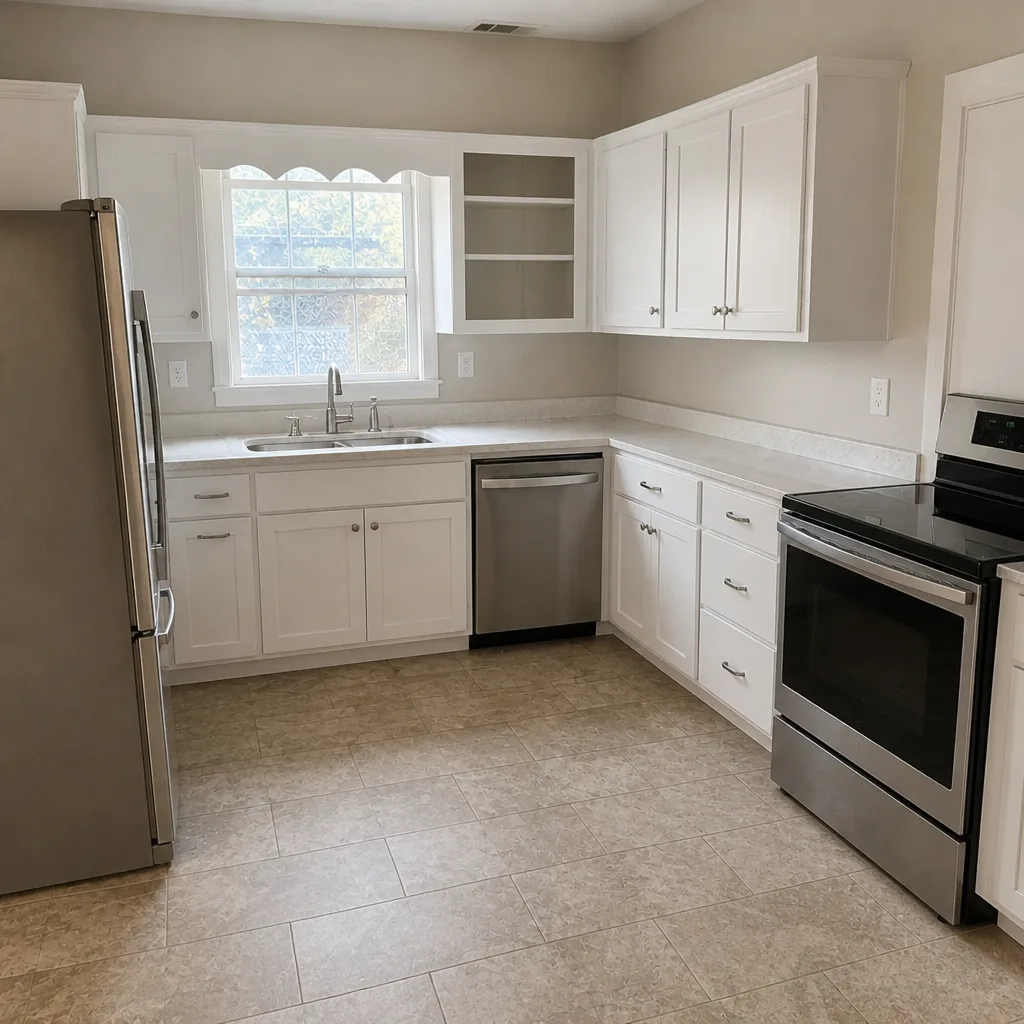
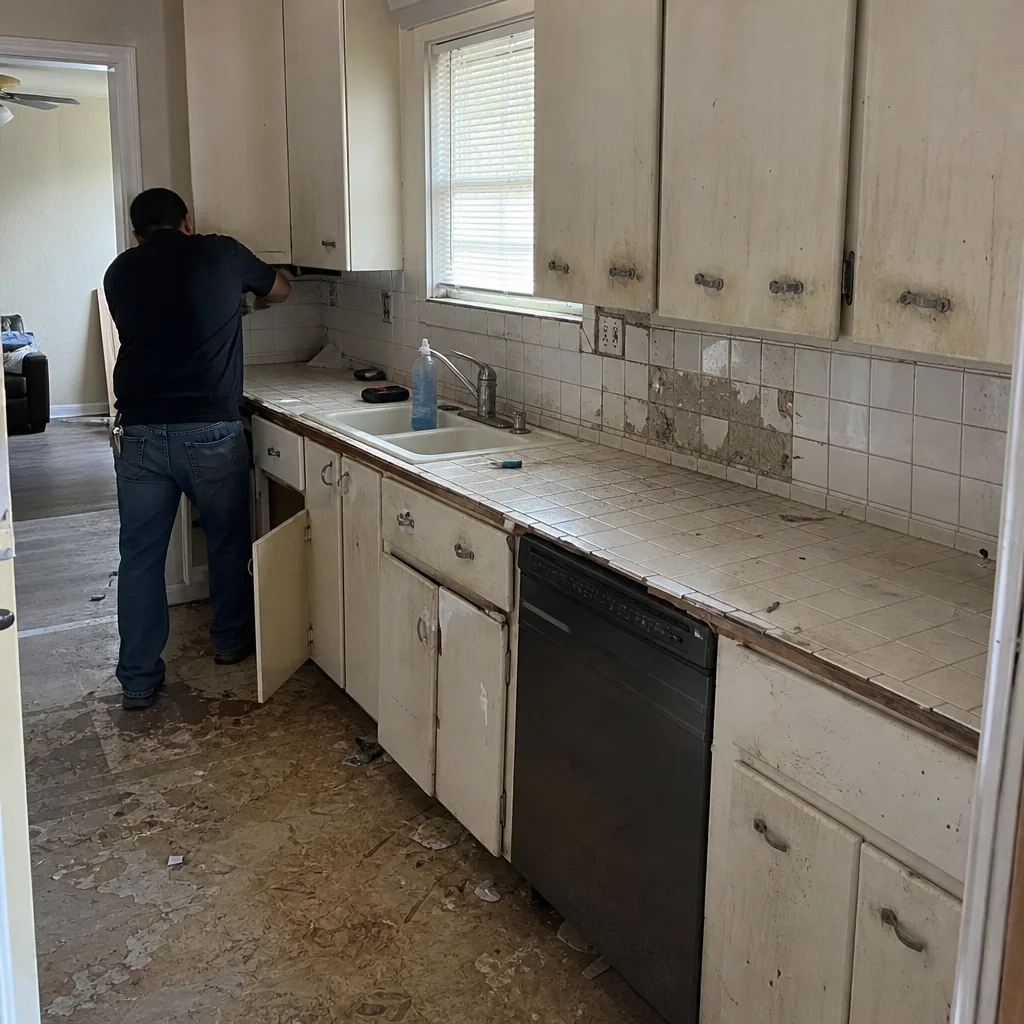
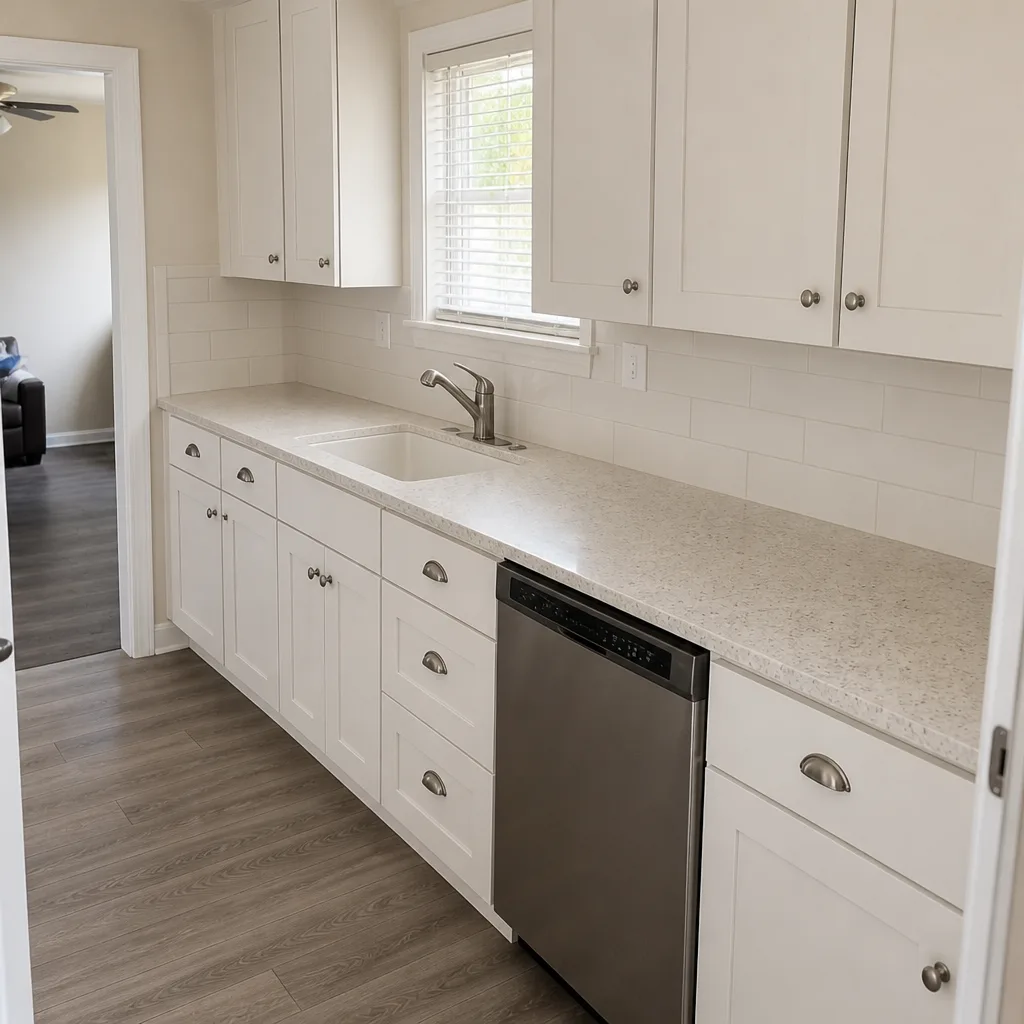
See the difference
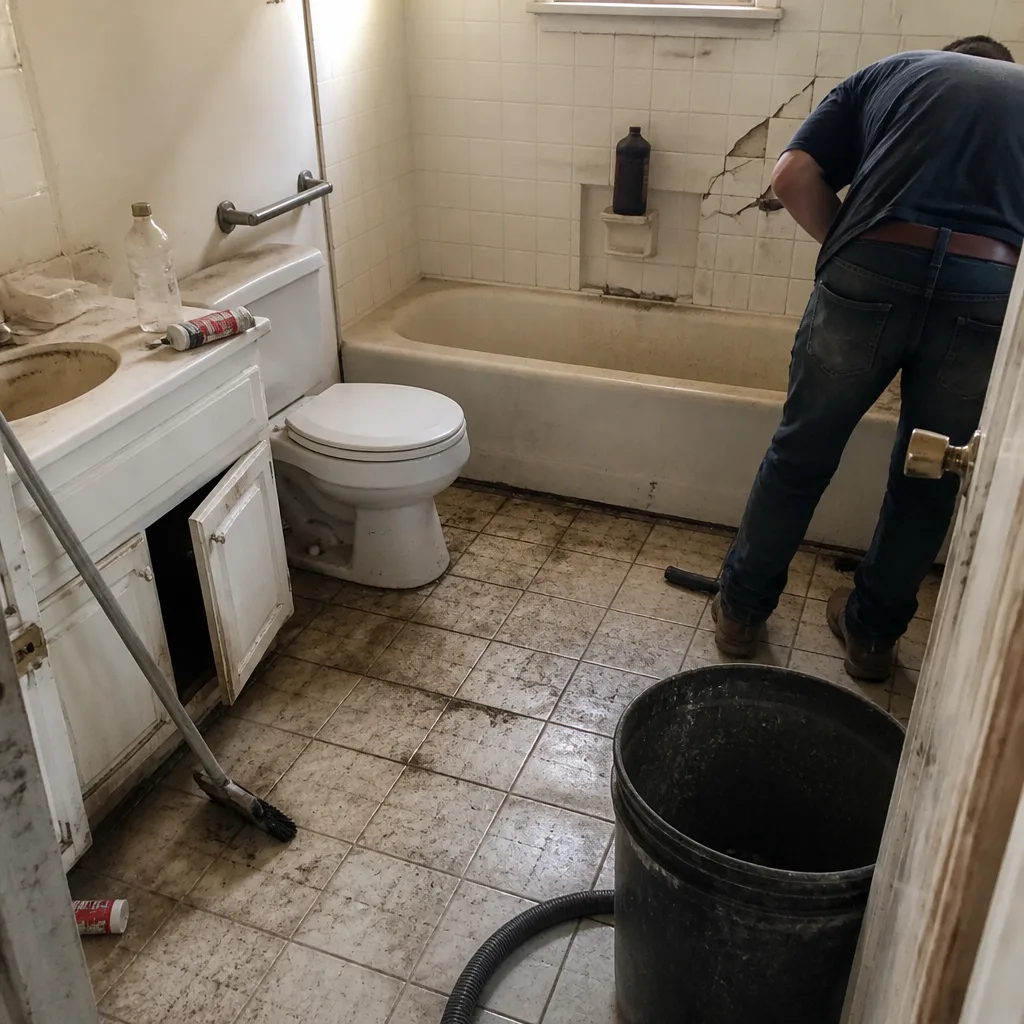 Before
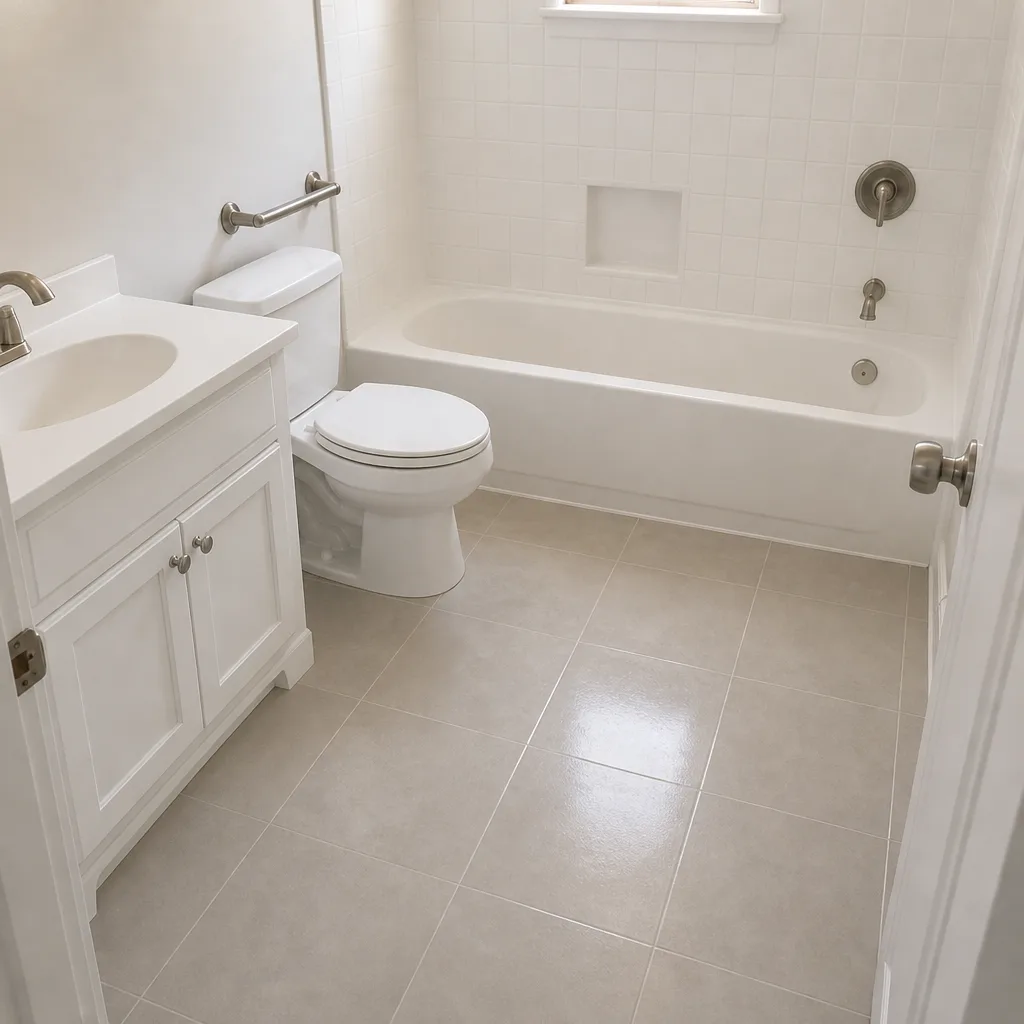 After
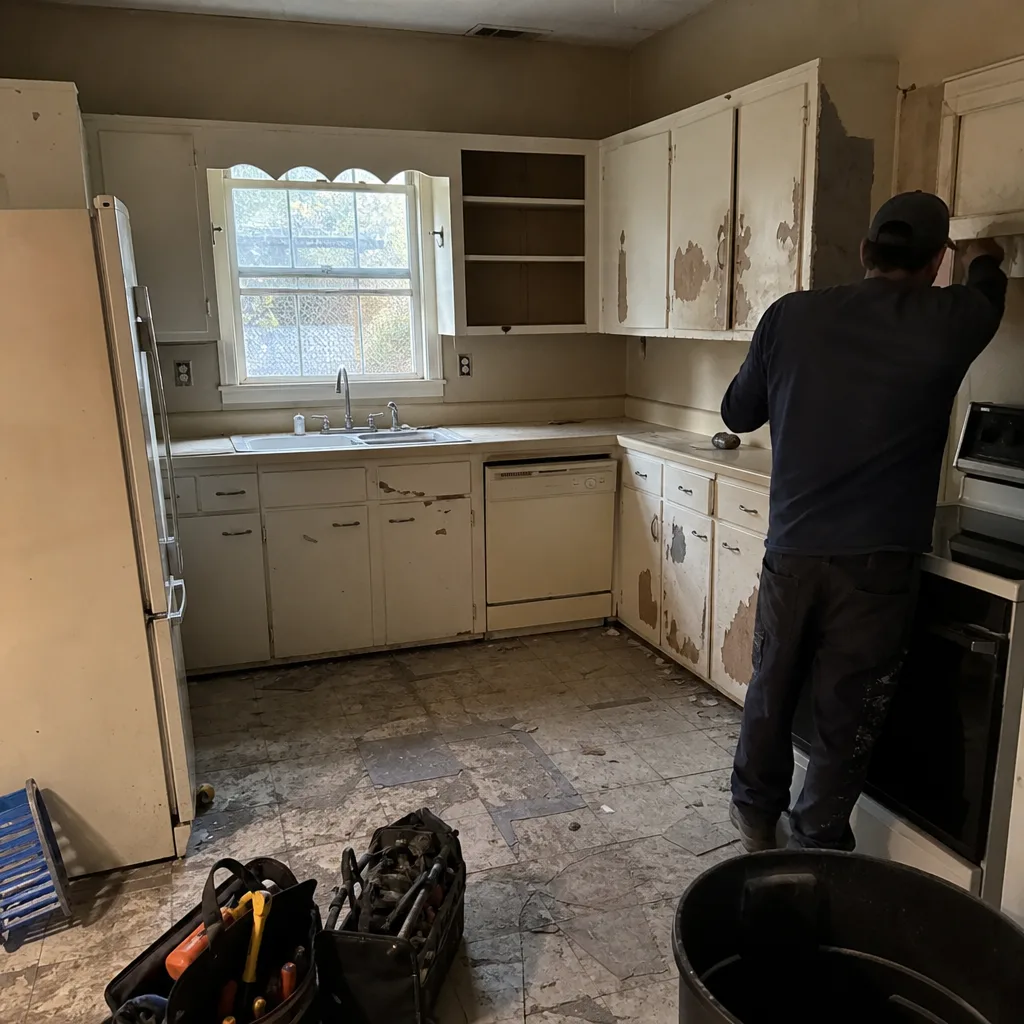 Before
 After
 Before
 After
When to Call a Professional
Call a professional when the shower pan is failing, when you see moisture under the tile, when a prior bathroom was never permitted, or when the subfloor beneath an existing tub has a soft spot. Call immediately if demo has exposed cast-iron drain lines with visible corrosion or a subfloor with black stains, because that’s the point at which the wrong contractor turns your project into a surprise. If your bathroom remodel is tied to a larger structural change, a second bathroom being added, or a garage conversion that affects plumbing, that work also needs a professional – Home Additions & ADU in Dallas is the right place to start the structural conversation before the bathroom scope gets locked. Rowan Construction Group Dallas offers free estimates in Dallas with a written price before any work starts. Call (833) 954-5327.
Frequently Asked Questions
A mid-range full bathroom remodel in Dallas typically runs $18,000 – $32,000 for a hall bath, and $35,000 – $60,000 for a primary bathroom with a tile shower and custom cabinetry. The range covers demo, plumbing and electrical rough-in, tile, fixtures, vanity, and finish work – and the low end assumes the subfloor and drain are sound. Anything below $15,000 in Dallas either excludes the permit, excludes disposal, or is a cosmetic-only refresh. Call (833) 954-5327 for an exact written quote – estimates are free.
Yes. A written price before any work starts is the baseline of a professional relationship, not an upgrade. A contractor who resists putting the price on paper is telling you that cost overruns are going to be settled by conversation rather than by document. Get the price in writing, with a scope and a substantial completion date, or don’t sign the deposit check. Estimates at Rowan Construction Group Dallas are always written.
Walk away. Bathroom remodels that move fixtures, add electrical circuits, or change drain lines require permits through the City of Dallas Development Services, and permits produce inspection records that protect you at resale. A contractor who treats permitting as an optional step is handing you a resale liability that a future buyer’s inspector will find. Ask them to confirm in writing that they’ll pull and pass inspection before work begins.
It’s a single document – often a page or two – that names the change, describes the reason, and caps the cost. A proper change order reads something like: “Replace rotted subfloor under shower, 42 sq ft, discovered during demo, materials and labor not to exceed $1,850.” The number, the scope, and the cap are all on the page. If the change order has a number but no scope or a scope but no cap, it’s an open check. Call us for a second opinion on a written change order – free of charge.
Plumbing license numbers are searchable at tsbpe.texas.gov, and electrical license numbers at tdlr.texas.gov. General contractors aren’t licensed statewide in Texas, so your best protections are the insurance certificate (general liability and workers’ comp) and the permit history through City of Dallas Development Services. Also check bbb.org and dallascounty.org for complaint and court history. Ask for a certificate of insurance before any deposit is paid – a professional contractor will have it ready.
A hall bath takes 4 – 6 weeks; a primary bathroom with a custom tile shower takes 6 – 9 weeks. Add 1 – 2 weeks if the project requires uncovering and replacing cast-iron drain lines or the plumbing rough-in fails inspection. Any bid that promises a shorter timeline without seeing the subfloor and the drain path is promising something they can’t deliver. Get the substantial completion date in writing and hold it as a milestone, not a hope. If a competing bid looks too fast, call (833) 954-5327 for a free second opinion.
The Bottom Line
Bathroom remodeling red flags appear before the contract, not after. A quote without a site visit, a scope without brand names and SKU numbers, a price without a line-item breakdown, a change order without a cap, a substantial completion date that never made it onto the page – each one is a documented behavior that predicts overrun, stall, or dispute. The Dallas homeowner’s best protection is not a contractor’s enthusiasm or a smooth sales call; it’s the paper trail. Insist on the written price, the written scope, the written change order, and the written warranty. Ask about the permits, the drain path, the subfloor, and the exhaust. If you’re holding a quote that doesn’t answer those questions, bring it in. We’ll review it line by line, at no charge. Call (833) 954-5327 to schedule your free estimate – and if the project touches the driveway, the fence line, or the yard drain, we can price those too: Driveway & Pavers in Dallas and Fence Installation in Dallas are handled by the same team.
Written by the team at Rowan Construction Group Dallas.