Last updated November 17, 2026

Free written scope consultation - allowances, timeline, and change-order rules on paper before a single trade is scheduled
DIY vs Professional Home Additions & ADU: What’s Safe to Do Yourself
In Texas, unpermitted square footage added by a homeowner doesn’t just risk a stop-work order – it creates a material disclosure obligation at sale that, when ignored, has resulted in rescinded contracts and litigation years after the work was done. The DIY decision has a legal tail. That’s why the useful question for a Dallas homeowner is never “Can I build this myself?” It’s “Which tasks trigger a permit inspection, which raise a flag at refinance, and which attach liability to the deed?” This guide draws the line by task, not by project type, so you can see exactly where self-performing saves money and where it quietly costs you.
Quick Answer
A Dallas homeowner can legally pull their own permit and self-perform finish work on their primary residence – painting, trim carpentry, tile setting, and the like – provided the work is inspected. You generally cannot self-perform the mechanical trades (electrical, plumbing, gas, HVAC) legally on a rental ADU or any non-owner-occupied structure, and any task that creates a concealed condition you’ll later have to warranty is a poor candidate for a learning curve. Structural framing, foundation work, and anything that touches the building envelope are where a documented professional crew earns its price.
Styles & brands we work with
- Kitchen remodeling
- Bathroom remodeling
- Home additions & ADU
- Roofing
- Windows & doors
- Driveway & pavers
- Fence
Table of Contents
- The Texas Homeowner-Builder Exemption: What It Covers and What It Doesn’t
- Task-by-Task: What Dallas Code Lets You Self-Perform
- The Real Math: Which DIY Tasks Actually Save Money
- Lenders, Insurance, and the Disclosure Tail
- What to Document If You Self-Perform
- Why Dallas Conditions Raise the Stakes on Additions
- Common Mistakes to Avoid
- When to Call a Professional
The Texas Homeowner-Builder Exemption: What It Covers and What It Doesn’t
Texas law allows a homeowner to act as their own contractor on a home they occupy, which means you can pull the permit, hire subcontractors directly, and be responsible for inspections yourself. That exemption is real, and it’s why so many Dallas additions start with a homeowner at the permitting counter at Oak Cliff or the permit office downtown. What the exemption does not do is override the specific licensing rules that govern the trades themselves.
Electrical, plumbing, and gas work in a Dallas addition requires a licensed professional in nearly every case, and a mechanical permit won’t be issued to a homeowner for those scopes. So the exemption covers structural and finish coordination – it lets you sign as the responsible party – but it doesn’t turn you into an electrician.
- You can pull your own permit on a primary residence you occupy, as the responsible party.
- You can self-perform finish carpentry, tile, painting, drywall patching, and similar scopes that fall outside licensed trades.
- You cannot use the exemption to build a rental ADU without licensed subs for electrical, plumbing, gas, and HVAC.
- You cannot skip inspections because you’re the builder – the county and city inspect regardless of who holds the permit.
The safe way to apply it: pull the permit yourself, hire licensed subs for the mechanical trades, and be honest with the permitting office about who is doing what. If your ADU plans call for a kitchen and bathroom, those fixtures are where the licensed work concentrates. Our Home Additions & ADU in Dallas page breaks down how a full scope gets sequenced.
Task-by-Task: What Dallas Code Lets You Self-Perform
The DIY-versus-professional question is easier to answer task by task than project by project. Here is where the line typically falls on a Dallas addition, based on what Dallas Development Code and the licensed-trade rules actually require:
- Site prep, grading, and demolition: Usually self-performable. Clearing a yard and tearing out an old shed is labor, not licensure – but never cut a load-bearing member without an engineer’s sign-off, and call before you dig.
- Foundation and slab work: Not a good candidate. Post-tension slabs and pier-and-beam repair in Dallas black clay require engineered design and inspections. One failed pour is a five-figure lesson.
- Structural framing: Permit-required with engineering review. A homeowner can participate, but the framing inspection has to pass, and corrective framing after drywall goes up is the most expensive rework there is.
- Electrical: Licensed electrician only. This is non-negotiable, and it’s the trade most often caught in unpermitted work.
- Plumbing and gas: Licensed plumber only. Gas lines are a safety matter, not a skill contest.
- HVAC: Licensed mechanical contractor only, and sized to the addition’s load.
- Insulation and drywall: Self-performable by a homeowner with patience. This is also where the learning curve shows fastest.
- Tile, trim, paint, and finish carpentry: The best DIY candidates. Visible, inspectable, and fixable if you get it wrong.
If your addition includes exterior hardscape around the new structure, we cover the surface trade separately on our Driveway & Pavers in Dallas page, since that work has its own permit and drainage rules.
The Real Math: Which DIY Tasks Actually Save Money
A homeowner framing an addition usually saves less than they expect, because the savings are eaten by tool rental, material waste, and inspection failures requiring rework. Here is how the four most-debated tasks shake out in our experience.
- Framing: Saves the least. Nail guns, a framing nailer of the right gauge, scaffolding, and engineered approval add up fast, and a single framing-inspection failure that requires moving headers and re-sheathing can erase the entire labor savings. This is the trade where the math most often turns against the DIYer.
- Tile: Saves a modest amount. A careful homeowner can lay tile well, but uneven substrate, wrong thinset, and grout that cures poorly in Dallas humidity force rework. Material waste from cut errors is real – plan on 15% overage instead of 10%.
- Electrical: Saves nothing after the licensed electrician you’ll still need to pull the permit, and an unpermitted panel tap can void the coverage on the whole addition. This is the trade where the savings number is negative once risk is priced in.
- Plumbing: Same as electrical. Rough-in has to be inspected before drywall, and the licensed plumber who signs the permit is the one who does the work.
The general rule we give Dallas homeowners: finish work saves real money; rough work rarely does. A full scope quoted with a flat written price removes the guesswork – and if you’re comparing a self-build against a quoted job, bring the competitor’s numbers and we’ll review them line by line at no charge under our Free Second Opinion.
Lenders, Insurance, and the Disclosure Tail
This is where the DIY question gets expensive years later. When an appraiser sees a 400-square-foot addition on the tax record that doesn’t appear in the permit history, a HELOC or cash-out refinance can stall or shrink. Lenders price risk, and unpermitted square footage reads as risk.
Homeowner’s insurance follows the same logic. If a claim touches unpermitted addition work – a water heater installed without a permit, a subpanel tied in without inspection – the carrier can deny the portion of the claim tied to the unpermitted scope. And when you sell, Texas requires a seller’s disclosure notice that asks specifically about additions, alterations, and repairs made without required permits. If you answer “no” because you didn’t know, and the buyer later finds a permit gap, that’s where contracts get rescinded.
- Get the permit and the inspection record – the paper trail is your defense at refinance and at sale.
- Disclose any self-performed work on the seller’s disclosure notice, honestly.
- Keep the inspection sign-offs and the contractor invoices for the licensed trades.
Our crews document every visit with a photo record as a standard deliverable – when you self-perform part of a job and hand the rest to another contractor, ask for the same from them. The Fence Installation in Dallas page shows how exterior scopes get documented in practice, since fence and gate work along a property line raises the same disclosure questions.
What to Document If You Self-Perform
The inspection record is not enough on its own. Inspectors sign off at points in time; they don’t photograph the condition of what gets covered. If you self-perform any portion of a Dallas addition, document the concealed conditions before drywall goes up. Use date-stamped photographs, not phone shots you’ll lose.
- Photograph every concealed condition before drywall: framing connections, blocking, anchor bolts, and the rough-in for electrical and plumbing, all with a date stamp visible.
- Keep material receipts showing grade and specification: the lumber stamp, the shingle rating, the tile and thinset product names. Receipts with the spec on them are what appraisers and buyers trust.
- Save the inspection cards and sign-offs in a folder the next buyer can be shown.
- Record the sub’s license numbers for every licensed trade you hire directly.
- Note the date each inspection passed next to the photo set, so the sequence is easy to reconstruct.
A homeowner who documents properly has almost no downside at resale. A homeowner who doesn’t is the one who ends up explaining a gap. This is the same discipline we apply on a full addition – the photo record is standard, not an upgrade – and it’s the reason our clients can show a buyer exactly what was built and when.
Why Dallas Conditions Raise the Stakes on Additions
Dallas sits on expansive clay soil that swells with spring rain and shrinks through July and August. An addition tied to an existing foundation has to account for differential movement between the old slab and the new one, and this is not a detail a first-time builder learns from a video. In our experience, additions in neighborhoods like Lakewood and Preston Hollow that ignore tie-in detailing show hairline cracks at the junction within a few seasons.
Summer heat above 100°F also changes how concrete cures and how roofing sealants set, which is why so much exterior work in Dallas gets scheduled for fall and early spring. If you’re trying to self-perform any exterior portion, plan around the heat, not against it. And the same wind and hail that drive roof claims across the metro mean the transition between the new addition roof and the existing one is a place insurance adjusters look first.
Common Mistakes to Avoid
- Framing before engineering sign-off. A homeowner removes a wall to open a room, then discovers a header was load-bearing. In Dallas, that single decision can require an engineer’s letter, a re-inspection, and rework that eats the savings. Get the plan reviewed first.
- Using the exemption on a rental ADU. The homeowner-builder exemption is for a residence you occupy. A rental ADU with mechanical work self-performed is a licensing problem, not a gray area, and it’s the mistake most often caught at the first inspection.
- Drywalling over unphotographed rough-in. Once the wall is closed, any defect becomes a demolition project. The five minutes you save by not photographing the framing connection is a weekend you’ll spend opening drywall later.
- Treating an inspection pass as a warranty. The inspector signs off on what they can see. They don’t warrant the tile job or the weather seal at the addition roof. If a leak shows up two winters later, the inspection record won’t fix it.
- Ignoring the disclosure question at sale. Answering “no permits required” when the addition needed a permit is a disclosure problem that can surface years after the sale. Ask the permitting office in writing before you start.
- Mixing unpermitted and permitted scope on one project. A small permitted addition with an unpermitted carport attached is harder to explain than two clean projects. Keep the paperwork aligned with the square footage.
- Underestimating material waste. The learning curve on tile, trim, and concrete always costs more material than the experienced hand. Budget 15% overage on finish materials, and take the waste as part of the real price.
When to Call a Professional
Call a professional when the work touches the foundation, the structural frame, the building envelope, or any licensed mechanical trade – and call before the first nail goes in, not after the first inspection fails. Call when the addition will serve a rental unit, when the plans include a kitchen or bathroom, or when you’ll need a lender’s appraisal to recognize the square footage. Call when the schedule matters, too: an owner-builder often hits the same inspection queue as a professional crew, but without the sequencing experience to recover when a framing inspection comes back with corrections.
Rowan Construction Group Dallas offers free estimates in Dallas – call (833) 954-5327. You’ll get a flat written price with a written scope and warranty before any work starts, and every change is signed before it’s made. If you already have another contractor’s quote, our Free Second Opinion reviews it line by line at no charge. Start with our Rowan Construction Group Dallas home page to see how the trades fit together.
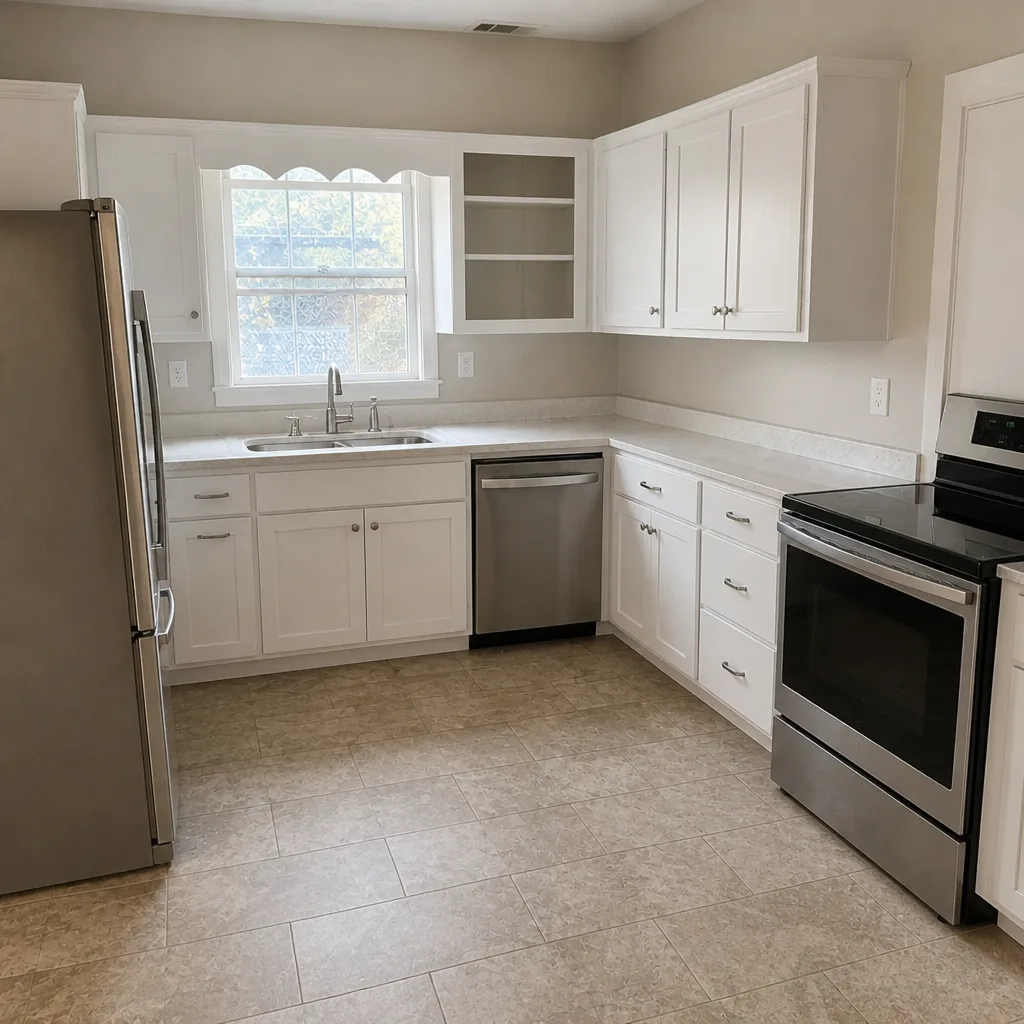
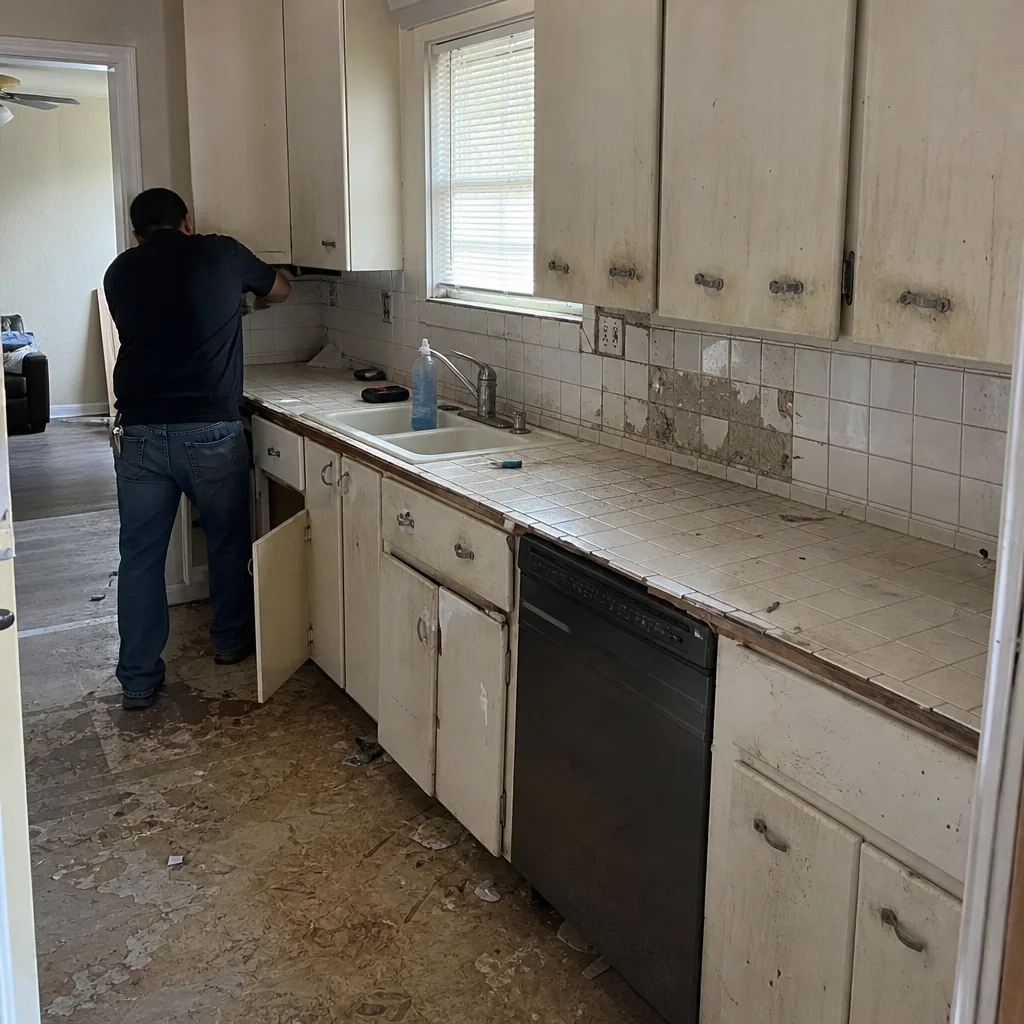
See the difference
 Before
 After
 Before
 After
 Before
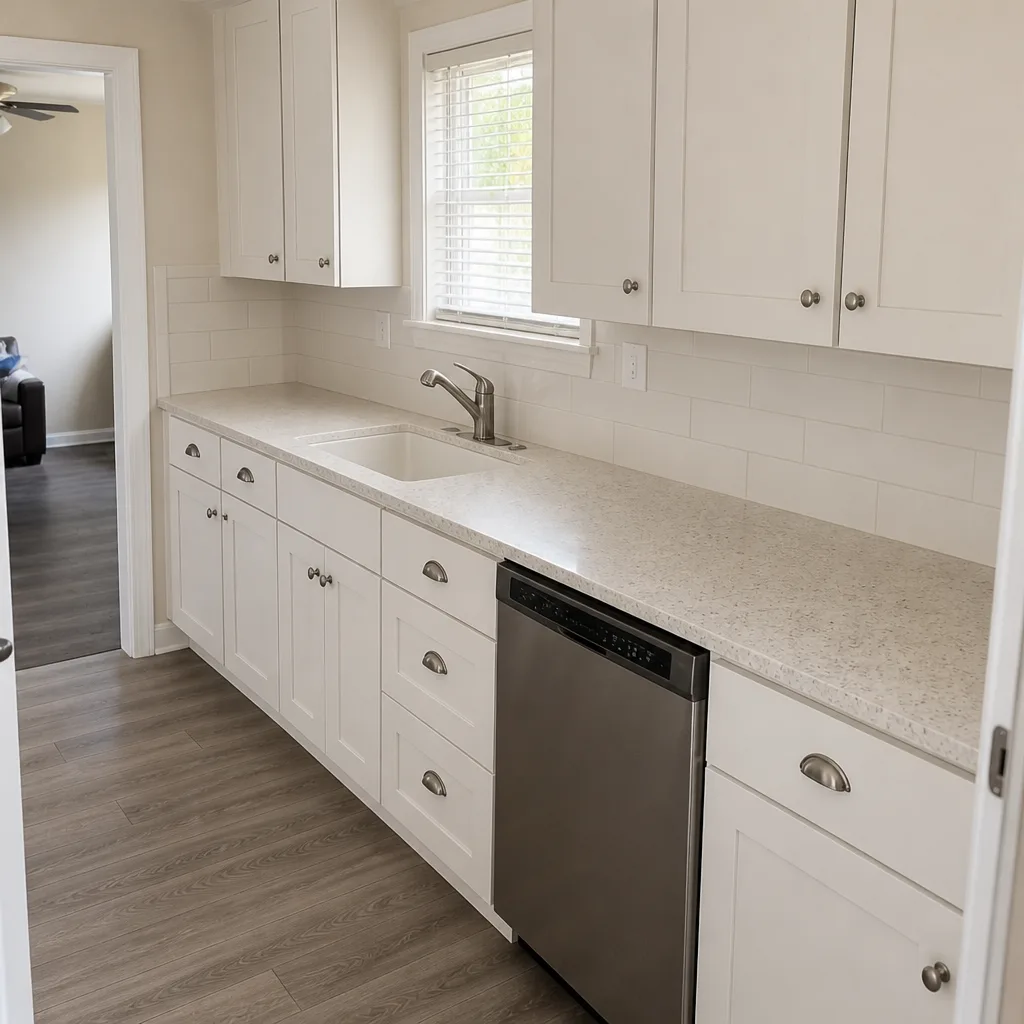 After
Frequently Asked Questions

Yes – a Texas homeowner can pull a permit as the responsible party on a residence they occupy, which is the homeowner-builder exemption. That lets you sign as builder and coordinate the trades. It does not allow you to self-perform electrical, plumbing, gas, or HVAC, and it doesn’t skip inspections. Call (833) 954-5327 if you want a written scope comparison before you start the permit process.
Not legally, in nearly every case. Electrical, plumbing, gas, and HVAC work requires a licensed professional in Texas, and the mechanical permits are issued to licensed contractors, not homeowners. A rental ADU is even clearer – the exemption doesn’t cover non-owner-occupied structures. Call (833) 954-5327 for a free estimate on any scope that touches the mechanical trades.
The portion of a claim tied to unpermitted work can be denied, and the addition may not be reflected in your coverage limits until it’s appraised as permitted square footage. Most carriers ask for the permit history at claim time. Call (833) 954-5327 before you build to see what a permitted scope protects against – estimates are free.
Often, yes. An appraiser who finds added square footage on the tax record without a matching permit history will flag it, and the lender may shrink or decline the loan until the work is permitted or the square footage is excluded. The clean fix is to permit it up front. Call (833) 954-5327 to get a written estimate for a permitted scope.
Usually yes – finish work is the best DIY candidate because it’s visible and fixable. Rough work is where the savings disappear once tool rental, material waste, and inspection failures are priced in. If you’re weighing a self-build against a quote, call (833) 954-5327 – we’ll look at the numbers with you at no charge.
Expansive clay swells and shrinks across the seasons, and an addition that isn’t tie-in detailed for differential movement between old and new slabs will show cracks at the junction. This is why the engineered foundation detail is the one part of an addition most worth trusting to a professional. Call (833) 954-5327 for a free estimate that includes the foundation scope in writing.
The Bottom Line
The DIY decision on a Dallas addition comes down to three questions: does the task trigger a permit inspection, does it flag the lender at refinance, and does it attach liability that follows the deed? Finish work – tile, trim, paint – is where a homeowner can save real money, provided you document concealed conditions with date-stamped photos and keep material receipts showing grade. Rough work and the mechanical trades are where the math turns against you, because the licensed sub is still required and the rework is expensive. Pull your own permit if you like, but sign a written price with a real scope for the rest – the paper trail protects you at sale.
Contact
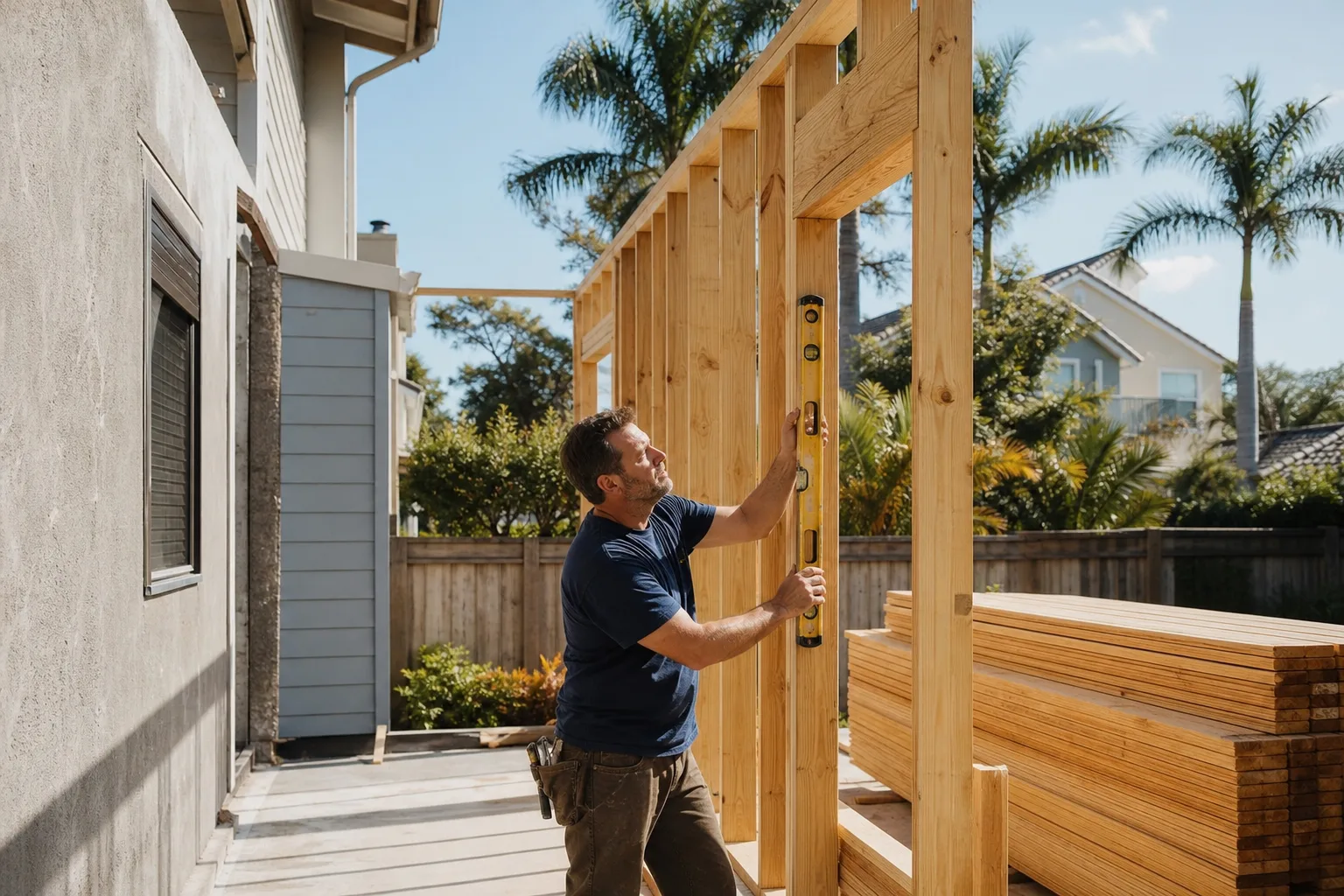
If you’re weighing a self-build against a quoted addition or ADU, Rowan Construction Group Dallas will give you a flat written price with a written scope and warranty before anyone picks up a tool, and every change is signed before it’s made. Our technicians have up to 19 years of experience, and we back the work with the 365-Day Done Right Promise. Call (833) 954-5327 to schedule your free estimate in Dallas.
Written by the team at Rowan Construction Group Dallas.