Last updated November 17, 2026








Free written scope consultation - allowances, timeline, and change-order rules on paper before a single trade is scheduled
Bathroom Remodeling Maintenance Schedule: What to Do and When
Schluter Systems warrants its tile-edging profiles for the life of the installation, but that warranty carries a clause most homeowners never read: it’s void if the adjacent caulk joint isn’t maintained. The same pattern repeats across Kohler, Moen, and Delta paperwork. The material is rarely what fails first in a Dallas bathroom. What fails is the soft stuff around it, the joints and seals and ventilation nobody schedules. After year three, nearly every callback we see traces back to grout, caulk, or an exhaust fan that quietly stopped moving air. This guide gives you a month-by-month and year-by-year schedule tied to the materials and brands commonly specified in a Dallas remodel, so your installation outlives its warranty instead of the other way around.
Quick Answer
A bathroom remodel needs a monthly wipe-down of grout and caulk seams, an annual exhaust-fan airflow test and caulk inspection, silicone caulk replacement every two to three years, grout resealing every one to two years for cement-based grout (longer for epoxy), and a full five-year professional inspection of valves, tile membrane, and drain assemblies. In Dallas, hard water speeds up cartridge wear and showerhead scaling, so cleaning intervals run shorter here than the national average.
Styles & brands we work with
- Kitchen remodeling
- Bathroom remodeling
- Home additions & ADU
- Roofing
- Windows & doors
- Driveway & pavers
- Fence
Table of Contents
- The Monthly Tasks That Prevent Most Callbacks
- Caulk vs. Grout: Different Joints, Different Timelines
- Exhaust Fan Airflow: The Silent Failure
- Dallas Hard Water and Your Fixture Brand
- How to Log Maintenance for Warranty Claims
- The Five-Year Professional Inspection List
- What Deferring Each Task Actually Costs
The Monthly Tasks That Prevent Most Callbacks
Fifteen minutes once a month handles the items that decide whether your remodel looks the same in year five. None of this requires a contractor, and all of it fits under the sink.
- Wipe the grout lines with a squeegee after every shower. Standing water is what feeds mildew in the grout’s porous surface. In a Dallas bathroom with no window, the humidity lingers longer than you think.
- Run a finger along the caulk seam where the tub or shower pan meets the wall. If the silicone has pulled away or gone chalky, you’ve caught a leak path before water reaches the substrate behind the tile.
- Check the toilet base for wobble. A rocking toilet compresses its wax ring and eventually leaks into the subfloor. A tightened bolt now saves a floor repair later.
- Look at the exhaust fan grille. Dust on the blades cuts airflow more than most people expect.
- Open the vanity cabinet and glance at the supply lines. Braided lines with any corrosion or bulging should be replaced, not watched.
We’ve seen three-year-old Dallas remodels where a single missed caulk seam allowed water behind a shower wall, and the repair looked nothing like a maintenance issue. It looked like a $4,000 tile job.
Caulk vs. Grout: Different Joints, Different Timelines
These are not the same material and they do not age on the same clock. Treating them interchangeably is the most common reason a Dallas bathroom fails early. Here’s the distinction, with timelines you can put on a calendar.
- Silicone caulk (all movement joints): Replace every 2 to 3 years. Every inside corner, every tub-to-wall seam, every shower-pan perimeter is a movement joint and belongs to caulk, not grout. Silicone flexes; grout does not.
- Sanded cement grout (1/8-inch joints and wider): Reseal every 12 to 24 months. The sealer is what keeps water out of the porous cement. In Dallas’s humidity swings, the shorter end of that range is safer.
- Unsanded cement grout (narrow joints): Reseal every 18 to 24 months, same reasoning.
- Epoxy grout: Reseal every 4 to 5 years, or skip sealing entirely depending on the manufacturer’s spec. Epoxy is far less porous, which is why many remodelers specify it in shower floors. Read your product sheet before assuming it needs sealer at all.
One practical note on Dallas: our seasonal humidity shifts cause more expansion and contraction at movement joints than a drier climate would. That’s why we schedule silicone replacement at the front of the 2-to-3-year window here. If you want the tile work itself done right the first time, our Rowan Construction Group Dallas home page covers how we specify waterproofing and substrates.
Exhaust Fan Airflow: The Silent Failure
An exhaust fan rated at 110 CFM in 2020 can be effectively moving 60 CFM by 2024 without making a single unusual sound. Dust on the blades, a clogged grille, and a sagging duct all compound. The fan still hums, so nobody checks. Meanwhile the moisture it was supposed to remove stays in the room, and mold gets its opening.
Here’s how to test airflow with a single tissue:
- Turn the fan on and let it run for a minute.
- Hold a single-ply tissue flat against the grille.
- If the fan holds the tissue firmly, airflow is healthy. If the tissue flutters or falls, airflow has degraded.
- Remove the grille and vacuum the blades. Re-test. If it still won’t hold the tissue, the fan or duct needs professional attention.
Run the fan for 20 minutes after every shower, not five. That’s the interval that actually clears moisture from a Dallas bathroom, where outdoor humidity is already high and the fan has less headroom to work with. A fan that fails the tissue test is a mold risk disguised as a working appliance. In our experience, this single check prevents more long-term damage than any other monthly task on the list.
Dallas Hard Water and Your Fixture Brand
North Texas Municipal Water District supply runs roughly 300 to 400 parts per million total dissolved solids. That’s hard enough to leave visible scale on a showerhead within weeks and to wear valve cartridges noticeably faster than the manufacturer’s national average assumes. Dallas bathrooms live with this, so cleaning intervals get shorter.
- Kohler and Moen showerheads: Soak in white vinegar monthly to dissolve scale. Both brands publish a cartridge replacement interval, and hard water shortens it.
- Delta valve cartridges: Expect the cartridge to wear on the shorter end of its rated life. Cleaning the aerator and cartridge screen every six months keeps pressure steady and scale from seizing the valve.
- Drain assemblies: A once-monthly enzyme treatment keeps soap scum and mineral buildup from narrowing the drain, which matters more in hard-water Dallas than most guides admit.
- Glass shower doors: Squeegee after every use and treat with a mineral-repellent coating. Scale etches glass permanently, and no cleaner reverses it.
Label your fixtures when they’re installed and keep the model numbers. When a Kohler or Moen cartridge fails early, the brand’s warranty claim is easier to support when you can name the product and the date. That habit is cheap and it pays out years later.
How to Log Maintenance for Warranty Claims
Kohler, Moen, and Delta all condition their warranties on documented care. A claim without dates and product names is a claim that stalls. Keep a simple written log and the paperwork stops being a fight.
- Record the date, the task, and the product or brand involved. “June 2026, resealed tub seam, silicone, brand X” is enough.
- Keep the model and serial numbers for every fixture in one folder, digital or paper.
- Photograph before and after any repair or resealing. Photos are the evidence a warranty department accepts.
- Note who did the work, whether you or a professional.
This discipline mirrors what we deliver on every Rowan job: a documented photo record on every visit, standard not optional. If you’re planning a fresh installation, our Home Additions & ADU in Dallas page shows how that documentation carries through larger projects.
The Five-Year Professional Inspection List
Some tasks belong to a trained eye, not a homeowner. At the five-year mark, this is what a professional should walk through, in order:
- Inspect the waterproofing membrane behind shower tile for any sign of compromise.
- Test every valve cartridge for scale and wear, and check shutoff valves under the vanity.
- Examine the drain assembly and the wax ring seal at the toilet base.
- Measure exhaust-fan airflow properly, not just by the tissue test.
- Check the caulk and grout lines at the tile-to-tub transition and shower pan perimeter.
Each of these is a scheduled inspection, not an emergency. That difference matters: a membrane inspected at five years is a maintenance line item; a membrane found failing at eight years is a demolition. A Dallas bathroom with hard water and seasonal humidity benefits from this inspection on the earlier side. The same reasoning applies to the exterior envelope, which is why our Fence Installation in Dallas page treats inspection intervals as part of the installation itself.
What Deferring Each Task Actually Costs
The cheapest maintenance item is rarely the one that gets skipped. Here’s the honest math, comparing routine care against the deferred repair it prevents. These are typical ranges, not quotes.
- Silicone caulk replacement runs a few hundred dollars as routine service; deferred, the water behind tile can mean a partial shower rebuild at several thousand.
- Grout resealing is a modest line item; ignored porosity leads to staining and eventual tile replacement.
- Exhaust fan service or replacement is a small cost; deferred, the moisture promotes mold remediation work that dwarfs the fan’s price.
- Valve cartridge replacement is inexpensive and quick; deferred, a seized cartridge or a failed valve body turns a small fix into plumbing work behind the wall.
None of these numbers surprise a homeowner who priced the original remodel. What surprises people is how many of them trace back to a task that took fifteen minutes a month. Our Driveway & Pavers in Dallas page makes the same case for hardscape: the schedule is what protects the investment.
Common Mistakes to Avoid
- Treating caulk and grout as the same material. Silicone at movement joints and grout everywhere else is the correct split; swapping them causes failure at corners.
- Skipping the tissue test because the fan still runs. A fan that hums can be moving half the air it was rated for, and you won’t know without checking.
- Ignoring Dallas hard water. Assuming national cleaning intervals apply here means cartridges and showerheads wear faster than expected.
- Cleaning tile with harsh acid on a schedule. Aggressive cleaners erode grout sealer and cement, defeating the point of resealing.
- Not logging maintenance. A warranty claim without dates and product names often stalls, even when the failure is legitimate.
- Running the fan five minutes after a shower. Twenty minutes is the interval that actually clears a Dallas bathroom’s moisture.
- Waiting until something leaks to call anyone. A five-year inspection is a maintenance line item; a leak is a repair. The difference is your calendar.
See the difference
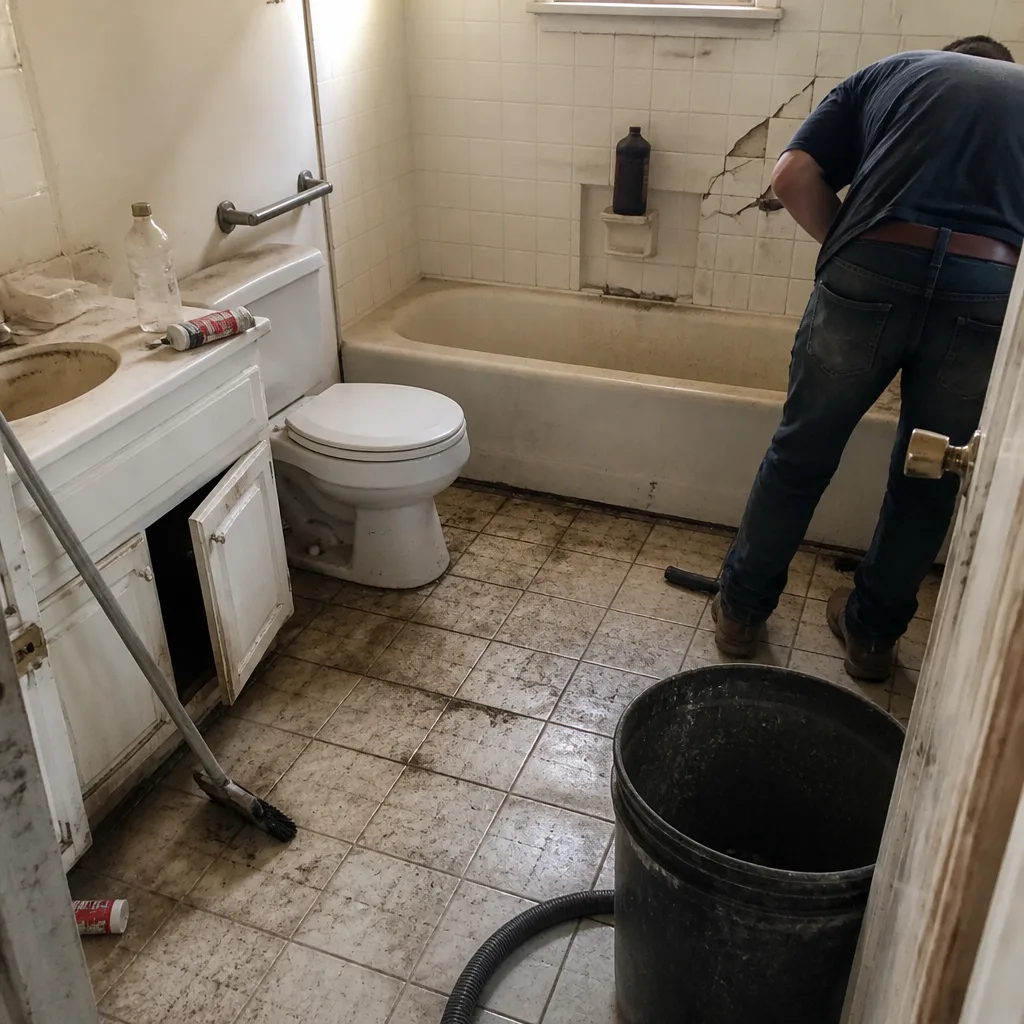 Before
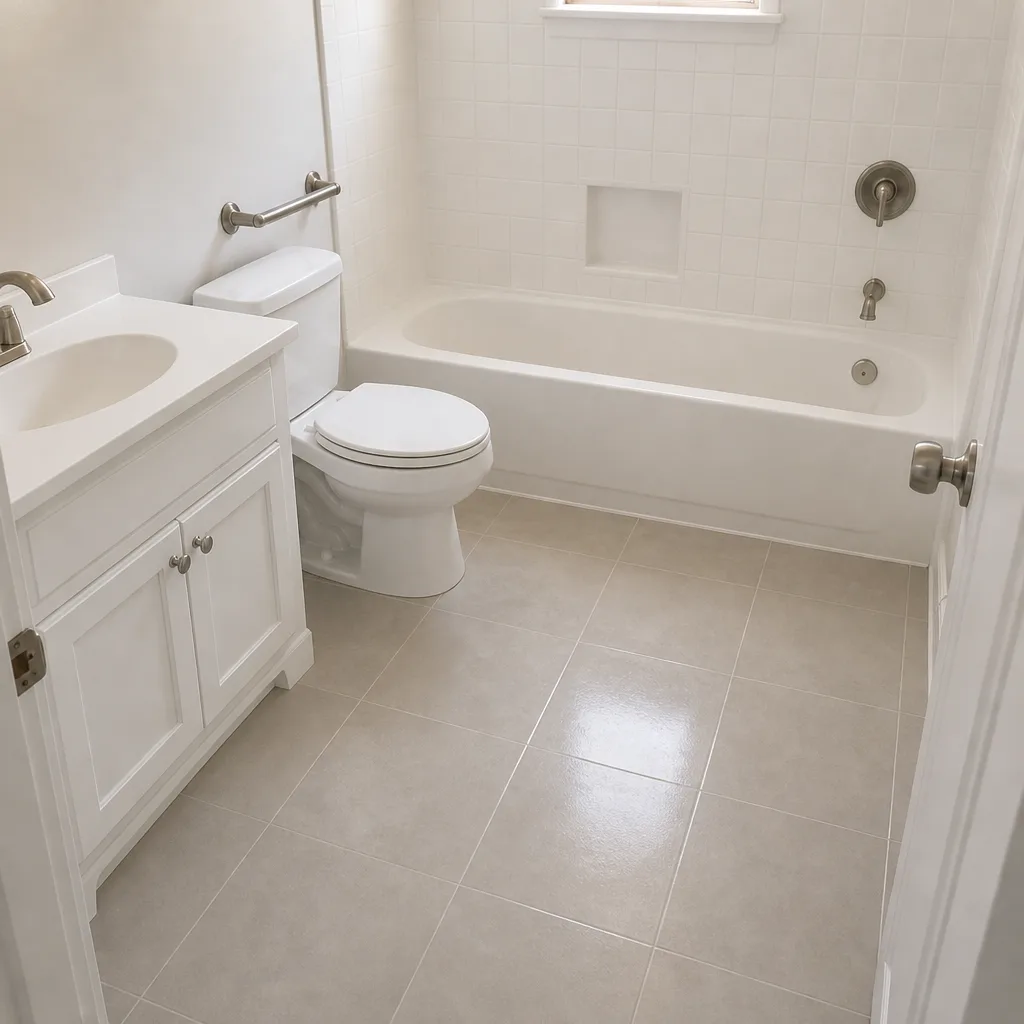 After
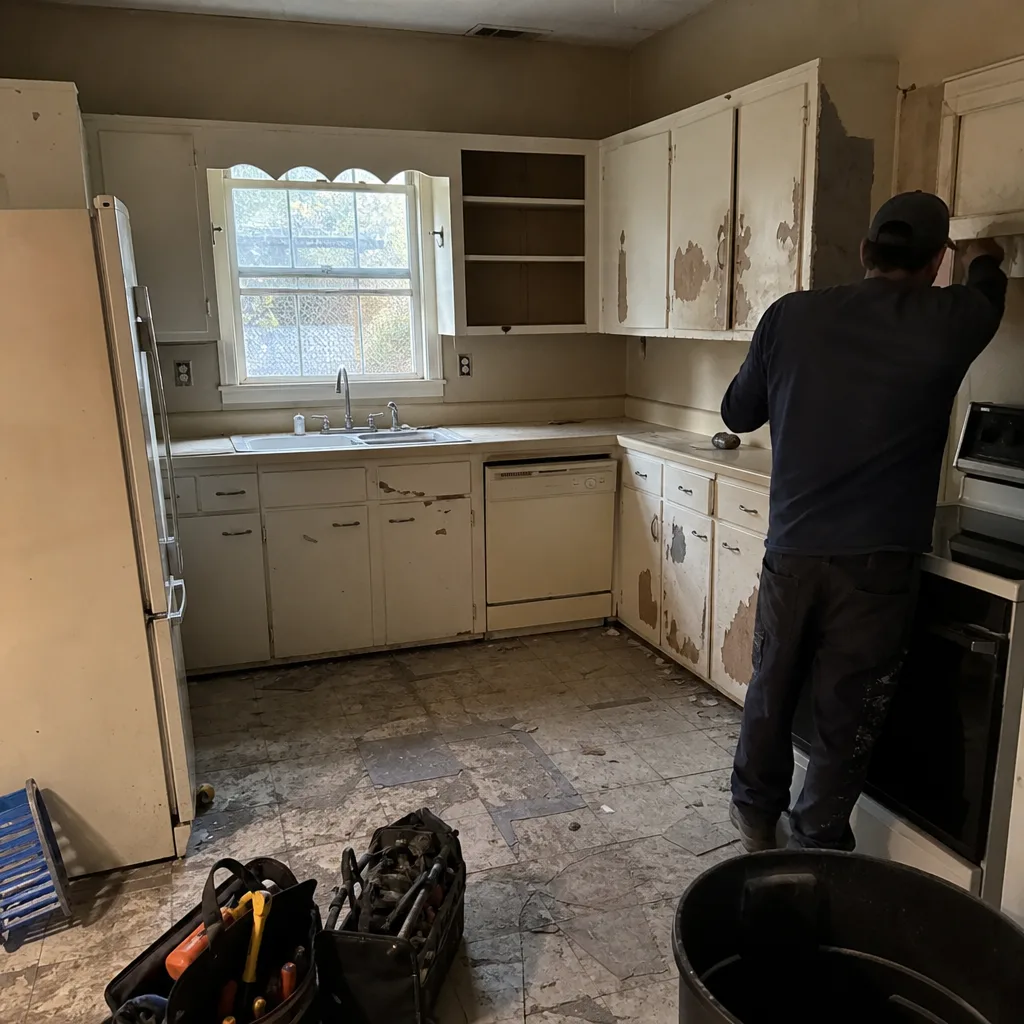 Before
 After
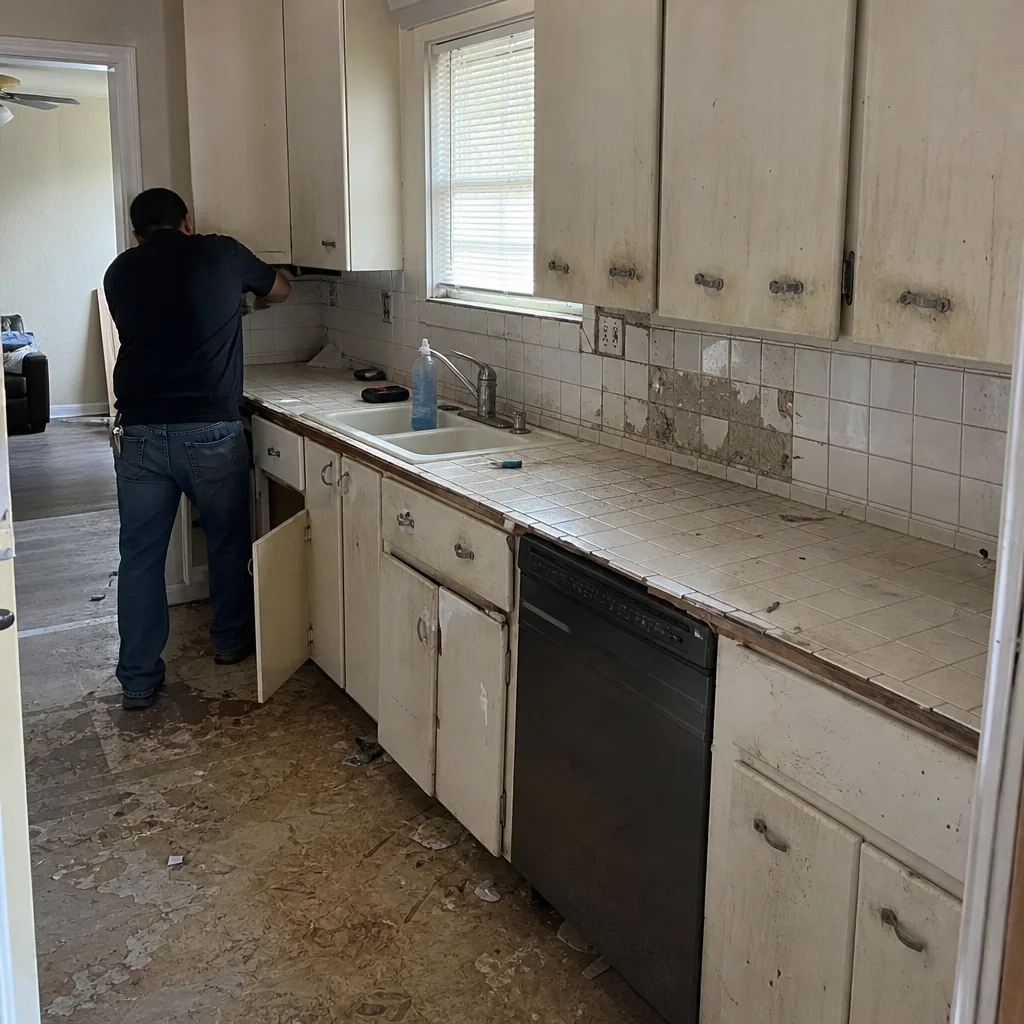 Before
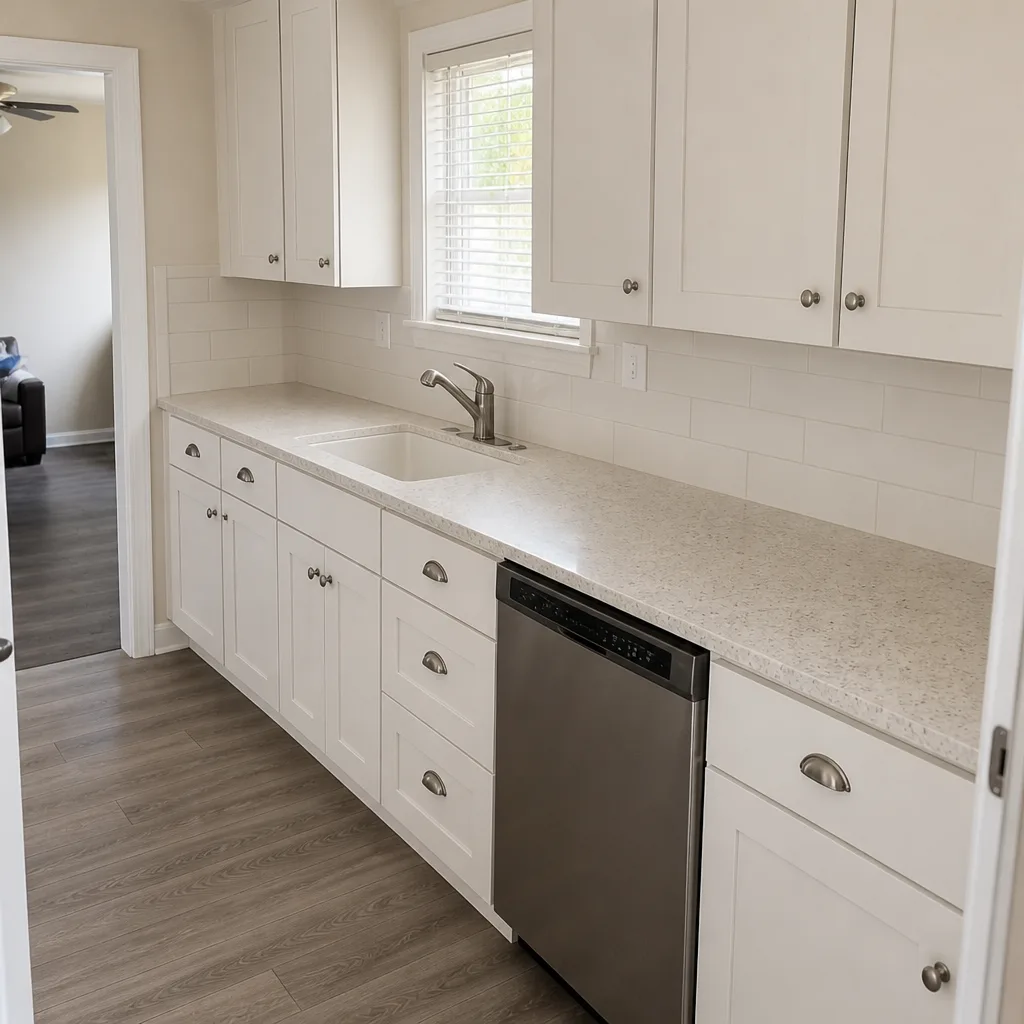 After
When to Call a Professional
Call a professional when the tissue test fails even after cleaning the grille and blades, when caulk keeps pulling away from the same seam within weeks of replacement, when you see any softness or staining at a tile-to-tub transition, or when a valve cartridge is seized and won’t come free without risking the valve body. Those are signs the problem sits behind the surface, and a trained eye should look before it grows. A five-year inspection is also a professional task, not a homeowner one, because the membrane and the valve wear aren’t visible without opening things up. Rowan Construction Group Dallas offers free estimates in Dallas, and our teams work to a written price before anything starts. Call (833) 954-5327 to schedule a visit.
Frequently Asked Questions
Replace silicone caulk at movement joints every two to three years. In Dallas’s humidity swings, aim for the earlier end because joints expand and contract more here than in a drier climate. If a seam keeps failing sooner, call (833) 954-5327 for an inspection; estimates are free.
Epoxy grout typically needs resealing every four to five years, or not at all depending on the manufacturer’s spec. Cement-based grout, sanded or unsanded, needs resealing every 12 to 24 months. Check your product sheet, then confirm with a professional at your five-year inspection.
Hold a single-ply tissue against the grille while the fan runs; if the fan won’t hold it firmly, airflow has degraded. Clean the blades and grille and test again. If it still fails, the fan or duct needs professional service. Call (833) 954-5327 for an airflow check with a written assessment.
NTMWD water runs roughly 300 to 400 ppm total dissolved solids, which leaves scale quickly on showerheads and wears valve cartridges faster than the national average. Soak Kohler, Moen, and Delta fixtures in vinegar monthly and clean cartridge screens every six months to slow the wear.
A missed caulk seam or failing fan can turn a few-hundred-dollar maintenance item into a several-thousand-dollar repair behind the tile. The five-year inspection is the safeguard. Call (833) 954-5327 for a written estimate before a small issue becomes a large one.
Yes. Kohler, Moen, and Delta warranties are conditioned on documented care, so keep dates, product names, and photos of each task. That record supports a claim if a cartridge or fixture fails early. For warranty questions, call (833) 954-5327.
The Bottom Line
A bathroom remodel lasts longer because of the maintenance schedule than because of the materials, and the schedule is mostly ordinary work: monthly wipes, an annual fan test and caulk check, silicone every two to three years, resealing on the grout’s clock. Dallas hard water and humidity shorten every interval here, so lean earlier rather than later. Log what you do, and the warranties you paid for will actually hold. When a task lands on a contractor, get a written price before anyone picks up a tool. That’s the standard our Rowan Construction Group Dallas home page is built on, and it’s why we offer a free second opinion on any written estimate. Call (833) 954-5327 for a free estimate in Dallas.
Written by the team at Rowan Construction Group Dallas.