
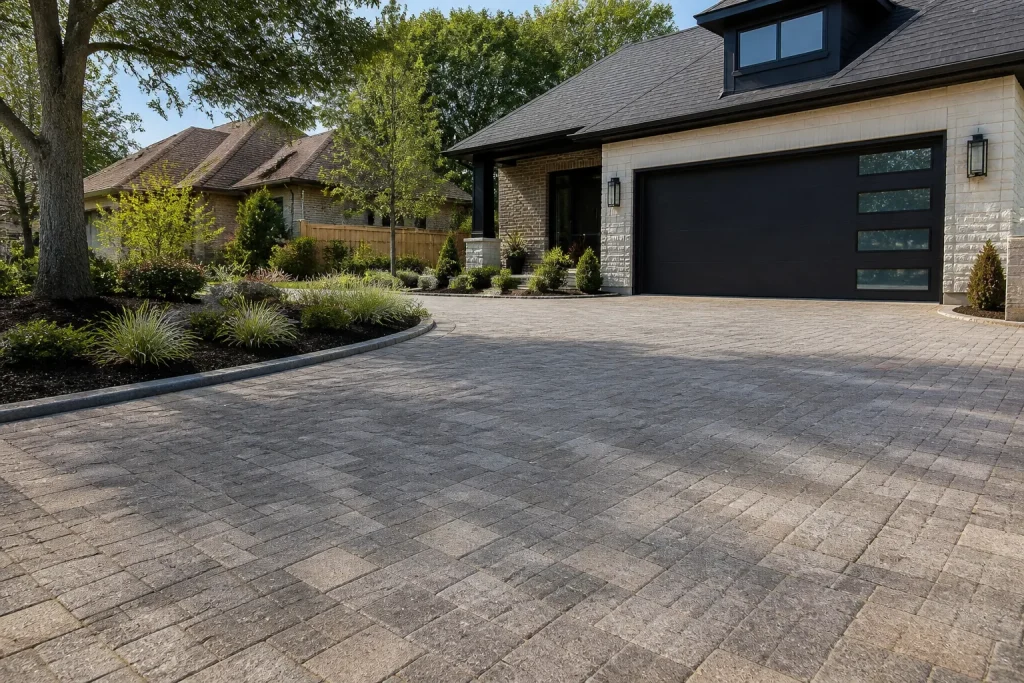
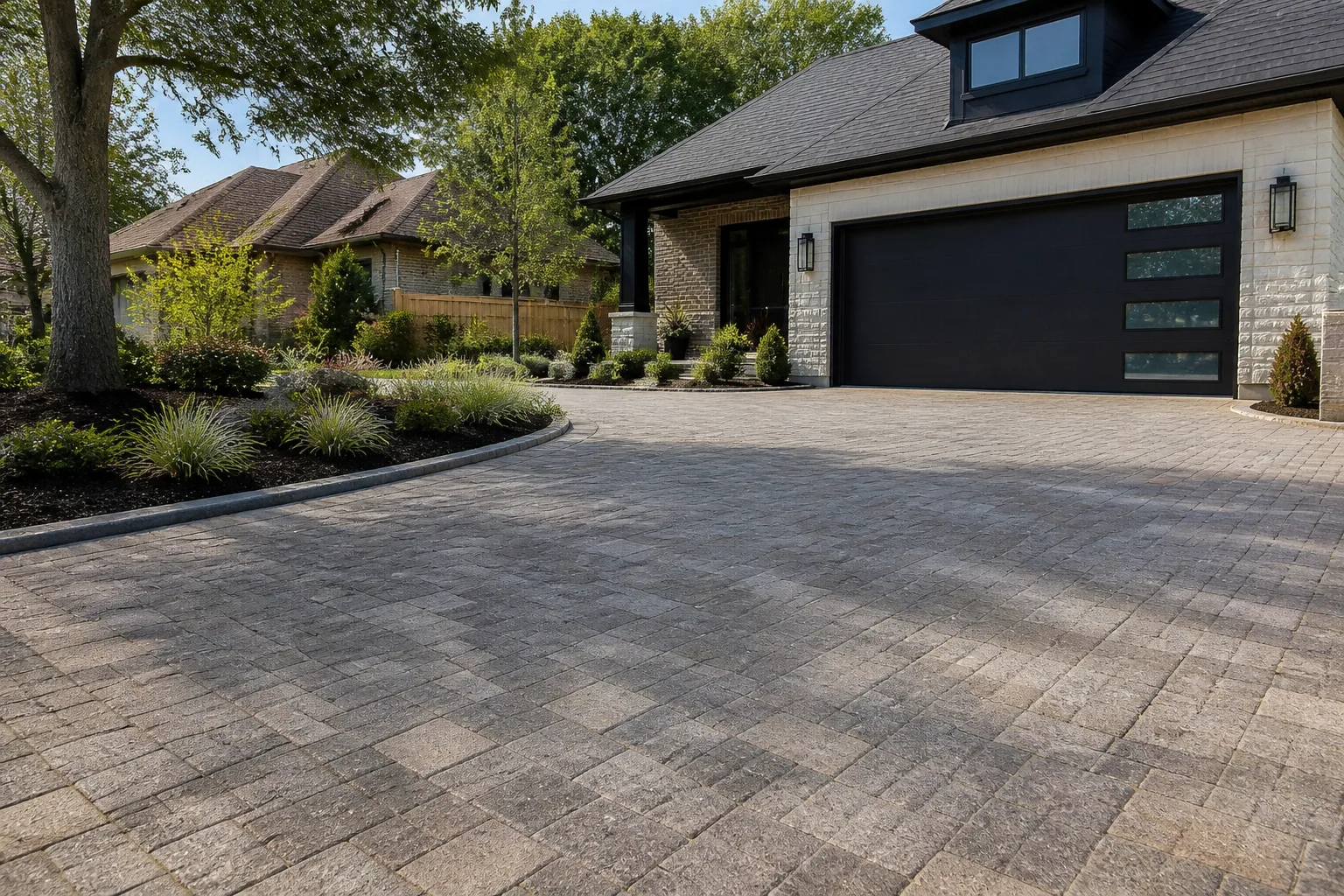
Tamko Driveway & Pavers in Dallas: A Homeowner’s Guide
TAMKO publishes installation requirements in their technical data sheets that most installers never reference, and the gap between those specifications and common field practice is where paver failures begin. In Dallas, that gap matters more than in most markets because the clay under your driveway moves with every wet and dry cycle. This guide covers what TAMKO’s own documentation requires, and what to do when a contractor’s proposal doesn’t match it. If you’d rather hand the measurements to someone who reads the spec sheets for a living, call (833) 954-5327.
What Does TAMKO Actually Specify for Paver Base and Drainage?
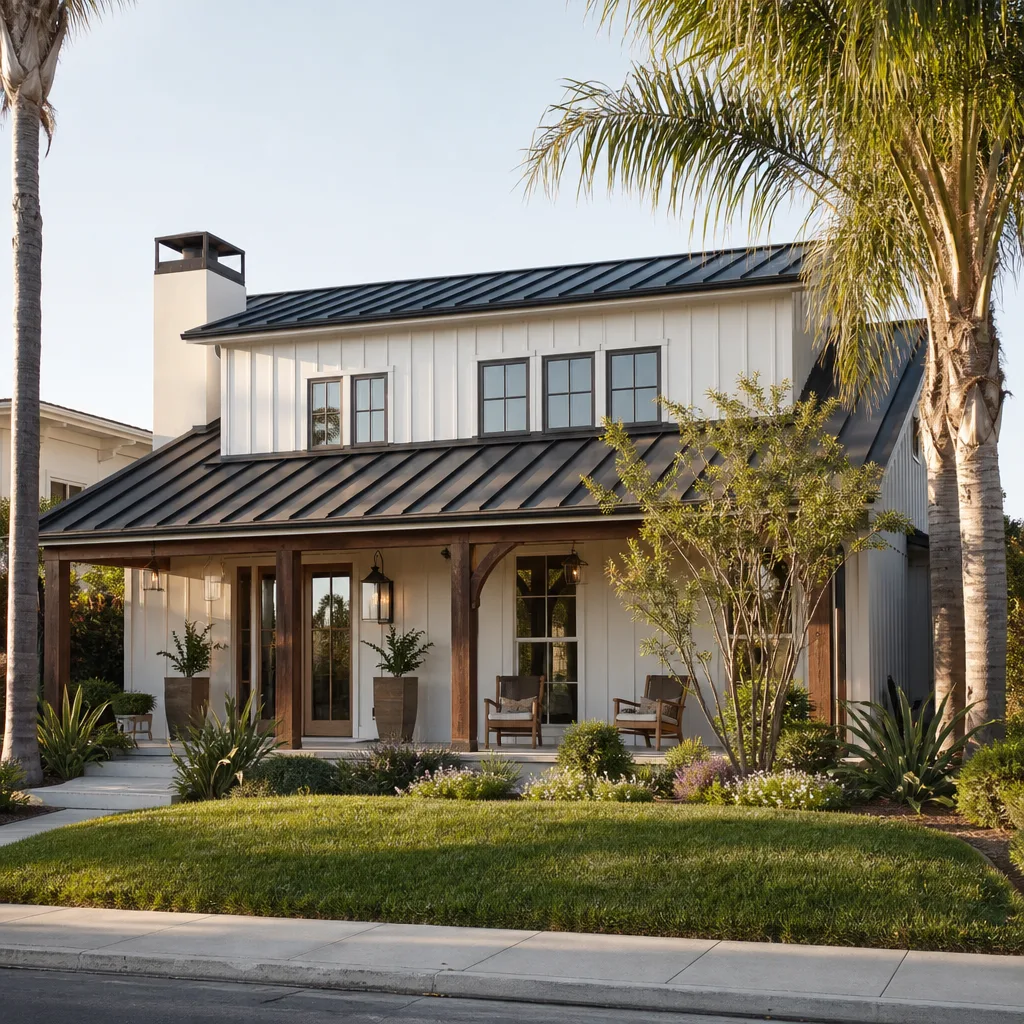
TAMKO’s installation documentation calls for a compacted aggregate base, typically 4 to 6 inches of crushed stone for a residential driveway, placed in lifts and compacted to 95 percent density before any bedding sand goes down. Drainage falls to a minimum slope of roughly 2 percent away from the structure, and the bedding layer stays at about 1 inch. Those numbers aren’t suggestions; they’re the conditions the warranty is written against. Because independent local professionals perform the work, the written scope is where those numbers have to live.
Here’s the comparison that matters, and you won’t find it on most Dallas contractor sites:
- TAMKO spec: 4 to 6 inches of compacted aggregate, placed in lifts of 2 to 3 inches, each compacted before the next goes down.
- Typical low-bid Dallas install: 2 to 3 inches of base, dumped and compacted once, often over native soil that was never proof-rolled.
- TAMKO spec: Geotextile separation fabric over expansive subgrade.
- Typical low-bid install: Fabric omitted to save a few hundred dollars in material.
- TAMKO spec: 2 percent slope to a defined discharge point.
- Typical low-bid install: “It drains to the street” with no fall calculated and no edge restraint on the downhill side.
On Dallas clay, the difference shows up in year two or three, not month one. That’s the whole problem. A driveway that skipped the base passes inspection by eye and fails by water.
Why Dallas Clay Soil Makes TAMKO’s Base Requirements Non-Negotiable
Dallas sits on expansive clay that swells when it’s wet and shrinks when it dries, and the shrink-swell cycle here can move a slab or a paver field far more than the paver itself will tolerate. TAMKO’s base and separation-fabric requirements exist precisely for this kind of subgrade. Skip them and the pavement doesn’t fail because the paver was bad; it fails because the ground under it moved and the pavers had nowhere to go but up and apart.
We see this across the metro. In older neighborhoods around Lakewood and the M Streets, driveway pavers laid over shallow base heave at the joints after a wet spring. Out in Plano and Frisco, where newer construction scraped off topsoil and left fill, the settlement tends to be uneven and slower, and it shows up as a low spot that holds water against the garage door. Different failure, same root cause: the base wasn’t built to what the manufacturer’s technical data sheet required.
The mitigation steps TAMKO’s documentation points toward aren’t exotic. They’re just rarely written into a Dallas proposal:
- Proof-roll the subgrade and remove soft spots rather than bridging over them.
- Install separation geotextile before the aggregate base goes down.
- Place aggregate in lifts and compact each lift to density.
- Set edge restraint on all four sides, including the street apron.
- Grade to a positive discharge point, not “toward the yard.”
Every one of those lines should appear in the written scope before anyone breaks ground. If a Dallas proposal lists “base prep included” with no numbers, that’s not a scope; that’s a placeholder.
What Do TAMKO’s Numbers Mean for a Dallas Driveway?
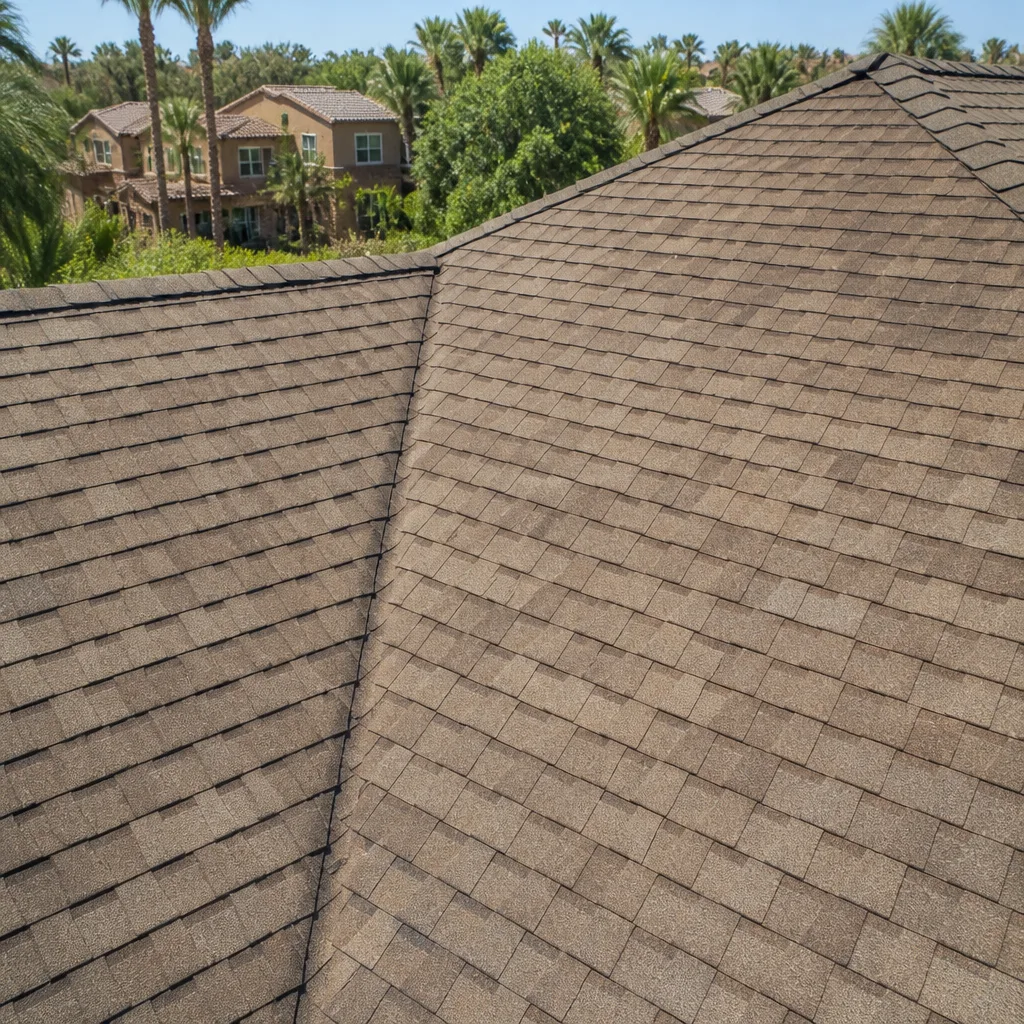
Ask a contractor to see the TAMKO technical data sheet for the specific product line they’re proposing, and read three things on it: the load rating, the slip resistance measured as DCOF (Dynamic Coefficient of Friction), and the freeze-thaw tolerance. Dallas gets ice events most winters, and a paver rated for a milder climate cycles differently than one specified for freeze-thaw exposure. The DCOF number matters on the apron where the driveway meets the street and stays damp.
Load rating is the one homeowners ask about least and should ask about most. A residential driveway carries a passenger vehicle, but it also carries the occasional delivery truck, the landscaping trailer, and whatever your neighbor’s contractor parks on it. The product’s published rating tells you what it’s built for. If the number on the data sheet doesn’t match how the driveway will actually be used, the paver is wrong for the job no matter how good it looks in the sample.
None of this requires you to become an engineer. It requires the contractor to hand you the spec sheet and point at the line. In our experience, the contractors who can do that in thirty seconds are the ones whose drives are still flat after a decade of Dallas summers.
How Should a TAMKO Paver Be Specified in Your Written Contract?
A contract that says “TAMKO pavers” is not a specification. It’s a brand name with no address. To lock in what you’re actually buying, the written scope needs four things: the product line, the SKU or color code, the quantity in square feet, and an overage percentage for cuts and breakage. Standard practice is 5 to 10 percent overage, and it should be stated as a line item, not buried in a lump sum.
Ask for the contract to read like this:
- Product line named exactly as TAMKO lists it.
- SKU or color code, so nobody substitutes a similar-looking paver mid-job.
- Square footage of finished pavement, measured, not estimated.
- Overage stated as a percentage and priced.
- Base spec with depth in inches and compaction method.
- Edge restraint and drainage discharge point named.
Under Clause 1 of the Haven Standard, the price is written before anyone starts, and no change proceeds until a signed change order is in place. That discipline is what keeps a paver job from growing a mystery line item for “extra base we found.” If the base needs more material than the quote assumed, you’ll see it in writing, with a number, before the work continues. The same written-price rule applies whether it’s a driveway or a kitchen, and you can see the full range of work on our Rowan Construction Group Dallas home page.
What Voids a TAMKO Paver Warranty in Dallas?
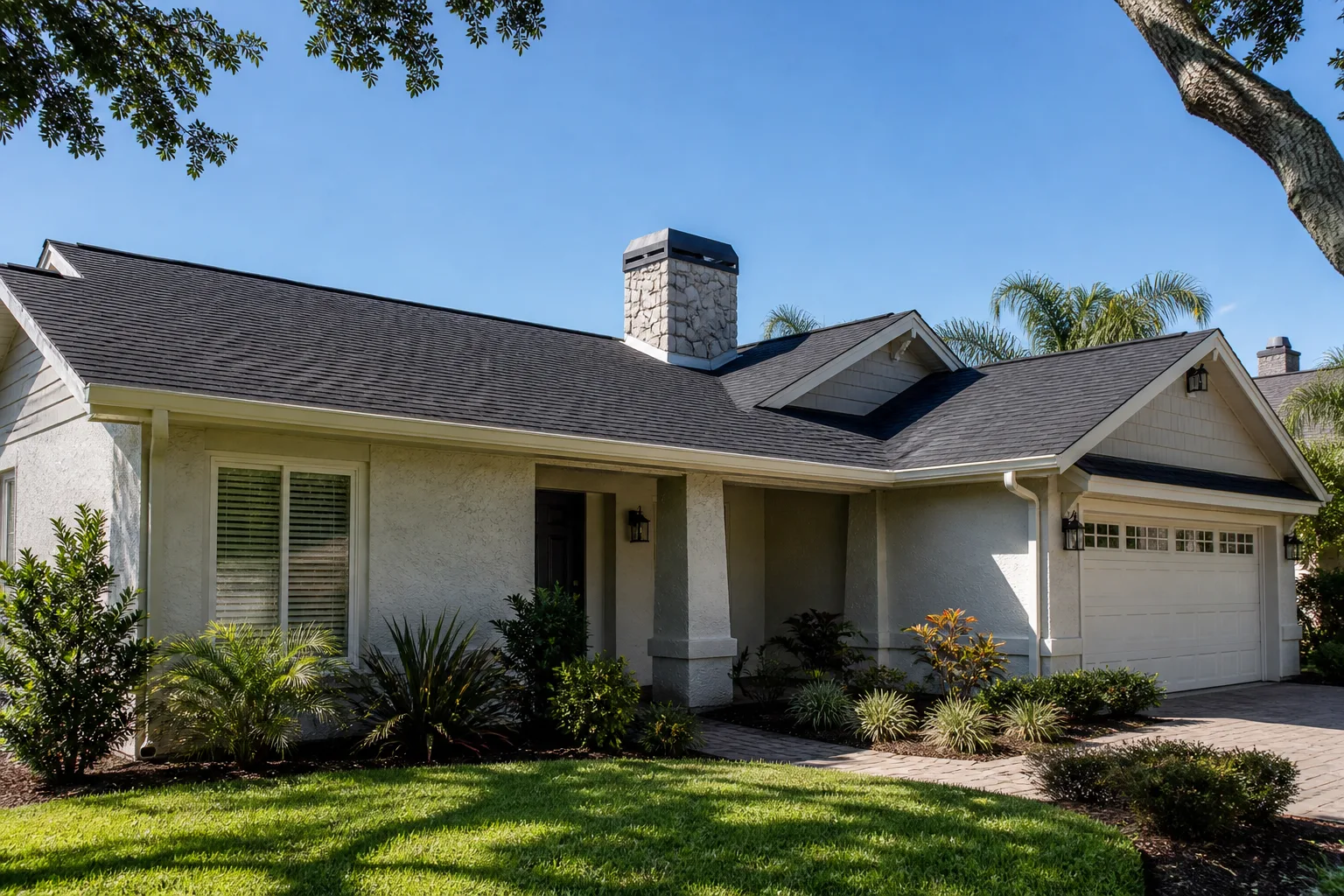
Improper base preparation is the single most common warranty-voiding condition in TAMKO’s documentation, and it’s the one contractors rarely mention at signing. The warranty is written assuming the installer followed the technical data sheet: correct base depth, correct compaction, correct drainage. When a Dallas install skips a step, the manufacturer can point to it and the coverage goes away. You end up holding a warranty that covers a product that was never given the conditions it was warranted for.
The other voids to know about:
- Installation over a base that wasn’t compacted to the specified density.
- Missing edge restraint, which lets the field spread and open joints.
- Drainage that directs water under the pavement instead of away from it.
- Failure to register the warranty per TAMKO’s process after installation.
Registration matters. A warranty that’s never registered may not be honored even when the install was perfect. Ask your contractor who files it, get the confirmation, and keep it with the written scope and the photo record. Documentation is the only thing that survives a decade of Dallas weather and a change of address.
When to Call a Pro
If your existing Dallas driveway shows heaving joints, a low spot that ponds against the garage, or edge pavers that have started to walk outward, the base is the suspect, and there’s no surface fix that holds. Repointing or re-sanding over a failed base buys you one season. The repair happens underneath. That’s a job for a crew that owns compaction equipment and reads the spec sheet, not a weekend project. You can see how we approach the work on our Driveway & Pavers in Dallas page.
Related services in Dallas: homeowners redoing a driveway often have the same conversation about their perimeter. Our Fence Installation in Dallas and Home Additions & ADU in Dallas pages cover the adjoining work.
The Bottom Line
TAMKO’s technical data sheets spell out base depth, compaction density, drainage slope, and separation fabric, and Dallas clay makes every one of those lines load-bearing. A proposal that names the product but not the base spec is a proposal that leaves your warranty exposed. Get the product line, the SKU, the overage, and the base numbers in writing before anyone starts. If you’re in Dallas and need help, Rowan Construction Group Dallas offers free estimates, and our technicians bring up to 19 years of experience to reading the spec and building to it. Call (833) 954-5327. Every quote is a flat written price with a written scope before work begins, backed by the 365-Day Done Right Promise: if it isn’t done right, we make it right.
Frequently Asked Questions
Most Dallas paver driveways land in a broad range depending on square footage, base conditions, and the product line you choose, and the base is often the variable that moves the number most. Because clay subgrade frequently needs deeper base and separation fabric than a flat-lot install, a proper written quote itemizes base depth and overage rather than quoting a single square-foot price. Call (833) 954-5327 for a free written estimate on your Dallas driveway.
It shouldn’t, and with us it doesn’t without your signature. Under Clause 1, the price is written before anyone starts, and no change proceeds until a change order is signed. If the crew finds soft subgrade that needs more aggregate than the quote assumed, you see the number in writing first and decide. Call (833) 954-5327 to schedule your free estimate.
Permit requirements vary by what’s being changed and where you are in Dallas, and the scope of your job determines what’s needed. We confirm the permit picture during the estimate and put it in the written scope so nothing gets discovered mid-job. Call (833) 954-5327 and we’ll walk you through it for your address.
Most residential Dallas paver driveways run a matter of days for the install itself, and base work and wet weather are what stretch the schedule. Because the base has to be placed in compacted lifts and the ground has to be workable, a wet Dallas week can add time; the written scope sets expectations before the crew arrives. Call (833) 954-5327 for a timeline on your project.
Written by the team at Rowan Construction Group Dallas.
Need Construction Help?
Call Rowan Construction Group Dallas - licensed & insured, here with fast after-hours help in Dallas.
(833) 954-5327