


How to Choose the Right Construction Company in Dallas
The single strongest predictor of how a Dallas construction project turns out isn’t the portfolio gallery or the star rating. It’s whether the contractor puts a written price in front of you before work starts, documents every change order in writing, and can show you a cost-variance record across finished jobs. Texas doesn’t license general contractors for most residential work, so the safety net most homeowners assume exists simply doesn’t. That means you have to verify. Here’s how.
If you’d rather not build your own vetting spreadsheet from scratch, call us at (833) 954-5327 and we’ll walk you through a free estimate the same way we do for every Dallas homeowner.
Key Takeaways
- Texas has no statewide general contractor license for most residential construction, so TDLR verification is the start, not the finish.
- Pull the contractor’s public permit history through the City of Dallas permit portal. A project trace beats a testimonial.
- Ask how change orders are processed. Verbal sign-off becomes an invoice surprise; a signed change order is the whole ballgame.
- Read three clauses before you sign: scope definition, materials substitution, and dispute resolution.
- Verify the company entity through the Texas Secretary of State and check Dallas County civil court records.
Does Texas Require a Contractor License for Residential Work in Dallas?
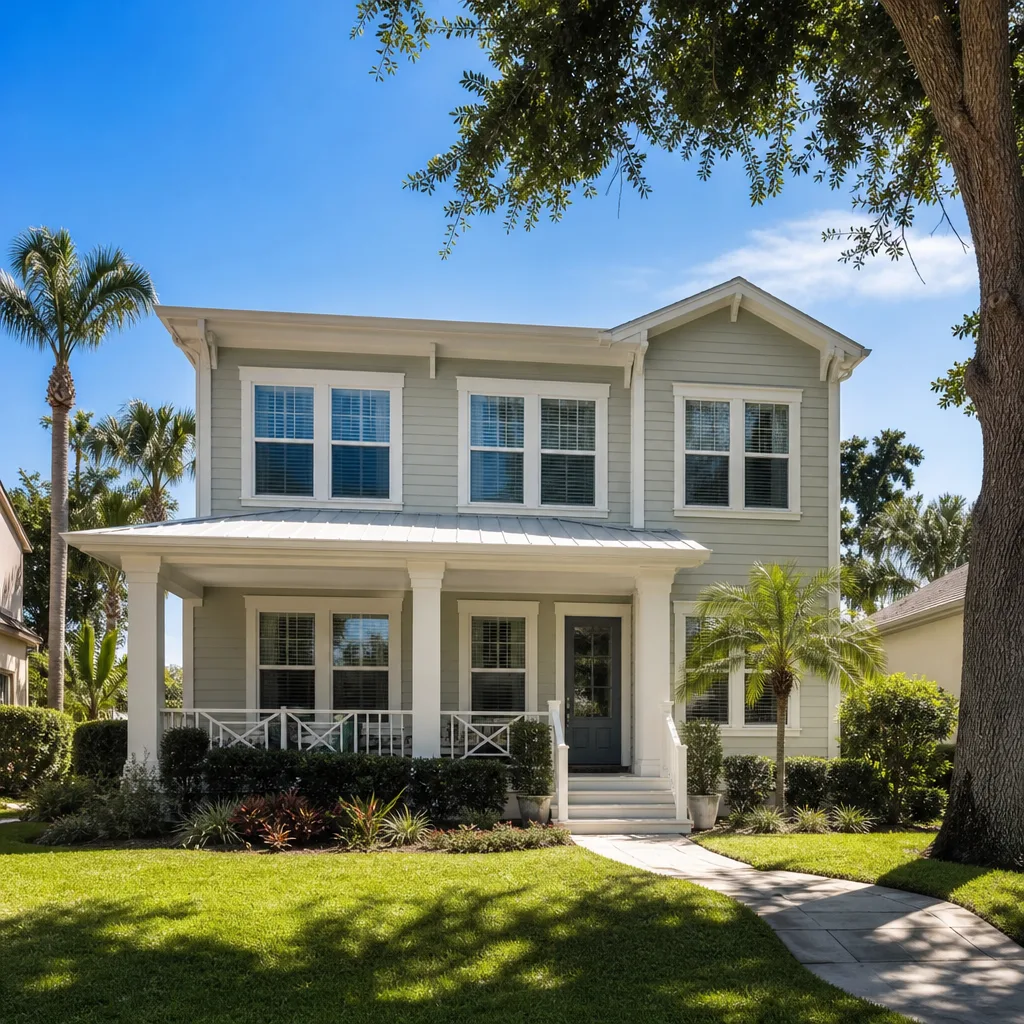
For most residential construction in Dallas, no. Texas does not license general contractors at the state level for typical home remodeling, additions, or roofing. Some trades are regulated separately, and electrical, plumbing, and HVAC work each carry their own licensing paths. This is the part that surprises homeowners most: the credential many people assume filters out bad actors doesn’t exist for a large share of Dallas construction companies.
What that means in practice is that “licensed and insured” can mean anything a contractor wants it to. So you verify the pieces that do exist:
- TDLR (Texas Department of Licensing and Regulation): Search the contractor’s name and any trade-specific license at tdlr.texas.gov. Air conditioning, electrical, and boiler work show up here. If a company claims a state credential, confirm it in the TDLR database before you believe it.
- Texas Secretary of State business registry: Search the company name at sos.state.tx.us to confirm the business entity actually exists, who is registered as the governing person, and whether the entity is active or forfeited. A contractor working under a name that isn’t a registered Texas entity is a red flag worth taking seriously.
- Dallas County civil court records: The Dallas County District Clerk’s online search lets you look up lawsuits by party name. A single dispute isn’t disqualifying. A pattern of breach-of-contract or Deceptive Trade Practices Act filings against the same company is data.
None of these three searches takes more than ten minutes. Do all three before a contractor steps onto your property.
Why Change-Order History Tells You More Than Reviews
Reviews tell you how a contractor behaves when things go well. Change orders tell you how they behave when the job hits the unexpected, which it always does. That’s why we look at a company’s change-order discipline before anything else.
There are two kinds of change orders in Dallas construction. Pre-approved change orders are written, signed, and priced before the extra work begins. Verbal authorizations are the other kind, and they’re how a $42,000 kitchen becomes a $51,000 one. The discipline a contractor applies here is the clearest predictor of whether your final number resembles your quoted number.
Five questions to ask about subcontractors, because their paperwork is your liability:
- Who is licensed, and are you licensed under your own name or a trade-specific credential?
- Who carries general liability insurance, and can I see the certificate with the policy effective dates?
- Whose name appears on the building permit for my address, and who is the permit’s responsible party?
- Who carries workers’ compensation for the crew on my property, and do you have certificates for each sub?
- If a sub damages something on my job, whose policy responds and who handles the claim?
Under Clause 1 of the Haven Standard, no work proceeds on a change until the change order is signed. It’s the reason our projects have stayed within a few percent of the agreed price across thousands of jobs.
How to Read a Dallas Construction Contract: Three Clauses That Cause Overruns
Most cost overruns on Dallas construction projects are not caused by bad luck. They’re caused by loose language in three clauses. Read them before you sign anything.
1. Scope definition
Look for line items naming what’s included and, just as important, what’s excluded. “Kitchen remodel” is not a scope. “Remove and replace 30 linear feet of upper cabinetry, KraftMaid brand, install compatible hardware, dispose of debris” is a scope. If the contract doesn’t name brands, specs, and dimensions, you don’t have a scope. You have a hope.
2. Materials substitution language
Many contracts include a clause allowing the contractor to substitute “equal” or “comparable” materials. That phrase is doing enormous work. Ask what the substitution procedure is, who approves it, and whether pricing adjusts if the substitute is cheaper. Prefab and modular components from makers like Plant Prefab and Dvele are increasingly common in Dallas additions, and the substitution clause governs how those components get swapped.
3. Dispute resolution
Arbitration, mediation, litigation, choice of venue. Read which one applies and where it happens. A clause forcing arbitration in a county three hours from Dallas costs you real money before a dispute even begins.
If any of these clauses reads like fog, that’s the answer. Get a Free Second Opinion on any written Dallas contractor estimate, and we’ll walk it line by line at no cost.
Pull the Permit History. It’s Public. Use It.
A contractor with real work history in Dallas has a public permit trail. The City of Dallas permit portal (accessible through the Dallas Development Services site) lets you search by address or by contractor name. A company that has pulled permits under its name since before 2007 has a decade-plus paper record you can read.
Here’s what the trail shows you that nothing else can:
- Whether the contractor actually pulled permits for similar work, or skirted them.
- Whether permits were closed on final inspection or left open (an open permit can become your problem at resale).
- Whether the name on the permit matches the company you’re hiring or a phantom entity.
- Whether a company claiming broad experience has actually done work at your scale.
We’ve audited competitor permit histories for Dallas homeowners and found companies with impressive portfolios and permits filed under a different contractor name for the last two years. Different name, different liability.
Do You Actually Need a Pro Here? When It’s Time to Call
Some construction work in Dallas is unambiguously a hire: structural changes, electrical panel work, gas line work, anything involving a roof steep enough to stop a goat. These are safety problems disguised as project tasks, and no amount of YouTube closes the gap. Others, like painting a hallway, are genuinely doable yourself.
The line falls where the work touches structure, licensed trades, or permits. Home additions in Dallas (including ADUs) require permits and inspections. Roof replacements touch the shingle layer count and the membrane, and a bad install voided by the manufacturer shows up three years later. Fence installation and driveway pavers are lower-stakes but worth hiring correctly because they’re permanent. For those categories, you can read more about our own work on Driveway & Pavers in Dallas and Fence Installation in Dallas. For projects against structure, our Home Additions & ADU in Dallas page covers the permit and inspection path.
Related services in Dallas we work in: kitchen and bathroom remodeling, roofing, windows and doors, fence installation, driveway and pavers, and home additions including ADUs. Start with Rowan Construction Group Dallas home for the full picture.
The Bottom Line
The right Dallas construction company is the one whose paperwork survives scrutiny before the work begins. Three TDLR-style verifications (TDLR, the Texas Secretary of State registry, Dallas County civil court records), a signed change order on every change, a scope tight enough to name brands and dimensions, and a permit trail that goes back further than two years. That’s the whole test. Everything else is decoration.
Our technicians have up to 19 years of experience, and we’ve built our process around the promise that the written price comes before anyone picks up a tool. If you’re in Dallas and need help, Rowan Construction Group Dallas offers free estimates – call (833) 954-5327. Estimates are free, the written quote is flat-priced with a written scope and a written warranty, and if the work isn’t done right in the first 365 days, we make it right under the Done Right Promise.
Frequently Asked Questions
You verify through three public sources: the TDLR database for any trade-specific license (electrical, HVAC, plumbing), the Texas Secretary of State business registry to confirm the company entity is active and registered, and the Dallas County District Clerk’s online records to check for litigation history. You also pull permit history through the City of Dallas permit portal. Licensing may not exist for the company, but the paper record absolutely does.
Typical overruns from verbal change authorizations in Dallas run 10 to 25 percent of the original contract, which on a $50,000 kitchen is $5,000 to $12,500 you didn’t agree to. Preventing it costs nothing: insist on a signed change order priced before the work starts. That single habit is the highest-leverage decision you’ll make. Call (833) 954-5327 for a free second opinion on any Dallas contractor’s written estimate.
Only items that could not be seen before demolition should change the price, and every one of them should arrive as a written, priced change order you sign before the work proceeds. Floor rot, hidden water damage, and unforeseen structure are legitimate. Discretionary upgrades, materials substitutions, or “extra labor” mid-job are not. If a Dallas contractor can’t describe their change-order process in one sentence, that’s your answer. Call (833) 954-5327 to see what our written-price process looks like.
Budget two to three weeks for anything structural. Interview three contractors, verify all three on TDLR, the Secretary of State registry, and Dallas County records, pull permits for each, and request written scopes with named materials. Contractors who can’t produce a written price before you ask are out. Contractors who produce one in a day are usually the ones to keep. Call (833) 954-5327 if you’d like a written estimate to compare against the others – it’s free.
Written by the team at Rowan Construction Group Dallas.
Need Construction Help?
Call Rowan Construction Group Dallas - licensed & insured, here with fast after-hours help in Dallas.
(833) 954-5327